


Two Platen vs Three Platen Injection Molding Machine Guide
2024-03-25 13:58:16
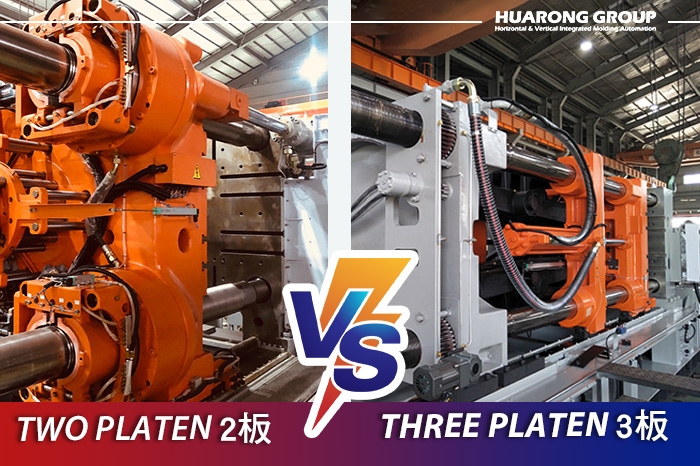
In today's market, two platen injection molding machines have become a popular choice, especially for manufacturing large automotive parts, industrial containers, pallets, and other products that require a substantial mold opening stroke. This article explains the differences between two platen and three platen injection molding machines, along with their structures, benefits, challenges, and typical applications.
In practice, choosing between a two platen and a three platen injection molding machine is not only a matter of clamping force. The more important question is whether the clamping structure matches the mold size, required opening stroke, product geometry, cycle target, and factory layout. For many projects, the right choice comes from evaluating the full molding condition rather than comparing machine tonnage alone.
Two platen machines primarily use a direct pressure mold clamping system. This system employs four sets of direct-pressure clamping cylinders to generate the clamp force and ensure that the mold remains securely closed during the molding process.
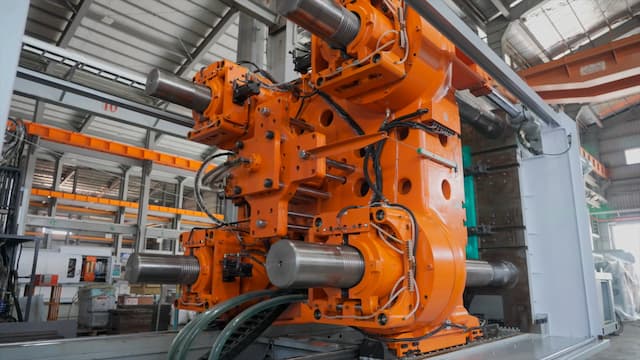
Related product: two platen injection molding machine - NRH series
2 Platen Machine Design
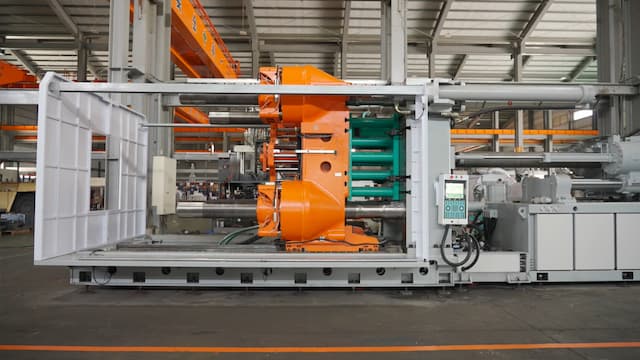
Two platen injection molding machine is composed of a fixed platen, a movable platen, four sets of tie bars, two sets of mold opening and closing cylinders, and four sets of direct pressure clamping cylinders.
2 Platen Machine Operating Process
The injection molding process of a two platen machine involves the clamping unit closing, injecting the molten material into the mold, cooling, and then opening the mold to eject the finished product.
For many manufacturers, the value of a two platen machine is not limited to its clamping principle. It is often selected because the structure can provide longer opening stroke, more flexible mold space, and better accessibility around the mold area. These advantages become especially important when the application involves large molds, deep-cavity parts, side-core actions, or automation systems that require wider working space.
Benefits and Challenges of 2 Platen Machine
This design offers several benefits, including
- Spatial Efficiency: Due to their compact design, two platen machines require less floor space compared to traditional 3 platen machines, making them ideal for manufacturing environments with limited space.
- High Stability, Precision, and Maintenance: Direct clamping helps support stable force transmission during the injection process, which is important for product consistency and mold performance.
- Large Mold Capacity and Better Accessibility: Two platen machines can accommodate larger molds and provide better access around the mold area for mold change, maintenance, and automation integration.
- Longer Opening Stroke for Deep-Cavity Products: Two platen machines are often preferred for products that require more mold opening distance during demolding and part removal.
- Better Accessibility for Automation Integration: The clamping layout can provide more accessible working space for robots, take-out systems, and mold-side automation.
- More Flexible Mold Handling for Large Projects: For larger molds or applications that require frequent mold changes, the machine structure can offer practical advantages in installation and maintenance access.
Despite their many benefits, two platen machines may still involve higher initial investment in some cases, and machine selection should always be reviewed against the actual mold structure and production requirements.
2 Platen Machine Applications
The applications of two platen injection molding machines are broad and varied, spanning industries such as automotive, consumer goods, and industrial manufacturing. Their ability to mold medium to large-sized plastic parts with precision and efficiency makes them an important solution in many modern production environments.
- Automotive Industry: These machines are used to produce components such as bumpers, instrument panels, and air-conditioner compressor housings.
- Consumer Goods: They are commonly used to manufacture large plastic parts for household appliances, furniture, and storage products.
- Industrial Applications: They are often used for large molded products such as industrial containers, pallets, and other heavy-duty plastic parts that require large molds and stable clamping performance.
Two platen machines are especially suitable when the application requires large molded parts, deep cavity molds, long demolding travel, or wider mold-side accessibility. In these cases, the machine is often selected not only for clamping force, but also for the usable mold space and opening stroke that support more stable production and easier integration with auxiliary systems.

Three platen injection molding machines use a toggle link system to generate clamping force. Based on the toggle link arrangement, these machines can be further divided into inward toggle and outward toggle types, which affects the machine length and mold opening stroke.
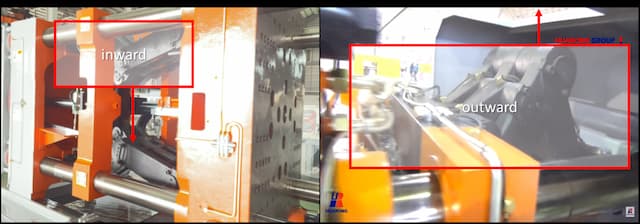
Related product: inward toggle three platen machine - HRN series
Related product: outward toggle three platen machine - NRV series
3 Platen Machine Design
A three platen injection molding machine is composed of a fixed platen, a movable platen, a die height platen, an I-shaped plate, four sets of tie bars, a set of toggle linkage mechanisms, a set of clamping cylinders, and a set of mold-adjusting gear.
3 Platen Machine Operating Process
The operating process of a three platen machine is similar to that of a two platen machine. The clamping unit closes the mold, the molten material is injected into the cavity, the part cools, and then the mold opens for product ejection. The difference lies in the clamping structure, where the toggle mechanism is used to build and maintain clamping force.
Three platen injection molding machines remain an important solution in many molding factories because they are well suited to conventional, high-volume production. For standard mold sizes and repetitive production cycles, the toggle clamping structure offers a proven and practical platform that continues to be widely used across many industries.
Benefits and Challenges of 3 Platen Machine
The toggle design allows for fast mold opening and closing speeds, which helps support reduced dry cycle times and efficient production in many standard molding applications.
For many general molding applications, the key advantage of a three platen machine is its suitability for fast, repeatable production. When the mold size is relatively standard and the production target emphasizes output and short cycle performance, the toggle structure remains a reliable and cost-effective solution.
Compared with two platen machines, three platen machines may have higher maintenance requirements because the toggle system includes more moving parts that require regular lubrication and inspection.
3 Platen Machine Applications
Three platen injection molding machines are commonly used in the production of precision parts and components in industries such as electronics, medical devices, consumer products, and other applications where stable, repetitive, high-volume production is important.
There is no single clamping system that is better for every application. In practice, the comparison should be based on mold dimensions, required opening stroke, product geometry, cycle target, maintenance expectations, and available factory space. For this reason, the most suitable machine is usually the one whose structure best matches the actual production task.
When comparing two platen and three platen injection molding machines, several factors come into play, including cost, floor space requirements, cycle times, mold flexibility, and maintenance needs. While two platen machines offer compact structure, larger mold accommodation, and longer opening stroke, three platen machines remain effective for standardized, high-volume production with fast dry-cycle characteristics.
| Aspect | Two-Platen Machines | Three-Platen Machines |
|---|---|---|
| Clamping Method | Direct Clamping | Toggle Clamping |
| Number of Platens | 2 | 3 |
| Mold Capacity | Better suited for large molds | More suitable for standard mold sizes |
| Mold Adjustment | Fast | Slower |
| Cycle Time (for the same machine tonnage) | Often longer in dry cycle comparison | Often shorter in dry cycle comparison |
| Space Efficiency | High | Lower |
| Maintainability | Good | Fair |
| Applications | Medium to large parts, high-precision parts, deep-cavity products | Small or thin parts, high-volume parts |
| Mold Installation and Removal | Usually quicker and simpler, with optional retractable tie-bar function | Can be more involved due to the additional platen and toggle mechanism |
| Cost (for the same machine tonnage) | Typically higher initial cost | Typically lower initial cost, depending on specifications |
| Floor Space Requirements | Less | More |
| Opening Stroke | Generally more suitable for long opening stroke requirements | More dependent on toggle geometry |
| Mold Space Flexibility | Better suited for large molds and complex mold arrangements | More suitable for standard mold layouts |
| Automation Accessibility | Better access around the mold area for robots and take-out systems | Depends more on machine layout and mold configuration |
| Maintenance Focus | Fewer toggle-related wear points | Requires regular lubrication and inspection of toggle linkage |
| Best-Fit Production Type | Large parts, deep-cavity parts, large molds | Standardized, high-volume, short-cycle production |
A two platen machine should be seriously considered when the application involves large molded parts, deep-cavity molds, long opening stroke requirements, or frequent large mold changes. It is also a strong option when automation access, mold-side working space, or factory layout efficiency are important factors in the production plan.
A three platen machine is often a practical choice when the production target focuses on standardized molds, high-volume output, and short cycle performance. For many general-purpose plastic products, the toggle structure continues to offer a dependable and cost-efficient solution.
Further ready: What is injection molding machine? By clamping mechanism to choose injection molding machine model
At Huarong, machine selection is not based on clamping force alone. A proper evaluation should include mold dimensions, mold thickness, required opening stroke, shot weight, material, special mold actions, target cycle time, and available factory space. When these conditions are reviewed together, it becomes easier to identify whether a two platen or three platen machine is the more suitable solution for the project.
Both two platen and three platen injection molding machines have their own advantages and challenges. Understanding the differences between these machines can help manufacturers make a more informed decision when selecting the right injection molding machine for their production needs.
In the end, the difference between a two platen and a three platen machine is not simply a matter of machine type. The better choice is the one that fits the mold structure, product design, production rhythm, and long-term operating requirements of the application.
Dependable Machine Supplier - Huarong
If you are searching for an experienced injection molding machine manufacturer for two platen injection machines, please feel free to contact Huarong.
- Group Name: Huarong Group
- Brand: Huarong, Yuhdak, Nanrong
- Service Offerings: Injection Molding Machine, Vertical Injection Molding Machine, Injection Molding Automation
- Tel: +886-6-7956777
- Address: No.21-6, Zhongzhou, Chin An Vil., Xigang Dist., Tainan City 72351, Taiwan
- Official Website: https://www.huarong.com.tw/


The Huarong Marketing Team is dedicated to translating Huarong’s deep manufacturing expertise into clear, actionable insights for our global audience. By collaborating closely with our R&D and engineering departments, we ensure that every update on injection molding machine technology and industry trends is presented with accuracy and practical value, reinforcing Huarong’s position as a premier injection molding machine manufacturer.
- Expert Insights: Regular updates on injection molding machine optimization and efficiency.
- Proven Reliability: 40+ years as a leading injection molding machine manufacturer in Taiwan.
- Global Reach: Tailored manufacturing solutions for automotive, medical, and packaging sectors.