How to Maintain Injection Molding Quality in High-Temperature Environments
2026-07-30 13:28:00
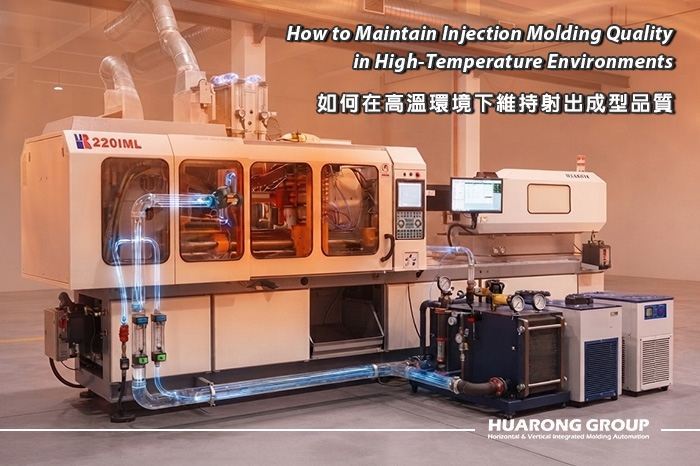
Maintaining consistent injection molding quality in hot environments requires more than simply adjusting processing temperatures. High ambient temperatures influence machine cooling efficiency, mold temperature stability, hydraulic performance, material conditioning, and overall process consistency. By combining preventive maintenance, environmental control, and data-driven process monitoring, manufacturers can reduce seasonal quality fluctuations while maintaining stable production throughout the summer months.
Injection molding is designed to operate within carefully controlled processing windows. While engineers typically focus on barrel temperature, mold temperature, and injection parameters, the surrounding factory environment is often overlooked.
When summer temperatures rise, the entire production system absorbs additional heat. Cooling water becomes less effective, machine components operate at higher temperatures, and the thermal balance established during process validation gradually shifts.
Instead of one obvious failure, manufacturers usually experience multiple small variations occurring simultaneously. These changes may include slightly longer cooling times, inconsistent melt viscosity, unstable mold temperatures, increased hydraulic oil temperatures, or reduced repeatability between production cycles.
Although each variation may appear minor, their combined effect can significantly increase reject rates and reduce overall equipment effectiveness (OEE).
For facilities operating multiple injection molding machines continuously, these issues become even more noticeable as heat accumulates throughout the production area.

High ambient temperatures rarely create a single defect. Instead, they increase the likelihood of several common molding problems occurring together.
When mold temperature fluctuates beyond the validated process window, plastic shrinkage becomes less predictable. Parts may gradually move out of tolerance even though machine settings remain unchanged.
Higher mold temperatures can reduce material viscosity, allowing molten plastic to flow into parting lines more easily. Combined with mold wear or insufficient clamping force, flash becomes more likely.
Longer cooling times and uneven temperature distribution can increase differential shrinkage, leading to cosmetic defects or structural distortion.
Cooling is often the longest stage of the molding cycle. When cooling efficiency decreases during hot weather, operators may compensate by extending cooling time, reducing overall productivity.
Hydraulic systems, servo motors, electrical cabinets, and cooling components all experience higher thermal loads. Without proper maintenance, unexpected shutdowns may occur during peak production periods.
Ambient temperature affects almost every subsystem of an injection molding machine. Understanding these interactions helps engineers identify root causes instead of treating symptoms.
| Area | Effect of High Ambient Temperature | Possible Production Impact |
| Cooling System | Reduced cooling efficiency | Longer cycle time |
| Mold Temperature | Poor temperature stability | Dimensional variation |
| Hydraulic System | Higher oil temperature | Reduced repeatability |
| Material Storage | Moisture absorption risk | Surface defects, bubbles |
| Electrical Cabinet | Higher internal temperature | Control instability |
| Factory Environment | Uneven airflow and heat accumulation | Process variation |
Rather than adjusting injection pressure or holding pressure immediately after defects appear, engineers should first verify whether environmental conditions have changed since the process was originally validated.
Many seasonal quality issues originate outside the mold itself.
Maintaining production stability requires coordinated management of equipment, processes, materials, and the manufacturing environment.
Cooling systems should receive additional attention before summer begins.
Inspect heat exchangers, cooling towers, chillers, water pumps, and pipelines for scaling or restricted flow. Reduced heat transfer efficiency can significantly affect mold cooling performance.
Verify that cooling water temperature remains within the recommended operating range for each production process.
Even when cooling equipment appears functional, reduced water flow can gradually increase mold temperature without triggering alarms.
Stable mold temperature is often more important than achieving the lowest possible mold temperature.
Temperature sensors, flow meters, and thermal monitoring systems allow engineers to detect deviations before product quality changes.
For precision components, maintaining consistent thermal conditions is generally more effective than repeatedly adjusting processing parameters during production.
When production includes multiple cavities or family molds, balanced cooling becomes increasingly important.
Hydraulic oil naturally becomes thinner as temperature increases.
Higher oil temperatures may influence pressure stability, response time, and repeatability, particularly in hydraulic injection molding machines.
Routine maintenance should include:
- Checking hydraulic oil condition
- Inspecting oil coolers
- Cleaning filters
- Monitoring operating temperature
- Verifying pressure consistency
Servo-driven machines may experience reduced hydraulic heat generation compared with conventional hydraulic systems, but cooling systems still require regular inspection.
Many engineering plastics absorb moisture from the surrounding environment.
High humidity often accompanies summer temperatures, increasing the risk of moisture-related molding defects.
Materials should be stored in dry environments and dried according to supplier recommendations before processing.
Proper material handling helps reduce defects such as:
- Silver streaks
- Surface blemishes
- Bubbles
- Reduced mechanical properties
- Inconsistent appearance
Material preparation should always be considered part of overall process control rather than a separate operation.
Machine performance depends not only on machine design but also on the surrounding production environment.
Improving ventilation helps remove accumulated heat around:
- Hydraulic units
- Electrical cabinets
- Motors
- Cooling equipment
Air circulation also improves operator comfort, supporting consistent production management during extended manufacturing shifts.
For facilities experiencing persistent heat accumulation, localized cooling or improved factory ventilation may provide better long-term process stability than repeatedly modifying molding parameters.
Preventive maintenance is significantly less costly than unexpected production interruptions.
The following checklist can help manufacturers prepare injection molding equipment for hot-weather operation.
| Inspection Item | Recommended Check |
| Cooling water flow | Verify stable flow rate |
| Chiller performance | Confirm adequate cooling capacity |
| Cooling tower | Remove scale and debris |
| Mold cooling channels | Inspect for blockage |
| Hydraulic oil | Check temperature and condition |
| Heat exchanger | Clean if necessary |
| Electrical cabinet | Verify ventilation fans operate correctly |
| Servo motor cooling | Inspect airflow and cleanliness |
| Material dryers | Confirm drying performance |
| Factory ventilation | Evaluate airflow around production cells |
| Process monitoring | Review temperature trends regularly |
| Preventive maintenance records | Update before peak summer production |
Rather than waiting for defects to appear, scheduled inspections help identify gradual performance degradation before it affects production quality.

When production quality changes during summer, manufacturers often react by adjusting processing parameters. While parameter optimization may temporarily reduce defects, it does not always address the underlying cause.
| Approach | Advantages | Limitations | Best Application |
| Adjust injection parameters | Fast implementation | May only treat symptoms | Temporary production recovery |
| Increase cooling time | Easy to apply | Lower productivity | Short-term quality improvement |
| Improve cooling system | Better process stability | Requires maintenance planning | Long-term operation |
| Environmental temperature control | Stable production conditions | Facility investment required | High-volume manufacturing |
| Preventive maintenance program | Reduces unexpected downtime | Requires planning | Continuous production facilities |
For many manufacturers, the most effective strategy combines preventive maintenance with data-based process monitoring rather than relying solely on machine parameter adjustments.
High-temperature environments should not automatically lead to unstable production.
Manufacturers that maintain consistent quality typically focus on process stability rather than reacting to individual defects. This includes establishing baseline operating conditions, monitoring equipment health, recording seasonal performance trends, and performing preventive maintenance before environmental conditions become challenging.
Modern injection molding operations also benefit from production data collection and process monitoring systems that help engineers identify gradual changes in temperature, cycle time, machine performance, and equipment utilization. These insights make it easier to distinguish between process variation and equipment-related issues, allowing corrective actions to be taken earlier.
Ultimately, successful injection molding in hot environments depends on viewing the machine, mold, material, cooling system, and factory environment as one integrated production system. When each element is properly maintained and monitored, manufacturers can achieve consistent product quality throughout the year, regardless of seasonal temperature changes.
Yes. High ambient temperature can reduce cooling efficiency, influence mold temperature stability, increase hydraulic oil temperature, and contribute to dimensional variation, flash, warpage, or longer cycle times if the process is not properly controlled.
Not necessarily. Reducing barrel temperature without understanding the root cause may create additional processing issues. Engineers should first evaluate mold temperature, cooling system performance, material condition, and factory environment before modifying process parameters.
Cooling-related systems should be prioritized. Chillers, cooling towers, heat exchangers, mold cooling circuits, hydraulic oil coolers, electrical cabinet ventilation, and material drying equipment should all be inspected before peak summer production.
Yes. Preventive maintenance helps maintain stable cooling performance, consistent hydraulic operation, and reliable machine control, reducing the likelihood of quality variation caused by high ambient temperatures.
Yes. Good ventilation helps remove accumulated heat around machines and electrical systems, improving equipment reliability and supporting more consistent processing conditions throughout the production area.
- Group Name: Huarong Group
- Brand: Huarong, Yuhdak, Nanrong
- Service Offerings: Injection Molding Machine, Vertical Injection Molding Machine, Injection Molding Automation
- Tel: +886-6-7956777
- Address: No.21-6, Zhongzhou, Chin An Vil., Xigang Dist., Tainan City 72351, Taiwan
- Official Website: https://www.huarong.com.tw/