Two-Platen Injection Molding for Automotive Parts: Design Considerations and Case Applications
2026-07-16 11:27:14
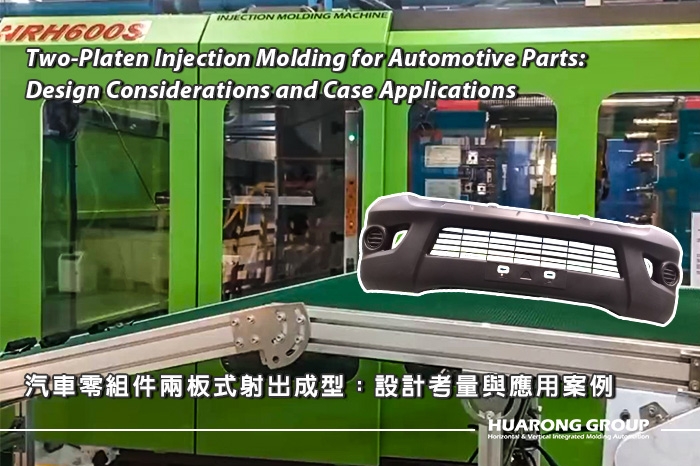
A two platen injection molding machine is particularly suitable for large automotive parts that require large molds, long mold opening strokes, multiple core pulls and robotic removal. This customer case shows how Huarong's NRH Series supports bumper related parts, front grilles, large lighting components and other exterior applications that require stable production for OEM and Tier 1 programs.
Readers who are still comparing clamping structures can first review Huarong's Two Platen vs Three Platen Injection Molding Machine Guide. The guide explains why machine selection should consider mold size, opening stroke, product geometry and factory layout instead of clamping force alone.
The customer is an automotive electronics manufacturer in Mainland China that produces lighting systems, electronic control modules, interior and exterior plastic parts, and precision molds.
As production expanded across several factories, the customer introduced conventional, dual shot, multi shot and large two platen injection molding machines. Large two platen machines supported product groups including structural lighting parts, bumper related components, front grilles, body trim and oversized transparent parts.
These applications could not be evaluated by tonnage alone. The customer also needed sufficient platen space, mold opening stroke, injection capacity, core-pull interfaces, and stable cycle performance.
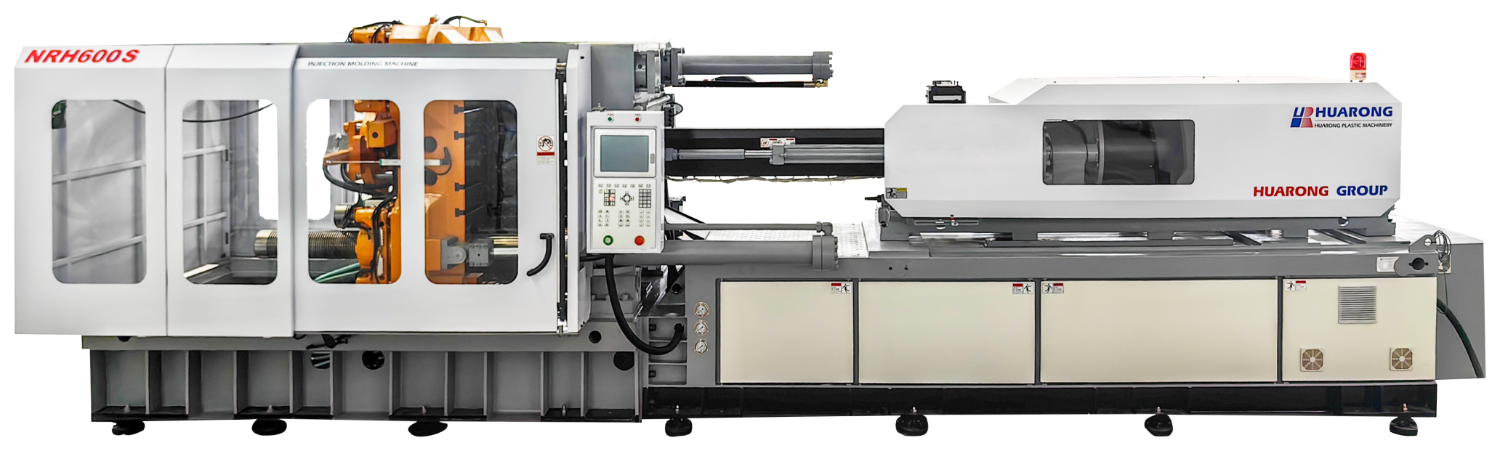
For this application group, Huarong recommends the NRH two platen injection molding machine, which is designed for medium and large molds and lists automotive bumpers, dashboards and interior trims among its principal applications.
Further Reading:Automotive Lighting Case:Stable Production of Car Lights & Transparent Parts
Different automotive parts create different demands on the machine, mold and validation process.
| Automotive application | Main molding challenges | Important machine requirements | Typical validation |
| Bumper fascia | Long flow paths, warpage, sink marks and visible weld lines | Large platen, stable clamping, long opening stroke and robot access | Appearance, dimensions, vehicle fit and paint trial |
| Front grille | Thin ribs, multiple slides, gloss variation and short shots | Injection speed control, core sequencing and mold rigidity | Surface approval, fit and coating validation |
| Instrument panel | Large projected area, mounting points and dimensional distortion | Stable mold support, holding pressure control and controlled ejection | CMM, checking fixture and assembly trial |
| Lighting housing | Sealing surfaces, warpage and mounting accuracy | Stable injection control, thermal consistency and automation | CMM, leakage test and lamp assembly |
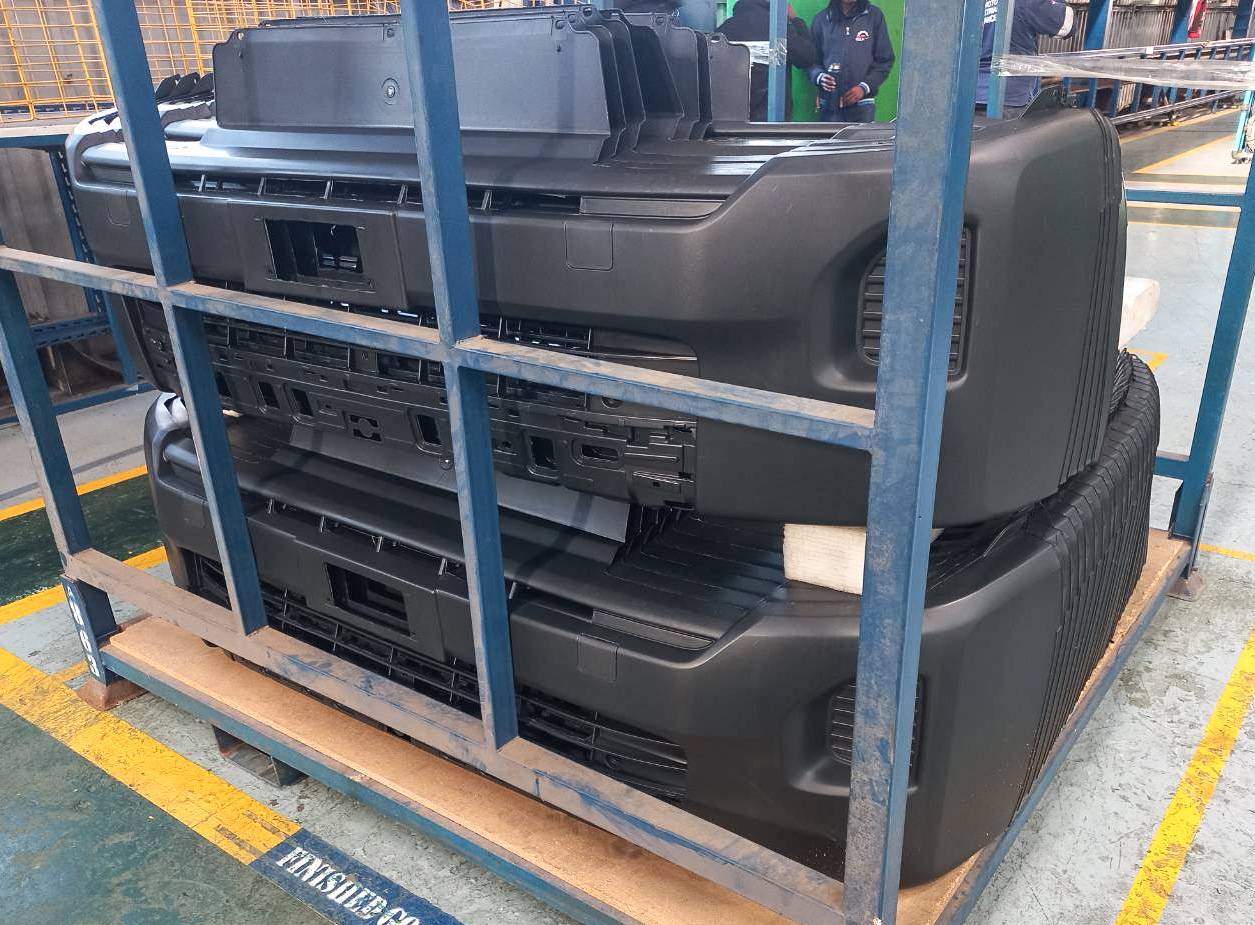
Bumper fascia is a representative NRH application because the mold may include grille openings, sensor mounts, clips, ribs and several side actions.
The machine must provide enough platen space for the mold while maintaining a stable clamping condition during filling and holding. This helps reduce machine related variation at the parting line and provides a consistent foundation for controlling flash, dimensional variation and left to right warpage.
Opening stroke is equally important. It should be calculated from the complete removal sequence:
Part depth + core retraction + ejector stroke + robot tooling + extraction clearance
A machine may provide enough calculated clamping force but still restrict production if the robot cannot remove and rotate the bumper efficiently.
Automotive grilles often contain thin ribs, narrow flow paths, decorative surfaces, mounting clips and multiple undercuts.
These molds may require several hydraulic cores. Each core should have a defined movement sequence, pressure requirement, position signal and safety interlock.
The injection process must also control visible defects such as weld lines, flow marks, burn marks, gloss variation and rib read through. Repeatable injection speed and a stable transition to holding pressure are important because process variation can change part weight, weld line position and local shrinkage.
Instrument panels contain many mounting points and assembly interfaces. Even when the part appears acceptable, warpage can move critical features outside their dimensional tolerance.
Large lighting housings present similar challenges around sealing surfaces, lamp mounting points and optical alignment. The customer case also included large structural lighting components and thick wall transparent parts, which are sensitive to material drying, mold temperature, holding pressure and cooling conditions.
For these applications, the two platen machine provides the mold capacity and opening clearance needed for large tooling, while stable injection and clamping control support repeatable production.
Machine selection should begin with the actual mold envelope, not only the calculated clamping force.
Engineering teams should confirm:
- Mold width, height, thickness and weight
- Platen dimensions and tie bar clearance
- Mold loading direction
- Nozzle and locating ring position
- Hot runner and cooling interfaces
- Crane and maintenance access
Large automotive molds may also include sequential valve gates, hydraulic slides, cavity sensors and multiple temperature control zones. These systems affect mold weight, installation and machine interface requirements.
Insufficient opening stroke can limit robot movement even when the machine has sufficient clamping force.
Two platen machines provide a longer opening stroke within a relatively compact structure. This is useful for large automotive parts, deep products and molds that require wider access for automated removal.
The opening requirement should include robot entry, gripping, withdrawal and part rotation. It should not be based on product depth alone.
Automotive molds often require side cores to form clips, ducts, openings, sensor positions and mounting features.
Before finalizing the machine, the customer, moldmaker and machine supplier should confirm:
- Number of hydraulic core circuits
- Core pressure and flow
- Movement sequence
- Position confirmation
- Ejector coordination
- Robot communication
- Safety interlocks
In practical projects, selecting a machine by tonnage alone can lead to insufficient opening stroke or core circuits being discovered during mold trials. Aligning these requirements early reduces later modification and commissioning risk.
Bumpers, grilles and visible trim may contain customer defined Class A surfaces. Their acceptance criteria normally depend on the OEM drawing, approved appearance sample, texture, coating and inspection conditions.
Injection molding engineers should control:
- Weld lines
- Flow marks
- Sink marks
- Gloss variation
- Silver streaks
- Surface waviness
- Scratches during removal
Machine repeatability supports surface consistency by stabilizing injection velocity, switchover position, holding pressure, clamping and cycle time. Final quality also depends on material drying, gate design, mold venting, cooling and ejection.
For painted parts, the production cell should also consider robot gripping, cooling, surface inspection and paint rack loading. Grippers should avoid visible surfaces and should not deform thin sections or attachment clips.
A stable molding process does not guarantee paint quality. It does, however, provide the paint line with parts that have more consistent geometry and surface condition.
PPAP is used to demonstrate that the supplier’s actual manufacturing process can consistently meet engineering and specification requirements during production.
Depending on customer requirements, automotive part validation may include dimensional results, appearance approval, production trials, capability studies, CMM inspection, optical scanning and checking fixtures.
Important characteristics for large molded parts include:
- Overall profile and flatness
- Mounting hole and clip positions
- Part weight
- Warpage after cooling
- Class A surface appearance
- Cycle time variation
- Core movement consistency
CMM inspection can verify critical datums, mounting points and geometric tolerances, while optical scanning can help evaluate complete surface profiles and warpage.
For OEM and Tier 1 validation, stable clamping and platen support help maintain a consistent mechanical condition around the mold.
This does not guarantee identical cavity pressure or eliminate warpage. Runner balance, cooling, material condition and process settings remain essential. However, stable mold support can reduce machine related variation that affects cavity pressure distribution, parting line behavior, flash and dimensions.
The NRH Series uses four sets of double half nuts with synchronized hydraulic clamping to provide consistent clamping pressure. It also includes moving platen positioning and tie bar support mechanisms intended to improve alignment and load support for large molds.
The published customer case reports stable cycle performance for automotive lighting, transparent components and exterior parts. Consistent cycles support capacity planning, downstream assembly scheduling and delivery control.
| NRH feature | Automotive production value |
| Compact two platen structure | Reduces machine length compared with a conventional toggle structure and improves factory layout efficiency |
| Extended mold opening stroke | Provides clearance for bumpers, dashboards and robotic part removal |
| Synchronized hydraulic clamping | Supports consistent clamping pressure for large molds |
| Large mold capacity | Accommodates wide molds, complex tooling and additional mold circuits |
| Detachable upper tie bar | Simplifies mold installation where crane height or factory space is limited |
| Automation accessible layout | Provides working space for robots, conveyors and mold side equipment |
Huarong states that the NRH structure can reduce total machine length by up to 30 percent compared with traditional toggle machines while providing a longer mold opening stroke. Actual dimensions depend on the selected model and configuration.
Before selecting a two platen injection molding machine, confirm three groups of information.
- Part dimensions, material and projected area
- Visible or Class A surface zones
- Critical dimensions and assembly datums
- Painting, coating or assembly requirements
- Target cycle time and production volume
- Mold dimensions, weight and installation direction
- Platen size and tie bar clearance
- Required clamping force and shot capacity
- Mold opening and ejector strokes
- Core circuits, hot runner and cooling interfaces
- Robot extraction space
- PPAP and customer specific requirements
- CMM, scanning or checking fixture plan
- Process capability characteristics
- Production trial duration
- Restart and material lot validation
- Process data and traceability requirements
A two platen machine provides large mold capacity, long opening stroke and accessible mold space. These advantages are useful for bumpers, dashboards, grilles and other large automotive components.
Not by itself. Stable clamping and mold support can reduce machine related variation, but warpage also depends on part design, gate location, cooling balance, material shrinkage and holding pressure.
The opening stroke must provide enough space for core retraction, ejection, robot entry, gripping and part rotation. Product depth alone does not represent the complete requirement.
Yes, when evaluating injection molded battery covers, protective housings or module components. Material reinforcement, flatness, sealing surfaces and insert interfaces must also be reviewed. Not every main EV battery enclosure is injection molded.
Customers should provide the part drawing, material, mold dimensions and weight, projected area, shot weight, opening stroke, core configuration, target cycle time, automation plan and quality requirements.
This automotive customer case shows why a two platen injection molding machine should be selected according to the complete part, mold and production process.
For bumper related parts, front grilles, instrument panels and large lighting components, the NRH Series provides large mold capacity, extended opening stroke, synchronized clamping and automation access.
These features help automotive suppliers move from initial mold trials to repeatable OEM and Tier 1 production while supporting dimensional validation, surface quality and stable cycle performance.
- Group Name: Huarong Group
- Brand: Huarong, Yuhdak, Nanrong
- Service Offerings: Injection Molding Machine, Vertical Injection Molding Machine, Injection Molding Automation
- Tel: +886-6-7956777
- Address: No.21-6, Zhongzhou, Chin An Vil., Xigang Dist., Tainan City 72351, Taiwan
- Official Website: https://www.huarong.com.tw/