Insert Molding Electrical Connectors:A Vertical Injection Molding Machine Case Study
2026-07-09 09:56:46
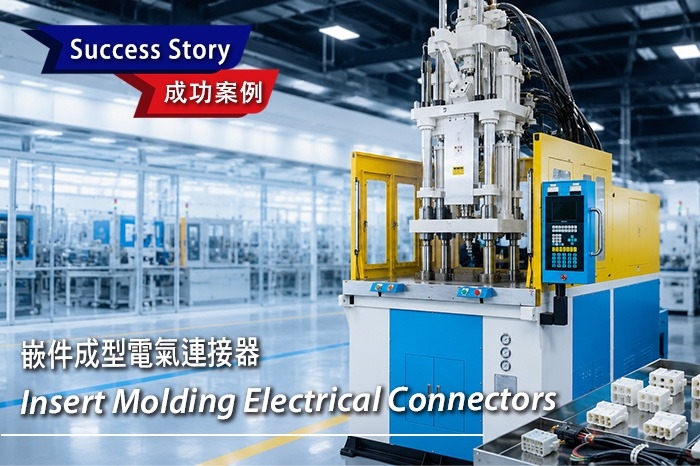
Insert molding electrical connectors requires stable metal insert positioning, open mold access, and repeatable injection control. In this customer case, an electrical connector manufacturer evaluated vertical injection molding machine options to improve insert loading, prepare for automation, and support different connector products, including cable connectors, USB plugs, wire harness connectors, and terminal overmolded parts.
The customer produces electrical connector-related components for electronics applications. These parts require metal terminals, cable ends, or connector components to be placed into the mold before plastic injection.
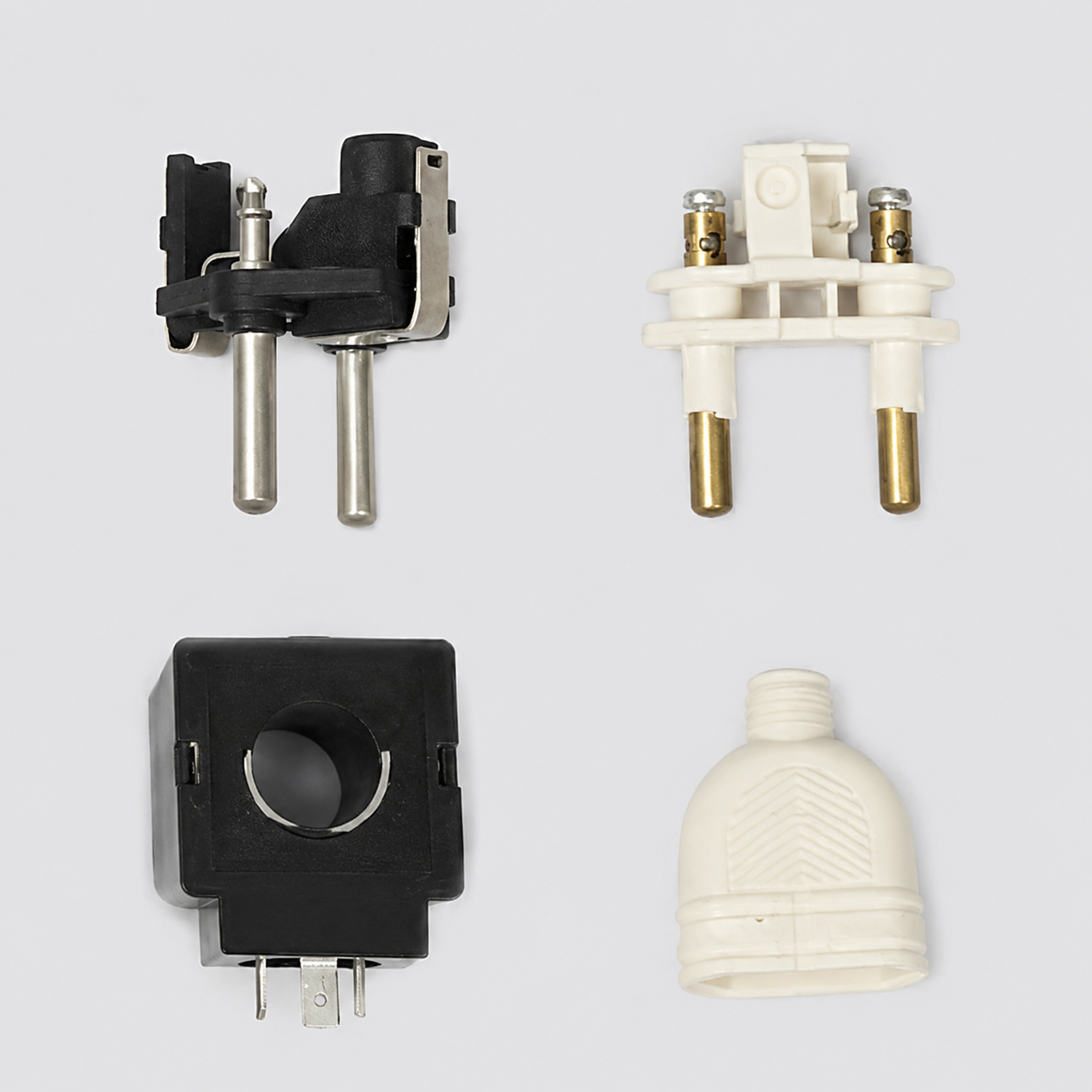
The customer's product range includes:
- USB connector / USB plug
- Cable connector
- Wire harness connector
- Power plug
- Terminal overmolding
- Overmolded connector assembly
For these products, machine selection cannot be based only on clamping force. The customer must also review mold size, insert loading method, cable routing, working space, injection unit capacity, operator access, and future insert molding automation requirements.
In one related case, a major electronics manufacturer in Tunisia purchased Huarong's YC-2S machine for electrical connector insert molding and overmolding. The decision was connected to the machine's tie-bar-less structure, low machine height, and ergonomic operating surface.
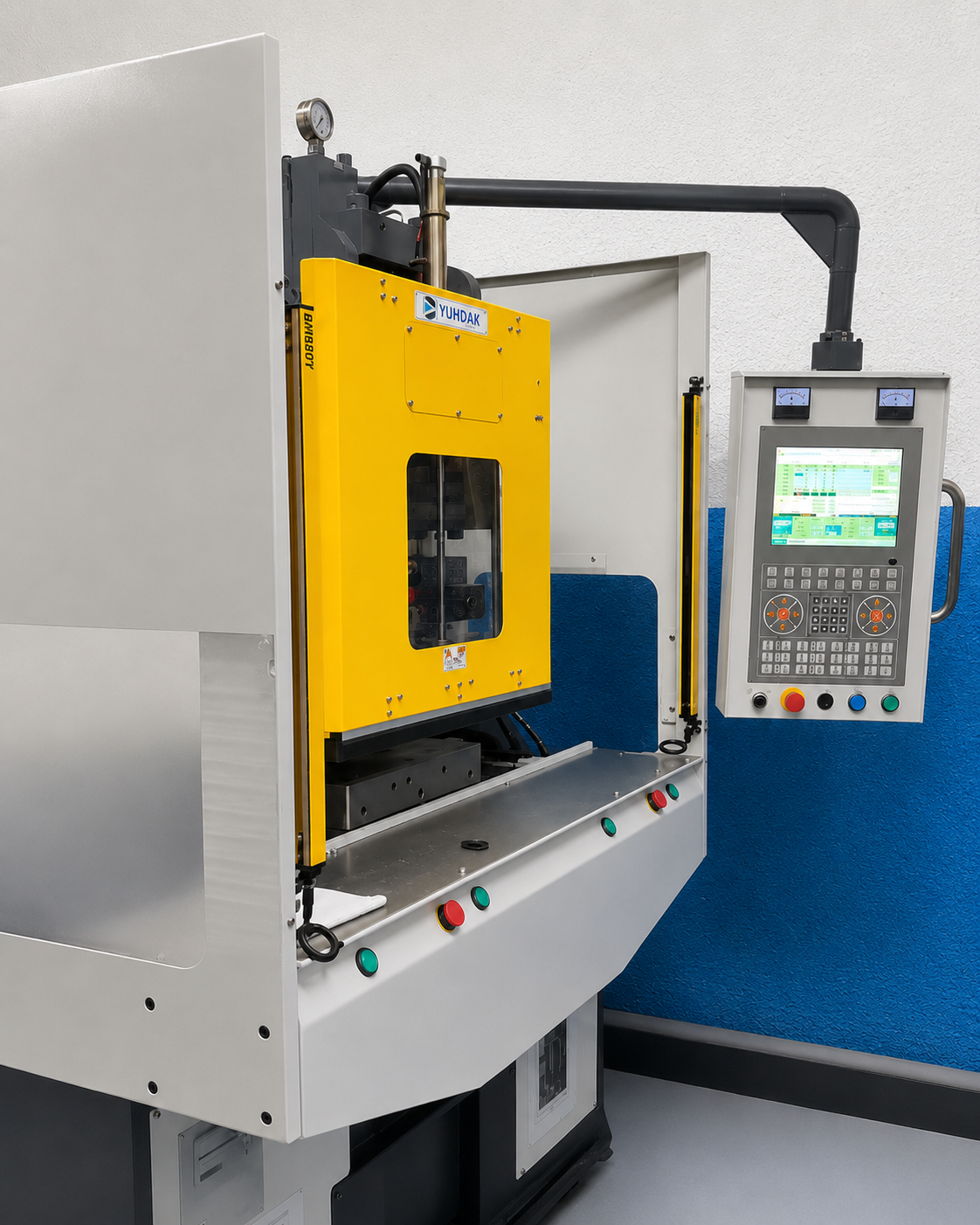
The key challenge in insert molding electrical connectors is maintaining the correct position of the metal insert or cable end during loading, mold closing, injection, cooling, and part removal. Even a small insert movement may affect the final connector quality.
Common production risks include:
- Terminal shift during mold closing
- Short shot around thin connector features
- Flash near metal pins or contact areas
- Insert exposure after molding
- Cable bending or interference during loading
- Unstable cycle time caused by manual loading variation
- Mold damage caused by missing or misplaced inserts
For connector manufacturers, the machine must support both molding performance and practical operation. If operators cannot easily place inserts, route cables, and remove finished parts, the process may become unstable even when the injection unit itself is suitable.
A vertical injection molding machine is often suitable for insert molding because the mold opens in a way that allows inserts to be placed into the lower mold side before injection. This is useful for electrical connectors because metal terminals, pins, plugs, and cable ends must be positioned before the mold closes.
For connector production, the practical benefits include:
- Better mold access for insert placement
- Clear separation between loading, molding, and unloading
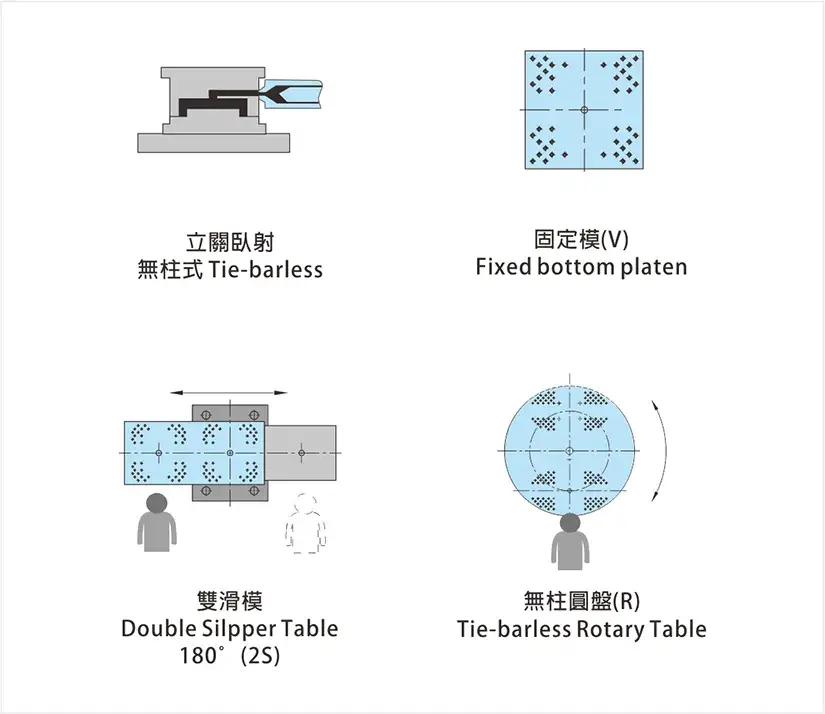
- Compatibility with rotary table, sliding table, and tie-bar-less structures
- Possibility to connect robots, feeders, sensors, and inspection systems
- More practical planning for semi-automatic or automatic insert molding
Different electrical connector products require different machine structures. A USB plug, a power plug, a cable connector, and a wire harness connector may all be electrical connectors, but the best machine configuration may not be the same.
| Production Situation | Recommended Direction | Reason |
|---|---|---|
| Repeated connector production with fixed operator position | YR Series rotary table vertical injection machine | Operator can stay at the operating side for insert loading and part removal. Rotary table structure is also easier to plan with automation. |
| Connector products with long wires, cable ends, or difficult insert handling | YC or YL Series tie-bar-less machine | Open space around the mold area makes it easier to insert long parts and remove finished products. |
| Connector products with limited floor space or simpler production flow | Sliding table vertical machine | Sliding table design may require less floor space than a rotary table, depending on machine size and layout. |
| Future automation planning | YR, YC, or YL depending on product shape | Machine selection should consider robot path, sensor position, fixture clearance, and operator access from the beginning. |
Huarong's YR Series is a rotary table vertical clamping vertical injection machine. Its product page lists a 180-degree rotary table, locating pin design, robot interface capability, and a 2-station standard configuration with optional 3-station or 4-station function. These features make YR suitable when fixed-position insert loading, part removal, and automation planning are important.
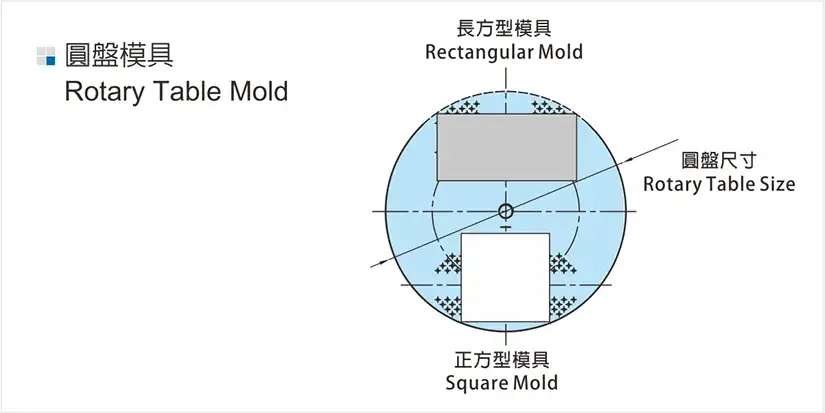
Suggested Machine:YR Series
Huarong's YC Series is a vertical clamping horizontal injection tie-bar-less machine. The YC Series product page highlights vertical clamping without machine column design, three-side open space, easier operation for embedded parts and finished products, automation connection planning, ergonomic operating surface, and low machine height. These points were relevant to the Tunisia electronics manufacturer's YC-2S purchase.
Suggested Machine:YC Series
For long strips or products with wires, Huarong’s vertical machine category also lists YC and YL tie-bar-less solutions as suitable because the left and right sides are open and convenient for inserting and removing finished products.
Suggested Machine:YL Series
The Tunisia electronics manufacturer selected YC-2S because the production involved electrical connector-related insert molding and overmolding applications where open mold access was important.
The key selection reasons were:
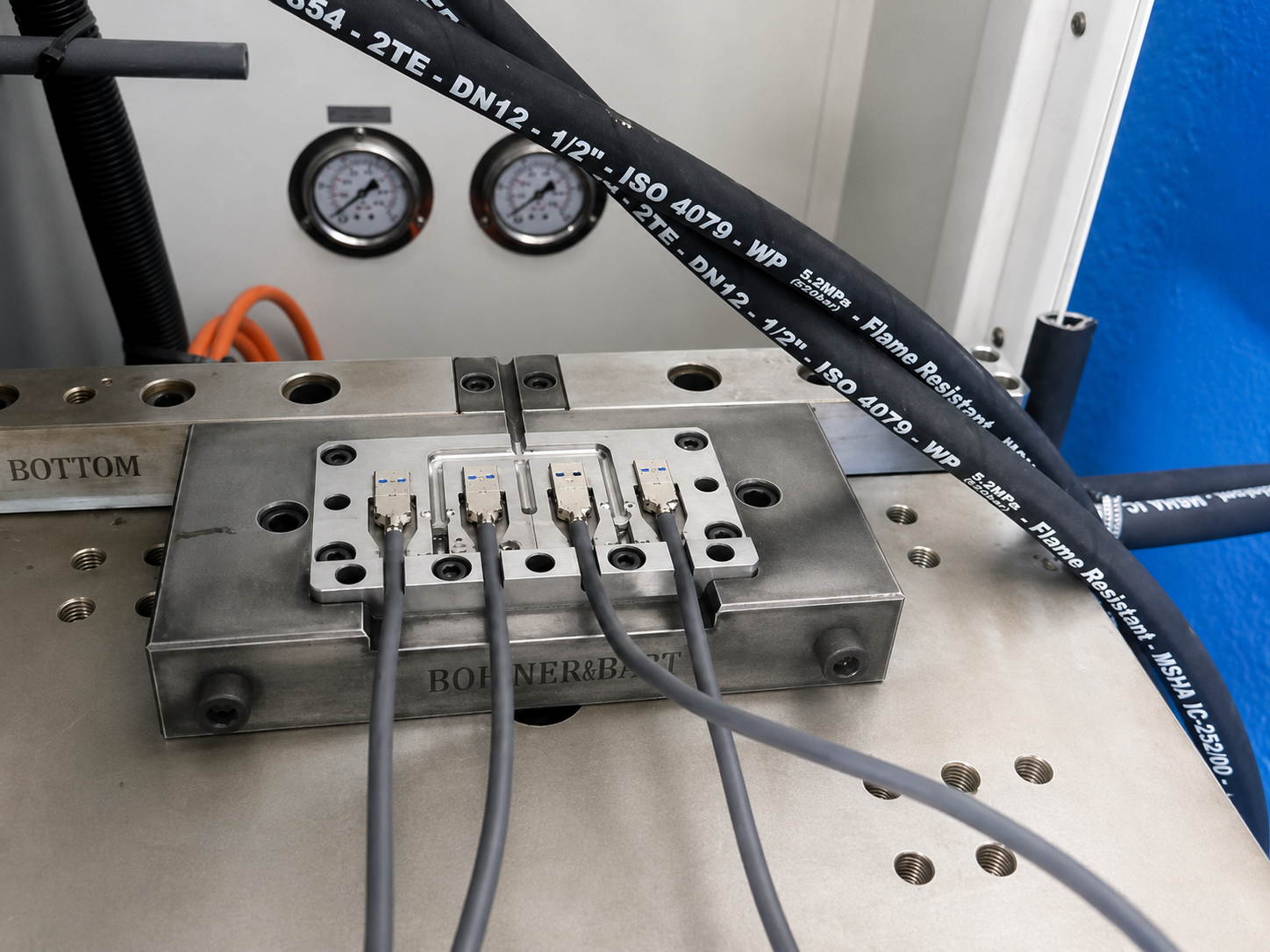
- Tie-bar-less design:The open structure helps reduce interference when handling embedded parts, cable ends, or longer connector components.
- Three-side open space:Operators can access the mold area more easily during insert placement and finished part removal.
- Low machine height:The lower machine profile provides a more practical operating environment around the machine.
- Ergonomic operating surface:This supports repeated manual loading and unloading work during connector production.
- Automation readiness:The machine layout can be considered together with future robot, fixture, and inspection planning.
This case does not mean YC-2S is the only solution for electrical connectors. It shows that when the connector includes cable ends, longer inserted parts, or difficult handling conditions, tie-bar-less access can become more important than a standard table structure.
Connector injection molding automation should be considered early, even if the first production stage is manual. Once the mold, fixture, and machine layout are fixed, later automation changes can become more difficult.
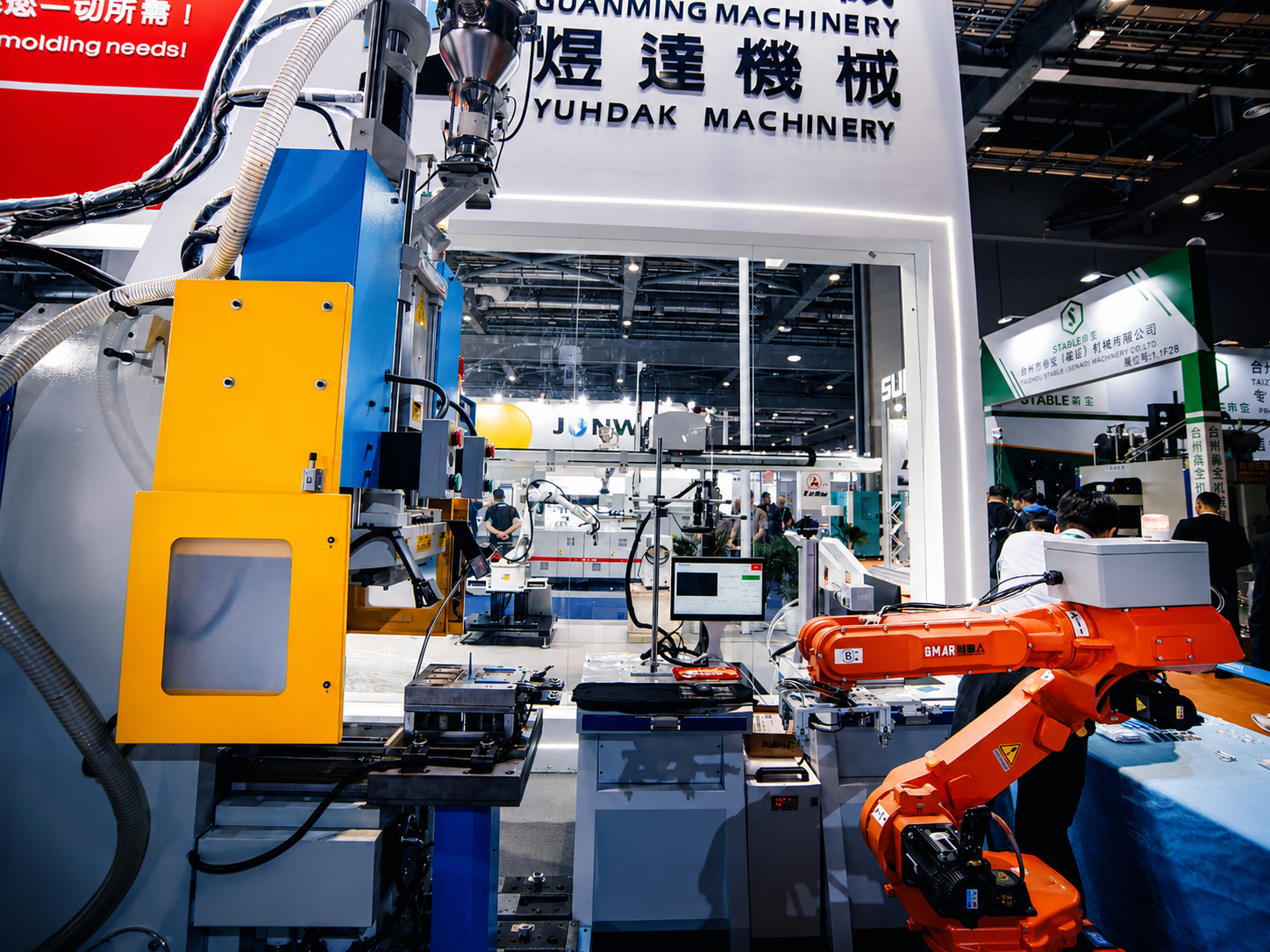
A practical automation path may include:
Stage 1:Manual insert loading with positioning fixtures
Stage 2:Semi-automatic loading with pick-and-place equipment
Stage 3:Robot loading, part removal, and insert confirmation sensors
Stage 4:Integrated automation with feeding, inspection, and sorting
For electrical connectors, the automation system should be designed around the insert first. Small terminals, pins, stamped metal parts, or cable ends must be fed, oriented, picked, placed, and confirmed before mold closing.
Further reading:Insert Molding Automation Guide:Machines, Robots, Tooling and ROI
Before confirming a vertical injection molding machine for insert molding electrical connectors, the customer should prepare the following information:
- Connector drawing and insert drawing
- Product type, such as USB connector, cable connector, wire harness connector, power plug, or terminal overmolding
- Material type, such as PBT, PA, LCP, TPE, or other engineering resin
- Estimated shot weight and cavity count
- Mold dimensions, mold height, and opening stroke requirement
- Insert loading method, manual or automated
- Cable length, cable routing, and allowed bending direction if wires are involved
- Required machine structure, such as rotary table, sliding table, or tie-bar-less design
- Expected production volume and shift arrangement
- Quality inspection requirements, including insert position, flash, short shot, and continuity checks
- Future automation plan, including robot, feeder, sensor, and inspection equipment
- Factory floor space and operator access requirements
This checklist helps the supplier recommend a machine based on actual production needs. It also helps procurement teams compare quotations more accurately because the lowest machine price may not provide the best production fit.
A vertical injection molding machine is useful because it gives better access to the mold area for insert placement. Metal terminals, pins, plugs, or cable ends can be positioned before mold closing, which makes the process suitable for manual loading, semi-automatic loading, or robot automation.
Not always. A rotary table is suitable when fixed-position operation, insert loading, part removal, and automation planning are important. The operator can stay at the operating side while the table rotates between stations, which helps organize a stable production flow.
However, a rotary table usually occupies more floor space than a sliding table, especially on larger machines because the rotary table diameter becomes more significant. A sliding table may be more practical when factory space is limited or when the production layout requires a simpler structure. The final choice depends on product type, insert loading method, automation plan, machine size, and available floor space.
YC or YL tie-bar-less machines should be considered when the product includes long wires, cable ends, long strips, or embedded parts that are difficult to load inside a conventional structure. The open access area can make insert placement and finished part removal more practical.
Electrical connector insert molding and overmolding can be used for USB connectors, cable connectors, wire harness connectors, power plugs, terminal overmolded parts, and overmolded connector assemblies. The exact machine choice depends on product shape, insert type, cable length, mold size, material, and automation plan.
For electrical connector insert molding, the right machine should match the product shape, insert type, cable length, mold layout, floor space, and automation plan. Huarong provides different vertical injection molding solutions, including YR rotary table machines for fixed-position production and YC/YL tie-bar-less machines for connector parts that need open mold access. Contact Huarong to discuss your electrical connector molding requirements and find a suitable machine configuration for your production needs.
- Group Name: Huarong Group
- Brand: Huarong, Yuhdak, Nanrong
- Service Offerings: Injection Molding Machine, Vertical Injection Molding Machine, Injection Molding Automation
- Tel: +886-6-7956777
- Address: No.21-6, Zhongzhou, Chin An Vil., Xigang Dist., Tainan City 72351, Taiwan
- Official Website: https://www.huarong.com.tw/