How to Upgrade from a Three-Platen to a Two-Platen Machine:A Decision Framework for Manufacturers
2026-07-02 15:20:21
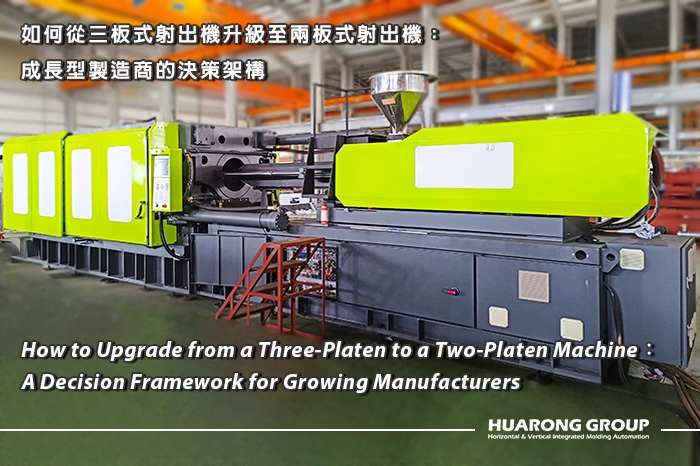
Growing manufacturers often discover that their original three-platen injection molding machine no longer supports larger molds, automation equipment, or future production goals. Upgrading to a two-platen injection molding machine is not simply replacing existing equipment—it is a strategic investment that can improve production flexibility, accommodate larger molds, and prepare a factory for long-term growth. The key is knowing when the upgrade creates measurable operational value rather than unnecessary capital expenditure.
A three-platen injection molding machine remains an excellent solution for many general-purpose molding applications. It offers reliable performance, proven technology, and cost-effective production for a wide range of plastic products.
However, production requirements rarely remain unchanged. As manufacturers win new projects, enter new industries, or expand product dimensions, machine limitations become increasingly visible.
The challenge is often not that the existing machine has become unreliable. Instead, production requirements evolve beyond what the original equipment was designed to support.
Typical growth drivers include:
- Larger plastic components
- Higher-value molds
- Multi-cavity tooling
- Integrated automation
- Faster mold changes
- Future production expansion
When these requirements begin affecting scheduling, productivity, or profitability, evaluating a two-platen machine becomes a logical next step.
One of the earliest warning signs is insufficient mold opening stroke.
Although the clamping force may still meet production requirements, the mold cannot fully open to remove large parts or allow robotic extraction. Operators may need to adjust production sequences, slow down cycles, or rely on manual intervention.
A two-platen injection molding machine typically provides a longer mold opening stroke within a relatively compact machine design, making it better suited for:
- Deep products
- Large containers
- Automotive components
- Industrial housings
- Thick structural parts
Greater opening distance also provides more flexibility when future products vary in size.
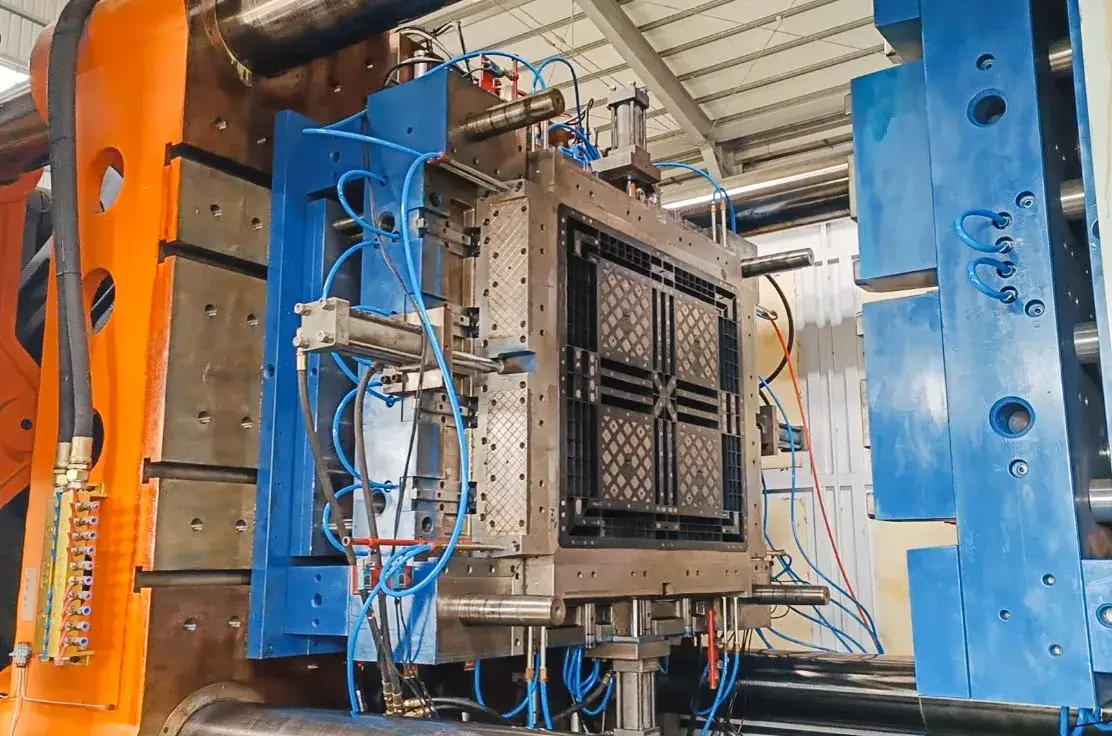
Many manufacturers initially purchase equipment based on current mold dimensions.
Several years later, new customer projects require:
- Larger mold plates
- Heavier molds
- More complex hot runner systems
- Additional cooling circuits
Instead of lacking clamping force, the machine simply lacks sufficient tie bar spacing or mold installation space.
Because two-platen machines are designed with larger mold capacity, they can often accommodate tooling that would otherwise require purchasing a significantly larger traditional machine.
For companies expecting continued product diversification, additional mold capacity reduces future production constraints.
Automation has become a standard requirement for improving consistency, reducing labor dependence, and increasing production efficiency.
Common automation includes:
- Cartesian robots
- Six-axis robots
- Automated part removal
- Vision inspection systems
- Insert loading systems
- Conveyor integration
These systems require sufficient space around the mold area.
When automation equipment must operate within limited clearance, programming becomes more complicated, maintenance becomes less convenient, and future upgrades become more difficult.
Two-platen machine designs generally provide a more open mold area, giving automation engineers greater flexibility when integrating robotic systems into production lines.
As manufacturers expand into low-volume, high-mix production, mold changes become increasingly frequent.
Every hour spent replacing molds represents lost production time.
A machine that provides easier mold access, improved working space, and better maintenance accessibility can significantly simplify changeover procedures.
Although mold change efficiency depends on multiple factors—including quick mold change systems, operator training, and plant layout—the machine architecture itself also influences overall productivity.
For factories managing dozens or even hundreds of molds, this operational advantage becomes increasingly valuable.
Perhaps the strongest reason to upgrade is planning.
Many manufacturers only replace equipment after production problems become unavoidable.
A more strategic approach evaluates whether the current machine will continue supporting business growth over the next five to ten years.
Questions worth considering include:
- Will upcoming customer projects require larger molds?
- Is automation becoming a standard customer expectation?
- Will production volumes increase?
- Will additional product families require more flexible equipment?
- Is factory expansion already under discussion?
Answering "yes" to several of these questions may indicate that postponing the upgrade could become more expensive than planning it proactively.
The following comparison focuses on investment planning rather than identifying a universally superior machine.
| Decision Factor | Three-Platen Machine | Two-Platen Machine |
| General production | Excellent | Excellent |
| Large mold compatibility | Moderate | High |
| Mold opening stroke | Moderate | Long |
| Tie bar distance | Standard | Typically larger |
| Automation integration | Good | Excellent |
| Factory expansion flexibility | Moderate | High |
| Large product applications | Limited by machine size | Better suited |
| Future scalability | Moderate | High |
| Initial investment | Generally lower | Typically higher |
| Long-term production flexibility | Moderate | High |
The right choice depends on product size, mold dimensions, automation strategy, factory layout, and long-term production planning rather than one specification alone.
Further reading:Two Platen vs Three Platen Injection Molding Machine Guide
Purchasing a larger injection molding machine should never be based solely on machine price.
Instead, manufacturers should evaluate the total operational impact over the equipment's expected service life.
Important ROI considerations include:
A larger machine may enable production of products that cannot currently be manufactured in-house.
This creates opportunities to:
- Accept higher-value projects
- Reduce outsourcing
- Expand into new industries
- Increase production flexibility
The ability to pursue new business often represents the greatest long-term return on investment.
Production bottlenecks frequently appear when multiple molds compete for limited machine capacity.
A two-platen machine capable of handling larger tooling allows scheduling to become more flexible while reducing production delays.
Even when production volume remains constant, smoother scheduling may improve overall equipment utilization.
Automation investments deliver greater value when equipment integration is straightforward.
Additional working space can simplify:
- Robot programming
- Maintenance access
- Safety system installation
- End-of-arm tooling changes
- Future automation upgrades
These operational improvements may reduce engineering time throughout the equipment lifecycle.
Many manufacturers purchase equipment sized only for current production.
Several years later, they discover another replacement is necessary because the machine cannot support business growth.
Choosing equipment with additional capacity can reduce the likelihood of another major capital investment in the near future.
Before replacing an existing injection molding machine, engineering and management teams should evaluate both current production requirements and future business objectives.
Use the following checklist during equipment planning:
- Current mold opening stroke limits production
- Existing tie bar spacing restricts larger molds
- Mold weight approaches machine limits
- Automation equipment lacks sufficient operating space
- New customer projects require larger parts
- Mold changes have become increasingly frequent
- Future product sizes are expected to increase
- Factory automation plans are expanding
- Production scheduling has become constrained
- Outsourcing is increasing because of equipment limitations
- Capital investment aligns with long-term growth strategy
- Equipment replacement is part of future factory planning
If multiple items are checked, conducting a detailed machine evaluation with an equipment supplier may be worthwhile before production constraints become more costly.
Upgrading equipment should be viewed as a phased process rather than a single purchase decision.
Successful implementation typically begins by reviewing current production data, mold dimensions, automation requirements, and future business forecasts. This information helps identify whether the new machine should supplement existing production capacity or gradually replace older equipment.
Many manufacturers also benefit from validating mold compatibility before installation. Reviewing mold dimensions, tie bar clearance, injection unit requirements, auxiliary equipment interfaces, and factory utilities can reduce installation delays.
Operator training should also be included in the transition plan. Although experienced technicians are already familiar with injection molding processes, introducing new machine architecture, control functions, maintenance procedures, and automation interfaces helps maximize productivity from the beginning.
Finally, planning future scalability is equally important. Rather than selecting equipment that only satisfies today's production requirements, manufacturers should consider whether the machine can support expected product development, larger molds, increased automation, and expanding production capacity over the coming years.
A well-planned transition minimizes production disruption while creating a stronger foundation for long-term manufacturing growth.
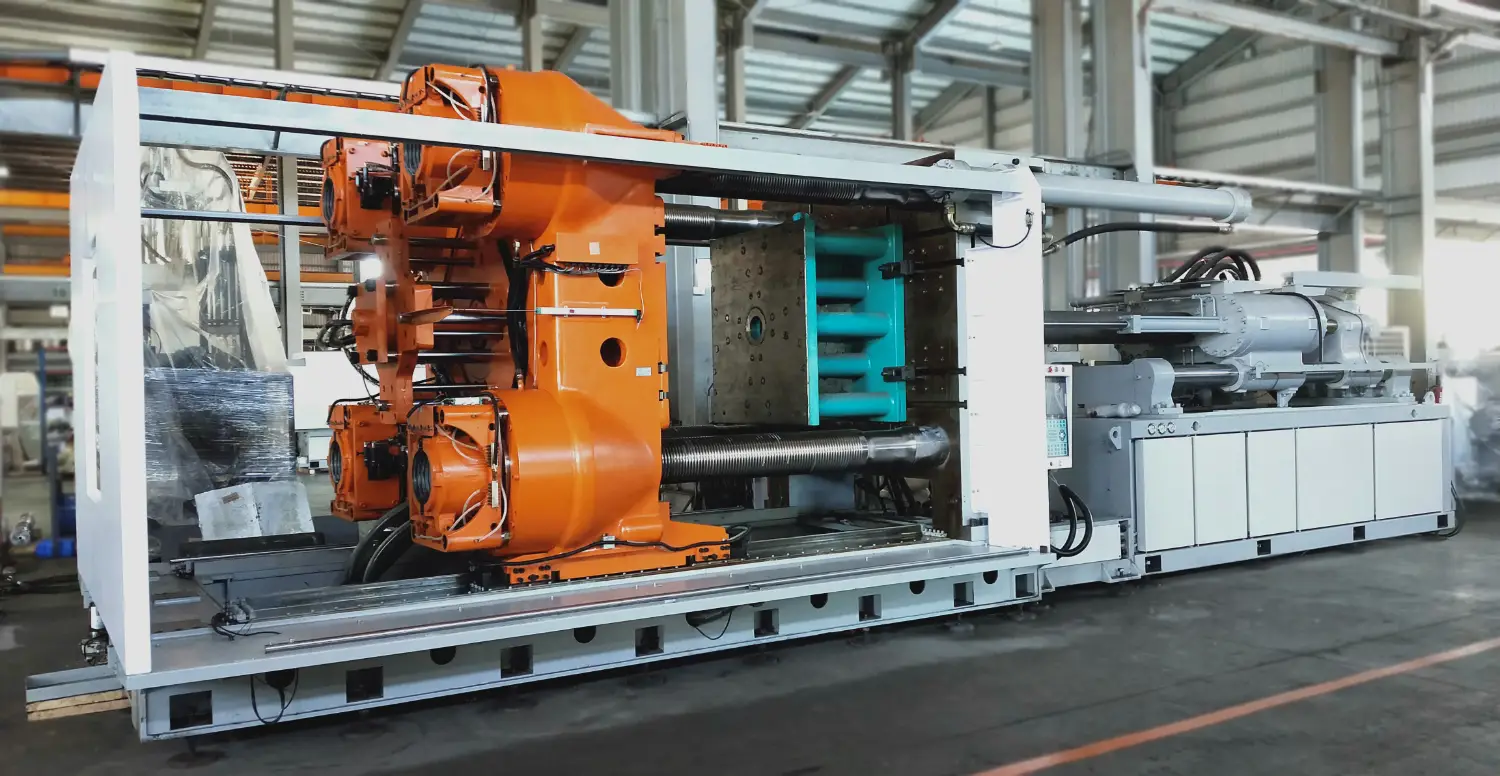
Upgrading from a three-platen to a two-platen injection molding machine is rarely driven by a single specification. More often, it results from gradual business growth, larger molds, increasing automation requirements, and expanding production capabilities.
Rather than waiting until equipment limitations interrupt production, manufacturers should evaluate operational warning signs early. Factors such as mold opening stroke, tie bar distance, mold capacity, automation integration, and long-term factory planning provide a more complete picture than machine price alone.
For growing manufacturers, the right investment is not necessarily the largest machine—it is the machine that best supports future production goals while delivering sustainable operational value over its entire service life.
The best time to upgrade is when existing equipment limits production efficiency or future growth. Common indicators include insufficient mold opening stroke, larger mold requirements, automation constraints, or increasing production bottlenecks.
No. Each machine type serves different production needs. Three-platen machines remain suitable for many standard applications, while two-platen machines are often preferred for larger molds, improved automation integration, and long-term production flexibility.
ROI should include more than the purchase price. Manufacturers should consider new business opportunities, production flexibility, reduced bottlenecks, automation compatibility, maintenance efficiency, and the potential to avoid another equipment replacement in the near future.
In many cases, yes, but compatibility should always be verified. Mold dimensions, tie bar spacing, clamping force, injection unit requirements, and mold mounting specifications all need to be reviewed before installation.
Not necessarily. Although machine dimensions vary by model and manufacturer, two-platen designs often provide larger mold capacity without proportionally increasing the overall machine footprint, making them an efficient solution for larger tooling.
Manufacturers should evaluate current and future mold sizes, required clamping force, shot weight, automation plans, factory layout, product portfolio, maintenance requirements, and expected production growth. Selecting equipment that supports long-term operational goals generally provides greater value than focusing solely on immediate production needs.
- Group Name: Huarong Group
- Brand: Huarong, Yuhdak, Nanrong
- Service Offerings: Injection Molding Machine, Vertical Injection Molding Machine, Injection Molding Automation
- Tel: +886-6-7956777
- Address: No.21-6, Zhongzhou, Chin An Vil., Xigang Dist., Tainan City 72351, Taiwan
- Official Website: https://www.huarong.com.tw/