Servo Hydraulic vs All Electric Injection Molding:Which Machine Type Fits Your Production?
2026-06-25 09:32:01
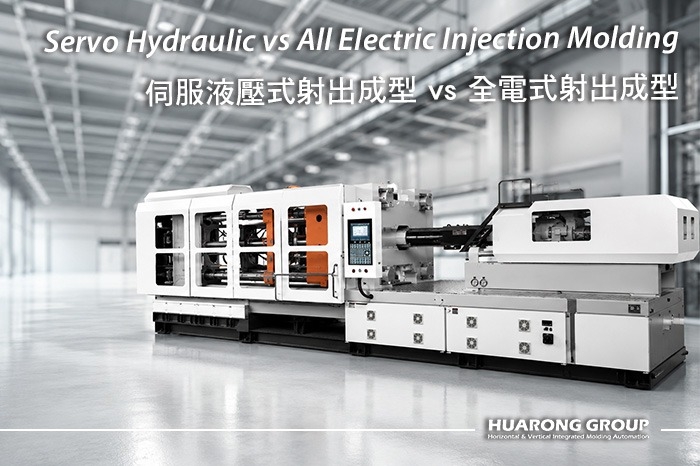
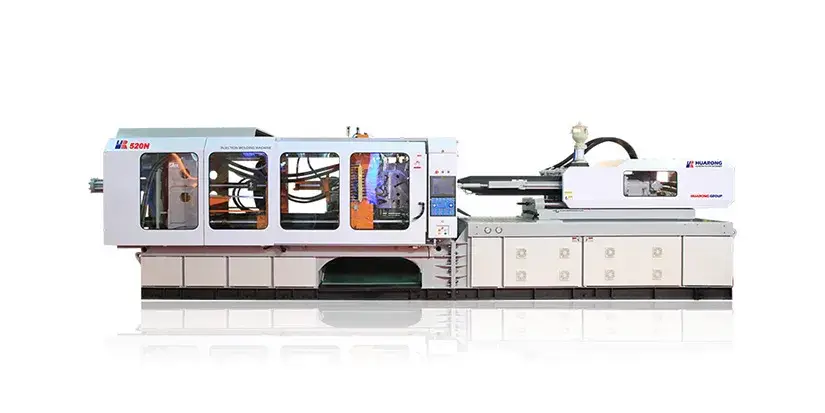
Choosing between servo hydraulic and all-electric injection molding depends on balancing force, precision, energy use, cleanliness, mold complexity, and long-term costs. Servo-hydraulic machines use a servo-motor-controlled hydraulic pump, while all-electric machines rely on servo motors for main axes such as injection, clamping, plasticizing, and ejection.
Choosing the right machine type depends on your application. For example, an all-electric machine is ideal for cleanroom medical molding, small precision connectors, or high-speed thin-wall packaging. In contrast, a servo-hydraulic machine is better suited for large, thick-walled parts, insert molding, core pulls, rotary tables, two-platen machines, and multi-component molding. It's important to evaluate the entire production system, not just the machine's energy label.
The main difference between servo-hydraulic and all-electric injection molding machines is their method of creating motion and force. Servo-hydraulic machines use a servo motor to control a hydraulic pump, which drives all actions such as injection and clamping. In contrast, all-electric machines rely on electric servo motors and mechanical systems, such as ball screws, to operate without hydraulic oil.
Servo hydraulic machines keep the force density and flexibility of hydraulic systems. Hydraulic pressure is useful when the machine needs high clamping force, high injection force, core pulls, ejector circuits, rotary table movement, or other auxiliary actions. Compared with older fixed pump hydraulic machines, servo hydraulic systems only generate flow and pressure when the molding cycle requires movement. During cooling, pressure holding completion or idle phases, the servo motor can slow down or stop, which reduces electricity use and oil heat generation.
All electric machines are built around direct servo control. Each main axis can move with high positional control because the servo motor rotation is translated mechanically into linear motion. This structure is often preferred for small precision parts, medical cleanroom production, optical components, electronic connectors, and thin-wall packaging. The absence of hydraulic oil can reduce oil leakage risk and simplify clean production planning.
The practical selection question is not “which technology is newer.” The better question is “which drive system matches the mold, material, tolerance, tonnage, cycle time, factory environment, and investment plan.” A 150 ton medical connector project and a 1,200 ton automotive part project usually require different evaluation logic.
A servo-hydraulic injection molding machine works by using a servo motor to control hydraulic pump output according to the actual demand of each molding step. During mold closing, injection, packing, plasticizing, mold opening, and ejection, the controller adjusts motor speed and torque to provide the required hydraulic flow and pressure. When demand is low, especially during cooling time, the servo motor reduces speed or stops, which lowers electricity consumption compared with a conventional hydraulic pump that runs continuously.
The key advantage is demand-based energy control. In many injection molding cycles, cooling time can account for a large share of the total cycle, especially for thick-wall parts, PP boxes, ABS housings, PC components, or glass fiber reinforced engineering plastic parts. A conventional hydraulic system may continue consuming power while waiting for the part to cool. A servo-hydraulic system reduces unnecessary pump operation during these low-demand stages.
Servo-hydraulic machines also retain hydraulic force advantages. Hydraulic cylinders and circuits can generate large forces in a compact structure, which is useful for high tonnage clamping, thick wall injection, long flow length parts, two platen machines, multi-shot molding, and molds with several hydraulic core pulls. For factories that frequently change molds, produce different product families, or use auxiliary hydraulic actions, this flexibility can reduce engineering costs and make machine planning easier.
Huarong's HRS and HRFC servo injection molding machines are designed for energy and power savings, fast injection rates, and high versatility. Huarong’s official product page describes a high-response servo system using precision encoders and proportional valves for real-time closed-loop control of injection speed and pressure. Huarong also lists energy efficiency of up to 70% and patented servo power-saving systems under patent numbers M327493 and M328970. These Huarong specific points should be used only when linking to official Huarong pages.
Suggested machine:Servo Injection Molding Machines, HRS and HRFC Series
An all electric injection molding machine works by using electric servo motors to drive machine axes directly or through mechanical systems such as ball screws, belts, and toggle mechanisms. Injection, clamping, plasticizing, and ejection are controlled by motor rotation instead of hydraulic oil pressure. This structure can provide accurate positioning, fast acceleration, and stable axis control when the application requires small dimensional variation or short cycle movement.
All electric machines are often selected for clean production environments because they do not rely on hydraulic oil as the main machine power source. This can be useful for medical device molding, diagnostic consumables, food contact packaging, optical parts, and electronics parts where oil leakage risk, oil mist control, or cleanroom planning matters. In these cases, the value of all electric technology is not only about electricity saving. It is also the combination of cleanliness, repeatability, and process control.
The limitation is that each function must be mechanically powered and controlled. If a mold needs several core pulls, unscrewing actions, special ejector sequences, valve gate control, or rotary table movement, the all electric configuration may require additional servo axes or special mechanical designs. These additions can increase purchase price, engineering complexity, and maintenance cost. For small simple molds, this may not be a problem. For automotive, multi-material or insert molding applications, it can become a major cost factor.
All electric machines should therefore be evaluated by part tolerance, mold simplicity, cleanroom requirement, and production volume. They are not automatically better for every molding factory. They are strongest when the application has simple mold actions, high precision requirements, short cycle times, and strict cleanliness requirements.
The most practical comparison between servo hydraulic and all electric injection molding should include energy use, precision, tonnage range, mold complexity, maintenance, and total cost. The exact result depends on machine size, material, mold design, cycle time, auxiliary equipment and local electricity cost.
| Selection Factor | Servo Hydraulic Injection Molding | All Electric Injection Molding | Practical Meaning |
|---|---|---|---|
| Energy consumption | Typical saving of 30% to 70% vs conventional hydraulic, depending on cycle and machine size | Often lower energy use than hydraulic systems, especially in simple high speed cycles | All electric may have an energy advantage, but the gap can narrow with modern servo-hydraulic systems |
| Precision and repeatability | Suitable for most industrial parts, including automotive, appliance, packaging and general engineering parts | Strong for micro parts, medical parts, optical parts and precision connectors | Choose based on actual tolerance, not only machine category |
| Mold complexity | Strong for hydraulic core pulls, valve gates, ejector circuits, rotary tables and multi shot systems | Best for simpler molds unless additional servo axes are justified | Complex molds often favor servo-hydraulic from a cost and flexibility viewpoint |
| Maintenance | Requires hydraulic oil, filters, seals and hydraulic circuit inspection | Requires servo motors, ball screws, lubrication and mechanical transmission maintenance | Maintenance type changes, it does not disappear |
| Typical applications | Large parts, thick wall parts, insert molding, two platen machines, multi shot molding, mixed product lines | Medical cleanroom, electronics, optical parts, thin-wall packaging, small precision parts | Application fit is more important than the technology label |
All electric machines usually have strong energy performance because motors operate only when the axis moves, and no hydraulic pump runs continuously to maintain system pressure. In simple, fast and repeatable cycles, such as caps, small containers, thin-wall packaging or electronic connectors, all electric machines can reduce power consumption and heat generation compared with older hydraulic machines.
Servo hydraulic machines also reduce energy consumption because the servo motor controls pump output according to actual demand. Compared with conventional fixed pump hydraulic systems, a servo hydraulic system can reduce unnecessary power use during cooling, holding completion and idle stages. Huarong’s official power unit page lists servo system efficiency above 70%, 40 ms responding time and 0.2% repeatability. These values are useful when discussing Huarong servo hydraulic technology, but they should not be used as universal values for every machine brand or every molding condition.
The energy difference between servo-hydraulic and all electric machines is highly application dependent. A short cycle thin wall part with simple mold movement may favor all electric energy performance. A long cooling cycle thick wall part may reduce the difference because both systems consume less energy during non movement phases. A large tonnage application with heavy mold movement may favor servo hydraulic when purchase cost, hydraulic auxiliary actions and clamping force are included in the total cost.
The correct calculation should use kWh per cycle, cycle time, annual operating hours, machine tonnage, cooling water load, auxiliary equipment and scrap rate. For procurement decisions, energy saving should be evaluated as part of the total cost of ownership, not as a single isolated number.
Suggested information:Injection Molding Machine Power Systems
All electric injection molding machines generally offer stronger axis positioning precision because servo motors and mechanical transmission systems can control movement directly. This is valuable for micro molding, medical components, precision connectors, optical lenses, light guides, and thin wall parts where small variations in shot weight, screw position, or mold movement may cause rejects.
Servo hydraulic machines can still provide sufficient precision for many industrial applications. Automotive interior parts, appliance components, logistics products, household goods, packaging parts, and general engineering plastic parts often require stable molding, but not always the extreme positioning accuracy needed for optical or micro-molded parts. In these cases, a modern servo-hydraulic machine with closed-loop control can meet production requirements while offering greater flexibility in mold actions and higher tonnage.
Precision should be defined by the measurable requirements of the part. Useful criteria include dimensional tolerance, shot weight variation, wall thickness, gate balance, cavity count, material viscosity, shrinkage behavior, and process window. For example, a transparent PC optical part and a PP storage box are both injection molded products, but their tolerance, surface requirements, mold design, and quality inspection points are different.
Buyers should avoid selecting all electric machinery only because it sounds more precise. If product tolerance is within the stable capability of a servo hydraulic system, the extra investment may not reduce scrap enough to justify the cost. If the part requires tight dimensional control, cleanroom operation, and short cycle stability, all electric may be easier to justify.
Servo hydraulic machines are often more practical for complex molds because hydraulic power is naturally suitable for auxiliary actions. Core pulls, valve gate circuits, ejector sequences, rotary table mechanisms, and special mold actions can be driven through hydraulic circuits and controlled by valves. This is important for automotive parts, threaded components, overmolding, insert molding, two-shot products and large molds with multiple moving mechanisms.
All electric machines can support complex actions, but each extra function may require additional electric axes, special mechanisms, or customized control integration. For a simple two-plate mold, this may not matter. For a mold with several core pulls, unscrewing functions, rotary movement, and synchronized ejection, the cost and complexity can increase. This is why the number of mold actions should be counted before comparing machine prices.
Huarong's double injection molding machine HDC Series is a relevant example of application complexity. Huarong’s official page describes rotary table or rotating shaft configurations, patented rotary table safety technology under patent M391464, optional servo motor driven rotation, and optional extra T-type or L-type auxiliary injection units for more complex product structures. These features relate to multi material production scenarios where flexibility and controlled movement matter.
Suggested machines:Double Injection Molding Machine, HDC Series
Vertical injection molding is another example. Huarong’s vertical injection molding machine page describes support for insert molding, multi component molding and integrated automation setups used in automotive components, electronics and industrial products. Insert molding often involves manual loading, robot loading, sliding tables, rotary tables, safety interlocks and precise timing between the insert and the injected plastic.
Suggested internal links:Vertical Injection Molding Machine for Insert and Overmolding
Procurement teams should compare the total cost of ownership instead of only the purchase price. Total cost includes machine price, mold compatibility, energy use, cycle time, scrap rate, maintenance parts, downtime, operator skill, auxiliary equipment, factory utilities and future product changes. A lower energy machine may not be the lowest cost option if the mold requires expensive customization or if future product changes require more axes.
Servo hydraulic machines usually require oil management, filter replacement, seal inspection, hydraulic temperature control and routine hydraulic circuit maintenance. These tasks are familiar to many injection molding factories and can be planned through preventive maintenance schedules. The advantage is that hydraulic systems are flexible for force transmission and auxiliary actions.
All electric machines remove hydraulic oil from the main drive system, but they still require mechanical maintenance. Servo motors, ball screws, bearings, belts, lubrication points and mechanical transmission systems need inspection. For high cycle applications, ball screw wear and replacement cost should be considered. The clean operation advantage is real, but “less hydraulic maintenance” should not be interpreted as “no maintenance.”
A practical cost review should include at least 3 years to 10 years of production assumptions. If the plant expects one simple high volume product, all electric may be easier to calculate. If the plant expects multiple molds, changing product families, different core pull requirements and future automation integration, servo hydraulic flexibility may reduce future investment risk.
| Cost Item | What to Check | Why It Matters |
|---|---|---|
| Purchase price | Base machine price plus required options | All electric configurations may arise when extra axes are needed |
| Energy cost | kWh per cycle multiplied by annual cycles | Energy advantage depends on cycle structure and machine size |
| Mold compatibility | Core pulls, valve gates, rotary tables, ejector circuits | Complex molds may favor servo hydraulic flexibility |
| Maintenance cost | Oil, filters, seals, ball screws, motors, bearings | Each machine type has different maintenance risks |
| Future production mix | Number of molds, product families and changeovers | Flexible machines may reduce later capital spending |
Buyers should choose servo hydraulic when production requires force, flexibility, complex mold actions and broad application coverage. Typical examples include automotive parts, appliance housings, industrial components, logistics products, multi shot molding, insert molding, thick wall parts and high tonnage machines. Servo hydraulic systems are also practical when the factory needs one machine platform to handle different molds over many years.
Buyers should choose all electric when production requires very high repeatability, cleanroom compatibility, simple mold actions and high volume stable production. Typical examples include medical consumables, optical parts, electronic connectors, small precision parts and thin wall packaging. In these cases, all electric equipment may reduce process variation, simplify clean production planning and support short cycle movement.
Servo hydraulic and all electric machines fit different production conditions. The table below provides a practical starting point for machine selection. Final selection should be verified by machine specifications, mold drawings, material data, cycle study and production targets.
| Application | More Likely Fit | Reason |
|---|---|---|
| Automotive interior parts, large housings, industrial covers | Servo hydraulic | Large mold size, higher clamping force and possible core pulls |
| Medical consumables and cleanroom parts | All electric | Oil free drive structure and high repeatability are valuable |
| Insert molding with metal terminals, wires or electronic components | Servo hydraulic or vertical servo hydraulic | Sliding table, rotary table and automation integration may be required |
| Thin wall packaging with short cycle targets | All electric or high speed servo hydraulic | Selection depends on wall thickness, cycle time and mold action |
| Two color, overmolding or multi material products | Servo hydraulic multi shot machine | Rotary table, auxiliary injection and hydraulic actions are often needed |
This table should be treated as an early decision guide, not as a final engineering answer. The final machine proposal should be checked against clamping force calculation, injection volume, plasticizing capacity, platen size, tie bar spacing, opening stroke, ejector requirement, cooling design and robot interface.
Servo hydraulic is better when the production needs high force, mold flexibility, core pulls, rotary tables, large tonnage or multi shot molding. All electric is better when the production needs oil free operation, high repeatability, simple mold actions and cleanroom compatibility. The better choice depends on product tolerance, mold design, material and annual production volume.
An all electric machine often saves energy in simple, fast and repeatable cycles, but it does not always produce the lowest total cost. Modern servo hydraulic systems can reduce energy use compared with conventional hydraulic machines by controlling pump output according to actual demand. The correct comparison should use kWh per cycle, cycle time, machine size and annual operating hours.
Servo hydraulic machines can make many precision industrial parts when the machine, mold, material and process window are properly matched. They are suitable for automotive, appliance, packaging, consumer goods and many engineering plastic parts. For micro parts, optical components or medical parts with very tight tolerances, all electric machines may provide additional control advantages.
Servo hydraulic machines are common in large tonnage applications because hydraulic systems can generate high force through compact cylinders and robust hydraulic circuits. This is useful for large molds, thick wall products, long flow length parts, two platen machines and industrial components. All electric large tonnage machines may require higher investment and more complex mechanical drive systems.
Servo-hydraulic machines are usually more practical for molds with multiple core pulls because their hydraulic circuits can support auxiliary movements via valves and hydraulic lines. All electric machines can support core pulls, but additional electric axes or custom mechanisms may increase machine cost. The number of core pulls should be counted before comparing machine quotations.
All electric can support ESG goals by reducing energy use and removing hydraulic oil from the main drive system. Servo hydraulic can also support ESG goals by reducing power consumption compared with conventional hydraulic systems while maintaining hydraulic flexibility. The better ESG decision should compare energy per part, scrap rate, maintenance waste, machine lifespan and production suitability
Choosing between a servo hydraulic and an all electric injection molding machine should be based on the molded part, material, mold structure, clamping force, shot volume, cycle time target and long-term production plan. If you are evaluating a new machine project, Huarong can help review your application requirements and recommend a suitable machine configuration.
- Group Name: Huarong Group
- Brand: Huarong, Yuhdak, Nanrong
- Service Offerings: Injection Molding Machine, Vertical Injection Molding Machine, Injection Molding Automation
- Tel: +886-6-7956777
- Address: No.21-6, Zhongzhou, Chin An Vil., Xigang Dist., Tainan City 72351, Taiwan
- Official Website: https://www.huarong.com.tw/