Factory Acceptance Test and Site Acceptance Test for Injection Molding Machines: Complete 2026 Guide
2026-01-29 14:21:30
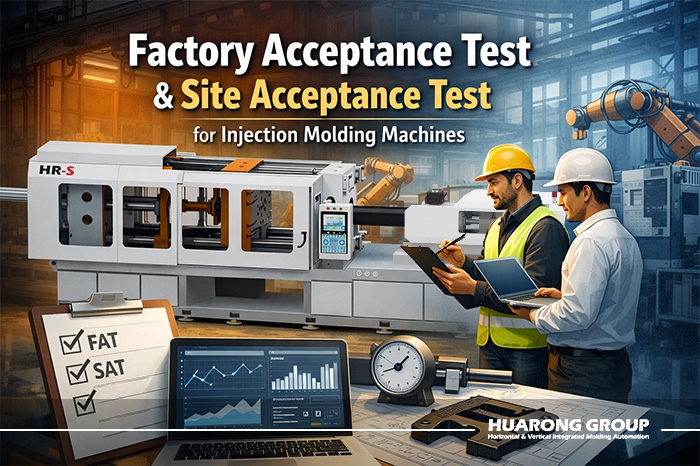
Factory Acceptance Test (FAT) and Site Acceptance Test (SAT) are essential quality assurance stages. Although FAT and SAT may sound similar, they serve different engineering and operational purposes.
- FAT (Factory Acceptance Test) verifies the machine’s integrity and that it conforms to contractual and functional specifications at the manufacturer’s facility.
- SAT (Site Acceptance Test) ensures the machine integrates into the production ecosystem and performs correctly once installed at the customer’s site.
These acceptance processes confirm whether a machine meets its contractual and operational expectations — from manufacturing completion to on-site readiness.
A Factory Acceptance Test is performed at the machine manufacturer’s facility before shipment. The goal is to verify, with customer participation, that the delivered injection molding machine matches the contract specification, operates correctly, and has all required safety functions in place. Although many FAT checks overlap with the manufacturer’s internal quality control activities, FAT is not an internal final inspection. FAT is an external acceptance step that fixes the official delivery condition of the machine, including configuration and key settings, before it is released for transport.
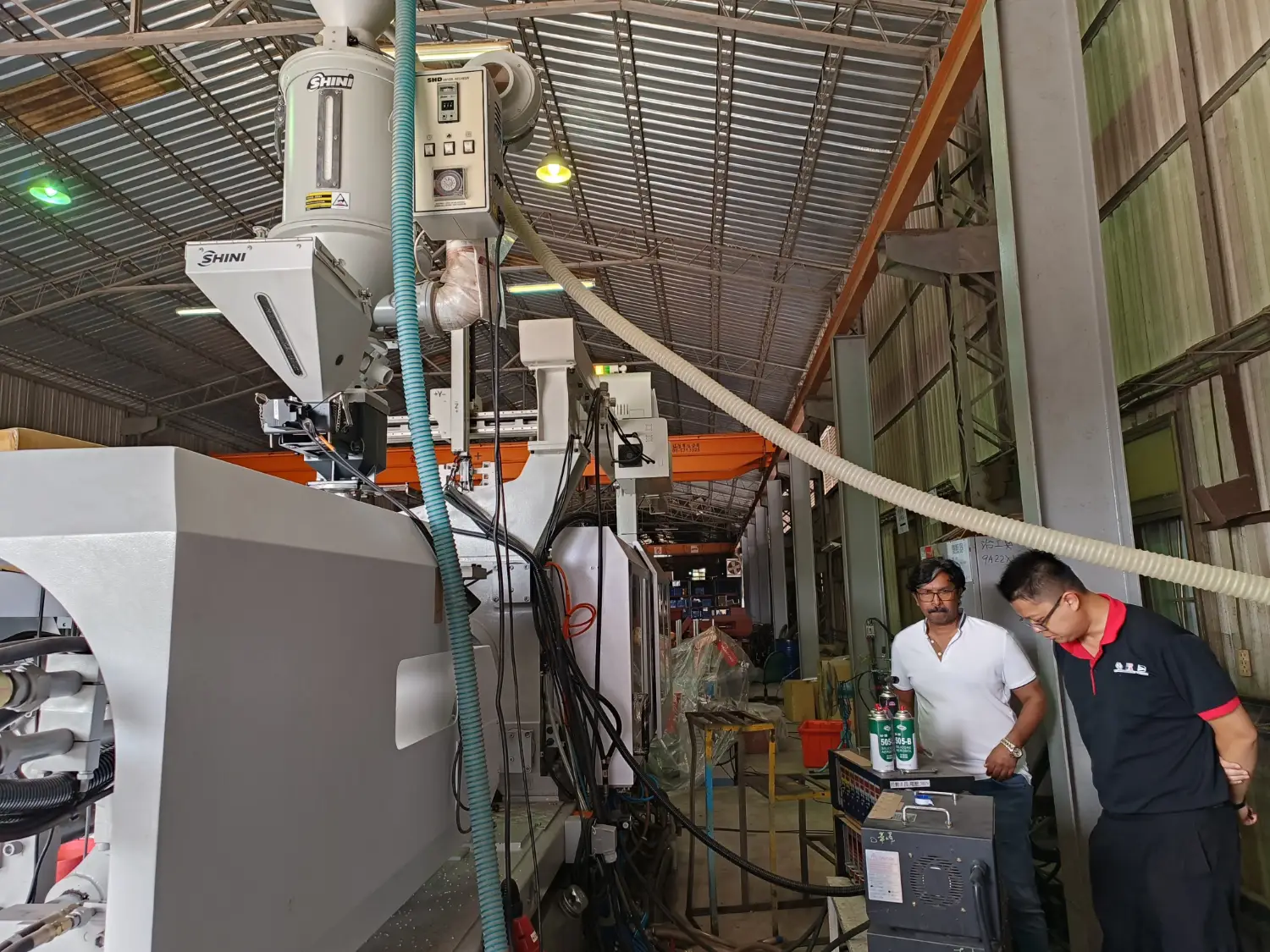
FAT verifies the machine as an engineering system, focusing on functional operation, safety interlocks, and stability under defined test conditions. It confirms that major subsystems such as clamping, injection and plasticizing, hydraulics or servo, ejector, core pull, and alarms behave as intended and within the agreed scope.
Once the machine is shipped, handling and installation can introduce variations. FAT documentation serves as the baseline reference, making it easier to pinpoint whether future issues stem from shipping, installation, or inherent manufacturing defects.
The following checkpoints are used as a customer witnessed acceptance checklist.
Confirm that the delivered machine matches the contract specification, including:
- Clamping force
- Opening stroke
- Tie-bar spacing and platen dimensions
- Injection unit size and screw diameter
- Maximum injection pressure and pump type
- I/O configuration, safety interlocks, and optional items
Inspect the machine condition prior to shipment, including:
- Hydraulic piping and hose routing
- Lubrication lines and fittings
- Electrical cabling and cable management
- Guards, covers, and warning labels
- Visible oil leakage and loose connections
Verify hydraulic stability under defined test conditions, including
- Pressure builds up and pressure holding stability
- Valve response and motion smoothness
- Oil temperature trend during continuous operation
- Abnormal noise, vibration, or excessive heat rise
- For servo systems, verify start-stop behavior, low-speed stability, standby energy saving state, and pressure response under load changes
Verify functional operation and protection logic, including
- Manual and automatic open and close movement
- Low-pressure mold protection effectiveness
- Repeatability of speed and position switching
- Clamping force build-up behavior and stability during continuous cycles
- Any drift or uneven movement should be recorded and investigated before shipment
Verify control stability rather than part quality, including
- Heating zone stabilization at setpoints
- Screw rotation speed control
- Back pressure stability
- Metering repeatability
- Injection speed control
- V P switchover behavior
- Holding pressure maintenance and stability
- Screw recovery time consistency
Verify motion repeatability and interlock logic, including
- Ejector forward and reverse smoothness
- Ejector interlock with the mold opening position
- Core pull direction, pressure, speed, and sequence logic
- Interlocks and forbidden motion checks
Verify and document safety-related functions, including
- Emergency stop
- Safety door interlocks
- Overpressure protection
- Oil level and oil temperature alarms
- Heater protection and overtemperature alarms
- Forbidden motion logic under unsafe states
Run a continuous dry cycle for 30 to 60 minutes to confirm
- No alarms under continuous cycling
- No leakage progression
- No abnormal vibration or noise
- Oil temperature trend remains within an expected range for the test condition
To fix the delivery baseline and support later troubleshooting, provide
- Signed FAT checklist and acceptance record
- Parameter backup files with version labeling
- Key settings records and test evidence, such as photos, screen captures, or trend logs
- Hydraulic and electrical schematics as agreed
- These deliverables define the agreed machine condition at shipment and enable objective comparison if deviations appear after transport or installation.
The Site Acceptance Test (SAT) is conducted after machine installation at the customer’s factory. It confirms that the machine operates reliably under actual site conditions, with all utilities and peripherals properly connected.
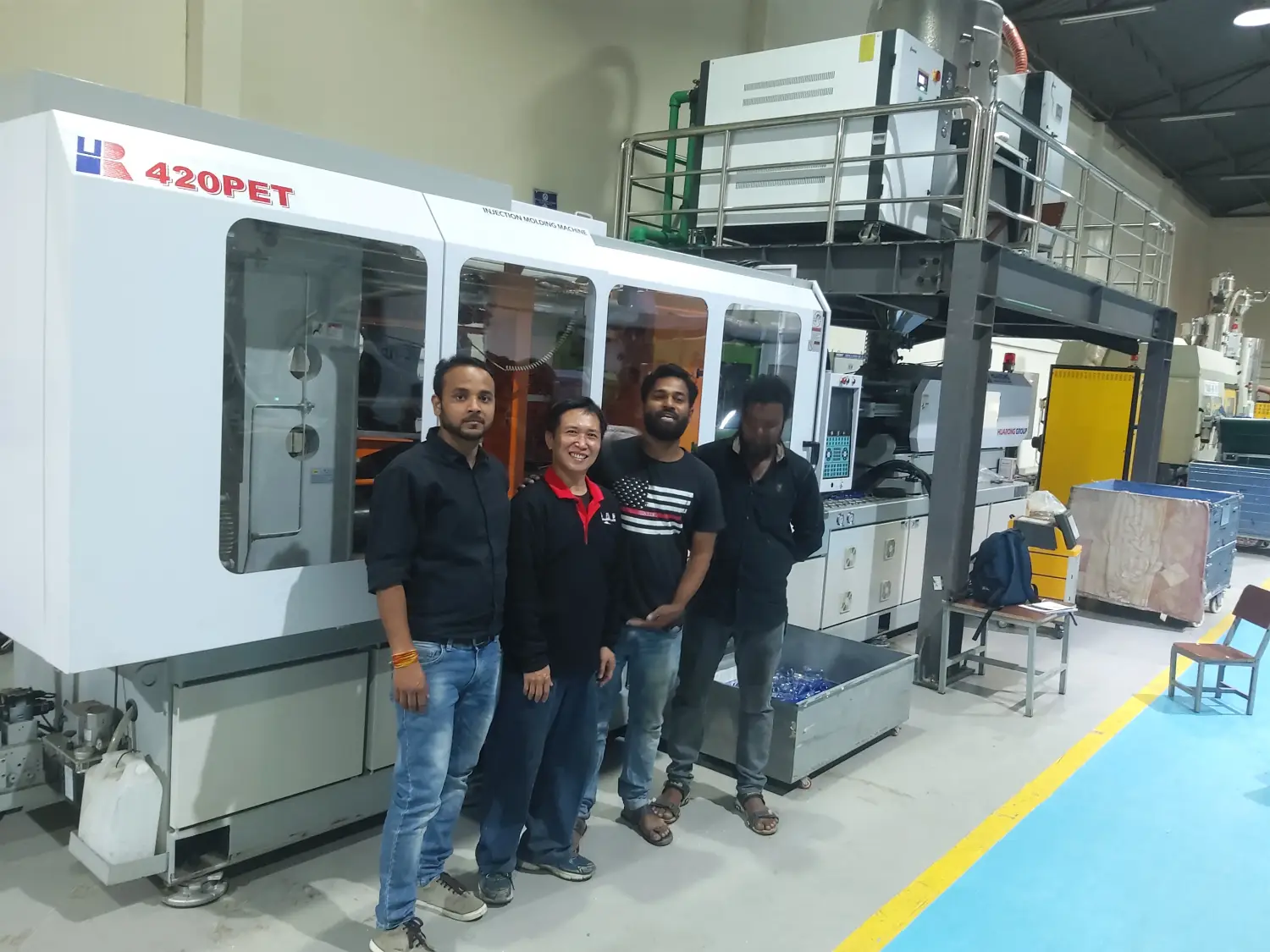
SAT validates the machine-environment system. Issues such as insufficient cooling, unstable voltage, or poor air quality are not machine defects but site-related conditions. Proper documentation helps prevent liability confusion.
Before powering on, verify:
- Electrical supply (voltage, frequency, grounding)
- Cooling water temperature and flow
- Compressed air quality
- Floor leveling
- Oil and hydraulic fluid quality
Engineers confirm that the machine is level, correctly phased, and properly connected to all utilities. Safety interlocks and I/O signals between the molding machine and auxiliary equipment (like robots or conveyors) are retested.
Further reading: Injection Molding Auxiliary Equipment: A Beginner’s Guide
Further reading: Injection Molding Auxiliary Equipment (Part 2): Advanced Systems & Special Processes
The machine is tested without mold or material to check for stable motion sequences, proper oil temperature, and absence of alarms. This ensures the system is mechanically and electrically sound.
SAT mold trials typically proceed through three levels:
- Installation verification — confirms motion and safety.
- Basic molding verification — ensures stable part ejection and operation.
- Production verification — confirms agreed cycle time, weight stability, and dimensional accuracy (only if defined in contract).
Final acceptance requires knowledge transfer — operator training, maintenance guidance, parameter backups, and signed acceptance records.
Further reading: Injection Molding Machine Maintenance PDF and Checklist
- Contract Stage – Define acceptance standards, FAT/SAT levels, and mold trial scope.
- FAT Stage – Conduct functional and safety testing, finalize records, and ship machine.
- SAT Stage – Verify site performance, complete operator training, and hand over responsibility.
| Item | FAT (Factory Acceptance Test) | SAT (Site Acceptance Test) |
|---|---|---|
| Primary Goal | Verify the machine meets contract specs, functions correctly, and is safe before shipment | Verify the machine runs correctly after installation and integrates with the customer site environment |
| Location | Manufacturer factory | Customer factory |
| Timing | After machine build is completed, before shipment | After installation, utility hookup, and peripheral connections |
| What It Validates | The machine itself as delivered | The machine plus site conditions as a combined system |
| Typical Inputs | Standard factory utilities and controlled conditions | Actual site utilities, floor condition, operator practice, and peripherals |
| Core Focus Areas | Contract conformity, functional operation, safety verification, stability run, baseline documentation | Site pre check, installation verification, I/O and peripheral integration, no load run, mold trial readiness |
| Mold Trial Role | Optional and typically used to confirm basic functional molding only, unless contract defines more | Recommended to confirm on site readiness; production level targets only if contract defines them |
| Pass Criteria Basis | Contract specification and signed FAT checklist | Contract plus confirmed site conditions and agreed SAT scope or levels |
| Key Deliverables | Signed FAT record, parameter backup with version label, configuration baseline, test evidence | Signed SAT record, site condition pre check, parameter backup, training handover records |
| Main Risk It Reduces | Shipping a machine that does not meet spec or lacks required functions | Misattributing site utility or integration issues to machine defects, delaying production start |
No. FAT ensures mechanical and control functionality — not molded part quality.
Environmental differences, such as power supply or cooling, can alter performance at the customer site.
They define the machine’s reference state and allow easy troubleshooting later.
Yes, but only if transport risk is minimal and both parties agree that installation won’t affect performance.
When executed properly, Factory Acceptance Test (FAT) and Site Acceptance Test (SAT) turn machine delivery into a controlled engineering process rather than a potential source of conflict.
For injection molding machine manufacturers and buyers alike, these tests establish trust, accountability, and performance validation — ensuring every machine enters production with confidence and clarity.
- Group Name: Huarong Group
- Brand: Huarong, Yuhdak, Nanrong
- Service Offerings: Injection Molding Machine, Vertical Injection Molding Machine, Injection Molding Automation
- Tel: +886-6-7956777
- Address: No.21-6, Zhongzhou, Chin An Vil., Xigang Dist., Tainan City 72351, Taiwan
- Official Website: https://www.huarong.com.tw/