Warpage Analysis in Injection Molding:Influences of Mold, Material, and Processing
2025-12-11 10:24:14

Plastic injection molding, as a highly efficient mass-production technology in modern manufacturing, enables the rapid production of high-precision and highly consistent molded parts. However, even with advanced injection molding equipment, defects cannot be fully avoided.
Warping is one of the most common injection molding defects; it leads to poor appearance, limited functionality, and even affects assembly accuracy. Warpage usually results from multiple factors acting together. Even slight deviations may cause the molded part to twist or deform after ejection. Therefore, understanding the causes and prevention strategies of warpage is essential for ensuring product quality, reducing defect rates, and maintaining stable production.
Warpage refers to the phenomenon in which a molded plastic part deviates from its designed dimensions and intended contour after demolding, often appearing as local or overall bending, twisting, lifting, or deformation. The severity of warpage varies depending on the product geometry, material characteristics, and processing conditions. Minor warpage may only affect appearance, while severe warpage can lead to functional failure or assembly issues.
Unlike other injection molding defects, warpage is fundamentally an overall deformation caused by internal stress imbalance and uneven cooling shrinkage, rather than a simple surface defect.
| Defect Type | Characteristics | Differences |
| Warpage | Overall or local twisting, lifting | Caused by uneven material shrinkage or internal stress leading to overall deformation |
| Sink Mark | Surface indentation | Common in thick-wall areas; caused by localized shrinkage or insufficient holding pressure |
| Flow Mark | Flow lines, wavy patterns on surface | Aesthetic defect, usually does not affect functionality |
| Weld Line | Thin line formed at melt-front meeting point | May reduce local strength but is not an overall warpage deformation |
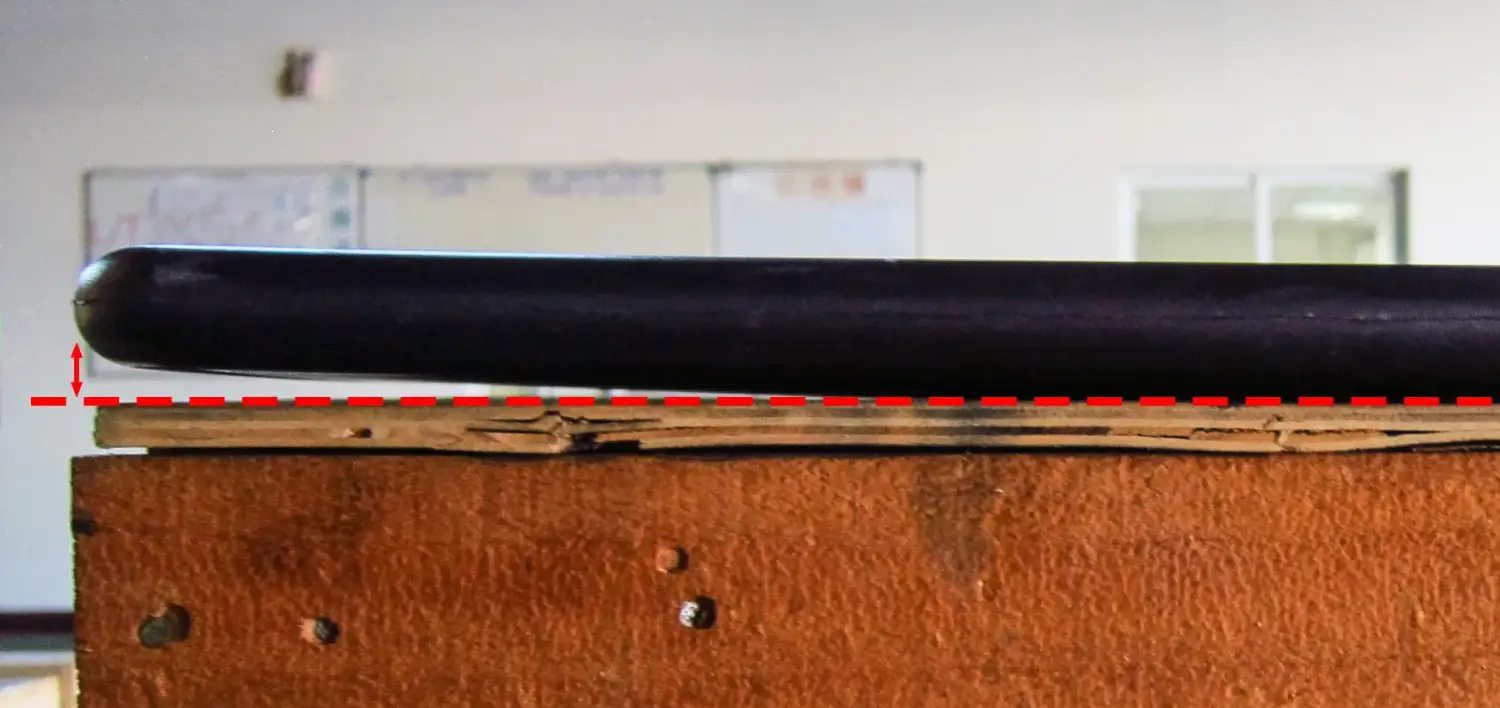
Warpage is the result of multiple interacting factors and can be analyzed from the following five aspects:
- Uneven cooling system:Uneven distribution of cooling channels in the mold leads to localized temperature differences, causing uneven shrinkage and internal stress variations that result in warpage.
- Improper gate and runner design:Incorrect gate location or size causes uneven melt flow and inconsistent fiber or filler orientation, increasing the risk of warpage.
- Insufficient mold precision:Uneven mold surfaces or dimensional inaccuracies affect melt filling uniformity and cooling rate, leading to localized warpage.
- Pressure imbalance in multi-cavity molds:If cavity-to-cavity pressure distribution is uneven, molded parts may warp due to shrinkage variations.
- Thermal expansion differences in mold:Uneven thermal expansion of mold steel or poor temperature control may also cause warpage after demolding.
- Insufficient or excessive injection pressure:Low pressure causes incomplete filling and weak areas; excessive pressure increases residual stress. Both conditions can lead to warpage.
- Too short or too long holding pressure:Insufficient holding time causes incomplete packing and uneven cooling; excessive holding time increases internal stress accumulation.
- Excessive injection speed:High injection speed increases shear stress in the cavity, causing uneven fiber orientation and warpage after cooling.
- Insufficient screw residence time:Material may not be fully melted, leading to inconsistent molecular arrangement and warpage.
- Improper barrel and mold temperature control:Low temperature results in poor melt uniformity; excessive temperature increases internal stress. Precise temperature control is essential for uniform cooling.
- Non-uniform wall thickness:Cooling speed and shrinkage are strongly related to thickness; uneven thickness easily causes localized warpage.
- Lack of ribs or support structure:Large flat or thin-wall components warp easily if ribs or structural supports are insufficient.
- Complex geometry:Long thin plates, curved surfaces, or raised features are more prone to warpage.
- Improper gate design:Uneven flow direction results in inconsistent fiber or filler orientation.
- Semi-crystalline plastics:Materials such as PP, PE, and POM exhibit higher shrinkage and flow-direction-dependent contraction, making them more prone to warpage.
- Amorphous plastics:Materials such as PC and PS have more uniform shrinkage but are still affected by uneven cooling.
- Fiber-reinforced materials:Inconsistent fiber orientation leads to shrinkage variation and higher warpage risk.
- Insufficient material drying:Excess moisture causes bubbles and uneven shrinkage.
- Improper filler or additive ratio:Alters the shrinkage rate and flow behavior, potentially causing warpage.
- Improper demolding or handling:External force on a part that has not fully cooled can easily cause warping.
- Lack of strict quality control:Failure to detect warpage early may accumulate issues and lead to large-batch defects.
- Unstable processing environment:Variations in temperature, humidity, or inadequate equipment maintenance affect cooling and shrinkage consistency.
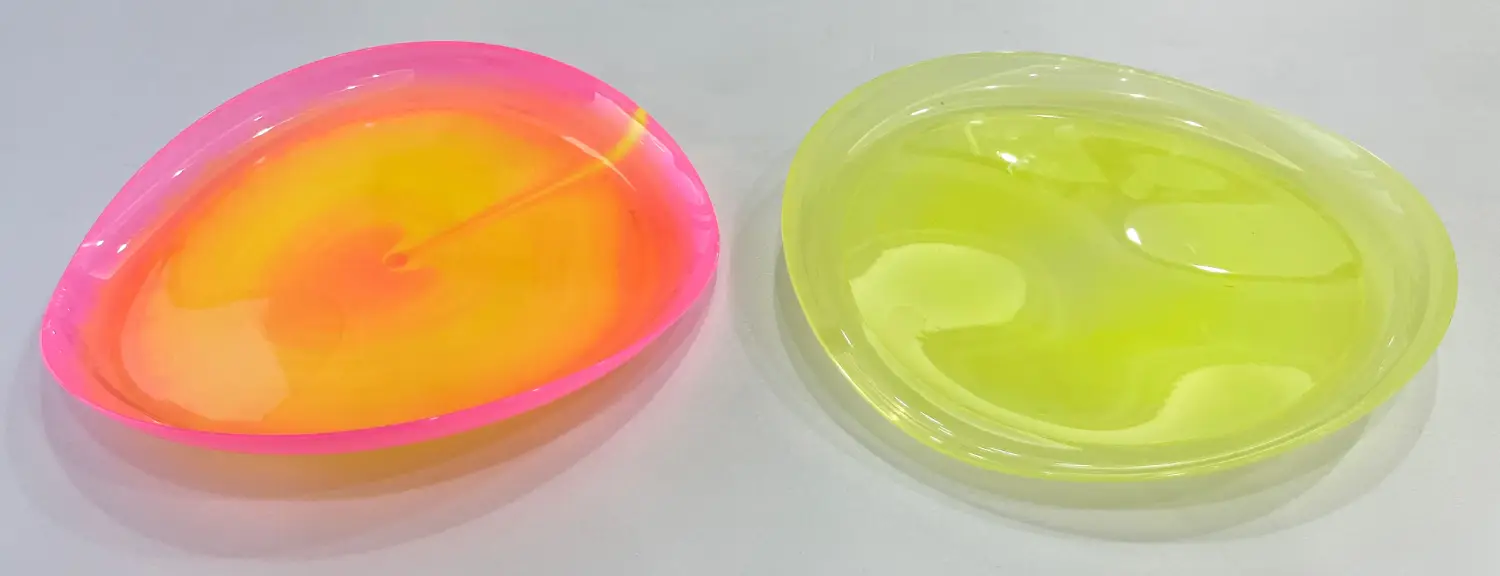
Preventing warpage requires coordinated control across four dimensions:design, mold, material, and processing.
- Uniform wall thickness to avoid abrupt thickness changes.
- Add ribs or support structures to large thin-wall areas.
- Use curved transitions and rounded corners to reduce stress concentration.
- Optimize gate and runner design to ensure one-directional flow and reduce inconsistent fiber or filler orientation.
- Uniform cooling channel layout and mold-temperature control, ensuring mold temperature variation stays within ±5–10°C.
- Maintain mold surface finish and dimensional accuracy to prevent localized shrinkage differences.
- Balance cavity pressure in multi-cavity molds to avoid inconsistent shrinkage.
- Proper venting design to reduce trapped air and void formation.
- Select low-shrinkage and high-stability materials according to product design.
- For fiber-reinforced materials, control fiber orientation uniformity to reduce local warpage.
- Ensure proper drying to avoid moisture-induced bubbles or uneven shrinkage.
- Maintain stable ratios of additives and fillers to ensure predictable shrinkage behavior.
- Adjust injection pressure, speed, and holding time to ensure proper filling and cooling.
- Control barrel and mold temperatures to maintain uniform melt flow and consistent cooling.
- Increase screw residence time to ensure complete melting.
- Maintain a stable cycle time to prevent internal stress variation caused by overheating or overcooling.
Warpage affects product appearance and functionality, and may also increase production cost and reduce efficiency. To effectively control warpage, one must implement coordinated measures in design optimization, mold precision and cooling management, material selection and handling, and precise processing parameter control. Through comprehensive technical control and continuous improvement, warpage risk can be significantly reduced, ensuring stable part quality and enhancing market competitiveness and customer satisfaction.
- Group Name: Huarong Group
- Brand: Huarong, Yuhdak, Nanrong
- Service Offerings: Injection Molding Machine, Vertical Injection Molding Machine, Injection Molding Automation
- Tel: +886-6-7956777
- Address: No.21-6, Zhongzhou, Chin An Vil., Xigang Dist., Tainan City 72351, Taiwan
- Official Website: https://www.huarong.com.tw/