Injection Molding Back Pressure: Settings, Functions, Defect Prevention & Optimization Guide
2025-10-30 08:59:51
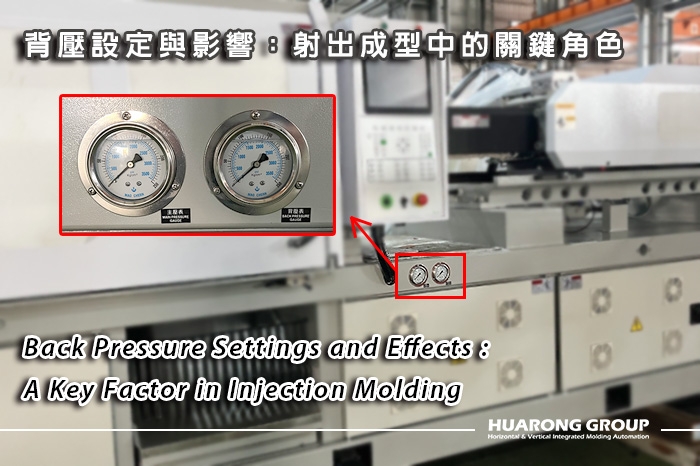
Injection molding back pressure is a key but often overlooked parameter in the plasticizing stage, impacting melt quality, shot consistency, filling stability, accuracy, appearance, and performance. At Huarong, we stress that controlling back pressure is vital for stable, high-performance injection molding in automotive, packaging, medical, electronics, and consumer fields. Proper settings improve melt homogeneity, reduce defects, optimize fiber dispersion, and boost overall quality. This guide offers a comprehensive, technically precise overview to surpass existing resources.
Back pressure in injection molding is the reverse pressure applied to the screw during plastication as it rotates and retracts to accumulate molten polymer. Hydraulic or servo systems generate this resistance and act directly against the screw motion. By doing so, injection molding back pressure:
- Compresses the molten plastic
- Increases shear and mixing energy
- Promotes uniform temperature and viscosity
- Helps expel air and moisture
- Stabilizes melt density before injection
Without proper back pressure in injection molding, even a well-designed mold and machine cannot consistently produce high-quality parts, because the melt itself is not sufficiently prepared.
Different injection molding machine architectures generate back pressure in injection molding using different mechanisms:
| Machine Type | How Back Pressure Injection Molding Resistance Is Generated | Control Characteristics | Typical Applications |
|---|---|---|---|
| Hydraulic Injection Molding Machine | Back pressure is produced by restricting hydraulic oil flow through valves | Stable and mature system; slower response; lower precision | General-purpose molding; cost-sensitive production |
| Servo Injection Molding Machine (Hybrid) | Servo motor drives hydraulic pump; back pressure controlled by servo pump pressuren | Faster response; higher precision; energy-saving | High-efficiency mass production; automotive; packaging |
| All-Electric Injection Molding Machine | Electric servo motor + ball screw directly apply resistive torque to create back pressure | Ultra-high precision; very fast response; cleanroom-friendly | Precision molding; medical and optical components |
Suggest machine: Servo Injection Molding Machines – HRS & HRFC Series
Related article: Energy Saving Injection Molding: The Key to Lower Costs, Higher Productivity, and ESG Readiness
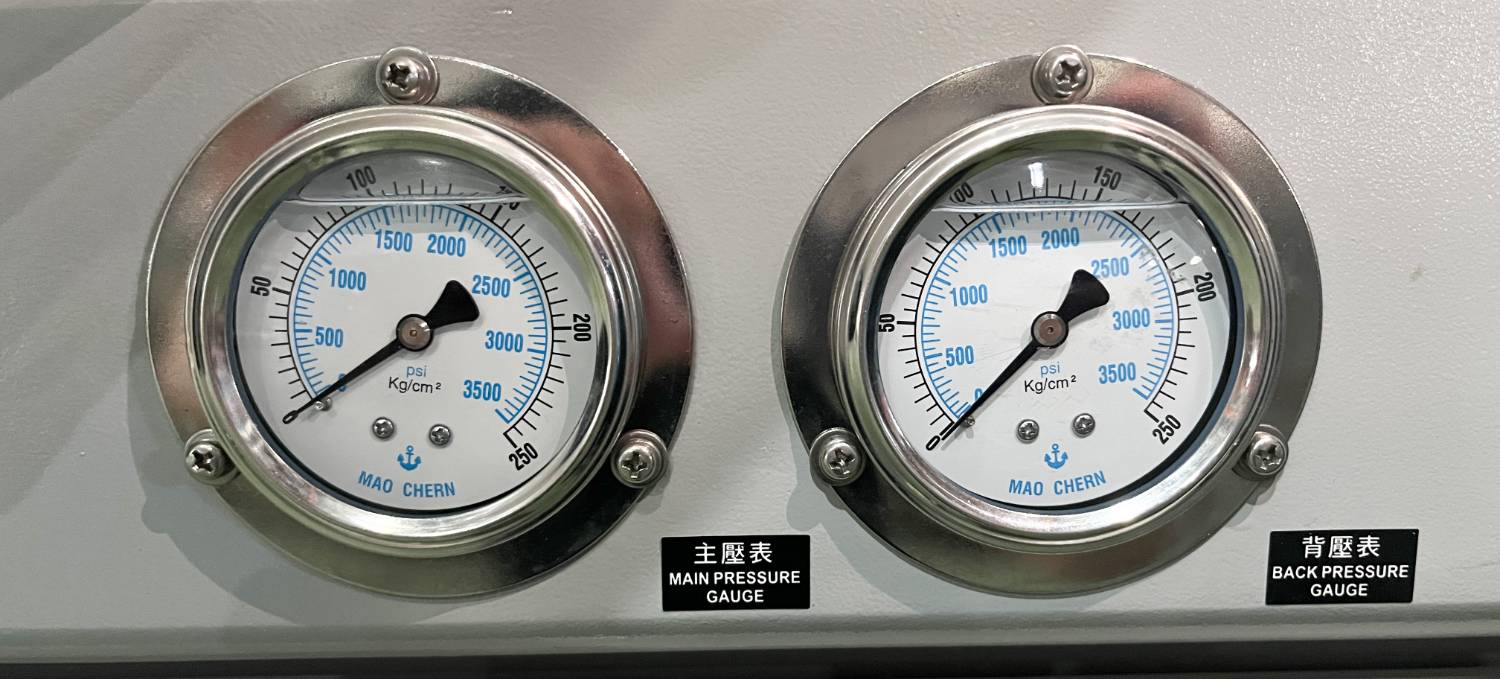
Back pressure plays multiple critical roles in injection molding, which can be summarized as follows:
One of the primary technical roles of injection molding back pressure is to enhance melt homogeneity and mixing efficiency. As back pressure increases:
- Shear between screw flights rises
- Pellets are fully melted in the transition and metering zones
- Temperature distribution becomes more uniform
- Viscosity variation is reduced along the screw channel
This is critical for:
- Color masterbatch dispersion
- Additives and stabilizers
- Regrind or PCR blends
- Highly filled or glass-reinforced materials
Injection molding demands consistent shot volume and melt density to achieve stable dimensions and weight. Injection molding back pressure compresses the molten polymer in front of the non-return valve (NRV), increasing and stabilizing melt density. As a result:
- Shot weight variation decreases
- Cushion becomes more repeatable
- Multi-cavity balance improves
- Short shot/flash alternation issues are reduced
Back pressure improves degassing inside the barrel. During plastication, back pressure in injection molding:
- Forces trapped air and volatile gases out of the melt
- Helps expel moisture from hygroscopic materials (with proper drying)
- Reduces internal bubbles and voids
- Minimizes silver streaks (splay) caused by moisture or gas release during injection
Further reading regarding injection: How Does Injection Molding Work? Step-by-Step Process
Moderate injection molding back pressure increases shear heating, which raises melt temperature slightly and reduces viscosity. This has a direct impact on:
- Filling long flow paths
- Thin-wall injection molding
- Complex rib or boss structures
- High-cavity molds with narrow gates
- Hot runner balance and pressure distribution
The compression effect of back pressure injection molding helps compact the melt structure and reduce internal voids. This yields:
- Higher material density
- Improved tensile and impact strength
- Enhanced fatigue resistance
- Better weld line strength (when combined with proper packing)
- Smoother, glossier surface finish
The influence of back pressure in injection molding can be seen across several quality dimensions:
- Surface Quality
- Uniform gloss
- Reduced streaks, bubbles, and flow marks
- Fewer burn marks related to trapped gas
- Dimensional Accuracy
- Stable shot weight and cushion
- Lower cavity-to-cavity variation
- More predictable shrinkage and reduced warpage
- Mechanical Performance
- Denser, more uniform internal structure
- Better impact and tensile properties
- More consistent fiber orientation and dispersion
The optimal injection molding back pressure depends on material rheology, screw design, and part requirements. The following ranges are widely used as starting references:
| Material Type | Suggested Injection Molding Back Pressure Range | Remarks |
|---|---|---|
| General Plastics (ABS, PP, PE) | 500–1000 psi (≈3–7 MPa) | Suitable for most standard applications |
| Glass-Filled or Highly Filled Materials | 700–1200 psi | Higher mixing energy needed to disperse fibers/fillers |
| Heat-Sensitive Materials (PVC, POM) | 300–600 psi | Avoid excessive shear and degradation |
We then refine back pressure injection molding settings based on:
- Melt temperature stability
- Screw recovery time
- Part appearance and weight
- Presence of degradation or burning
We recommend a structured optimization sequence for injection molding back pressure:
- Start from a Low Back Pressure Setting
Establish a stable baseline at the lowest practical back pressure. - Adjust Screw Speed (RPM) First
Find a screw speed that achieves complete melting without overheating. Screw speed and back pressure interact strongly. - Increase Injection Molding Back Pressure Gradually (≈50 psi per step)
After each step, evaluate:- Shot weight stability
- Melt appearance (color, clarity, absence of unmelted pellets)
- Surface quality of the part
- Identify the Optimal Back Pressure Injection Molding Point
Aim for:- Homogeneous melt
- Stable cushion
- Acceptable screw torque
- No signs of burn or degradation
- Verify with Data and Long-Term Monitoring
Track process indicators such as:- Shot weight trends
- Screw recovery time
- Pressure curves
- SPC charts
The objective is always the same: use the lowest injection molding back pressure that still guarantees excellent melt quality and stability.
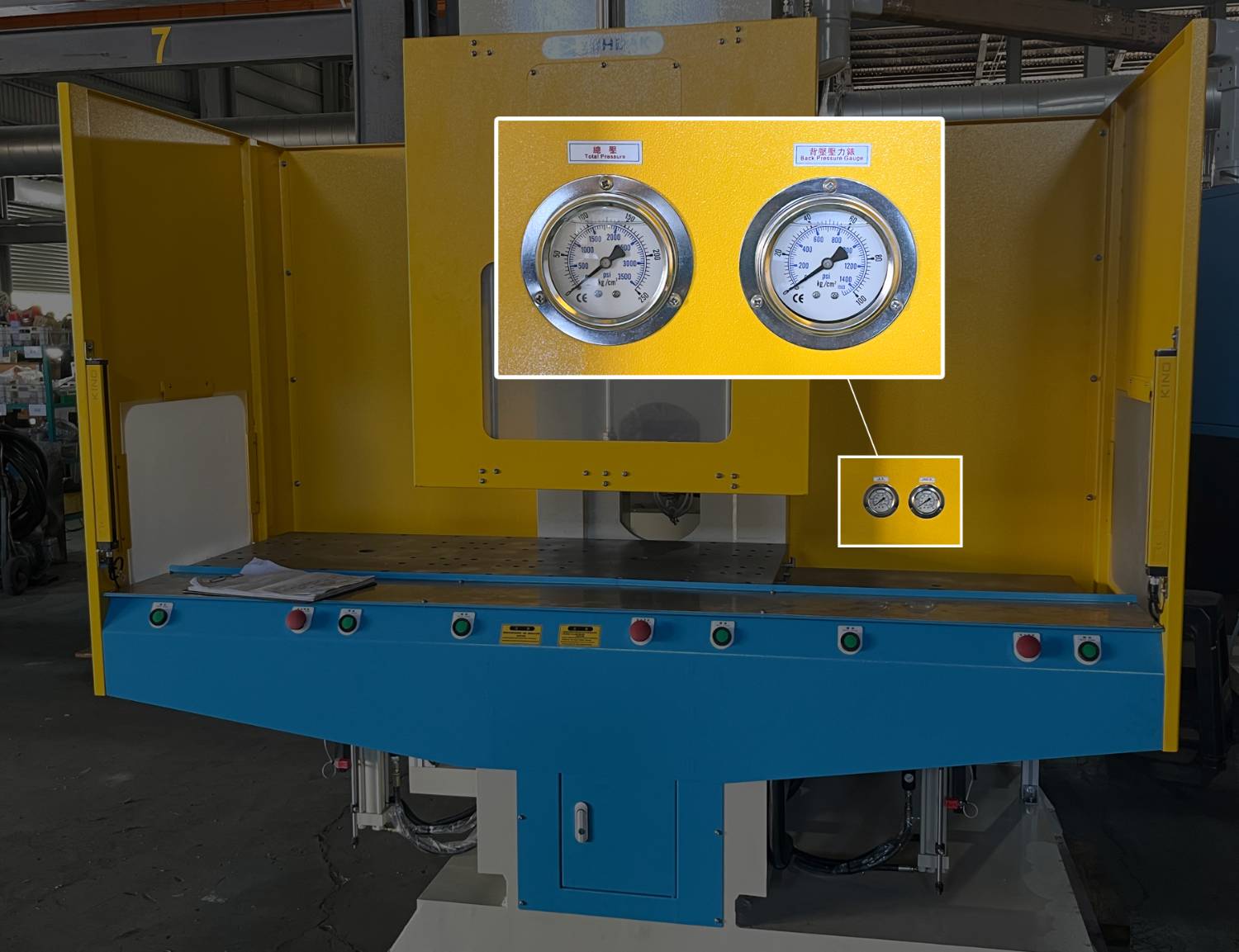
Below are typical issues associated with incorrect back pressure in injection molding, along with practical corrective actions:
| Problem | Likely Cause Related to Injection Molding Back Pressure | Corrective Action |
|---|---|---|
| Melt Overheating / Yellowing | Back pressure injection molding setting too high + high RPM | Lower back pressure; reduce screw speed; adjust barrel temperature |
| Poor Color Dispersion / Streaks | Back pressure in injection molding too low → weak shear mixing | Increase back pressure gradually; verify masterbatch dispersion |
| Bubbles / Voids / Splay | Inadequate degassing due to insufficient back pressure or poor drying | Increase back pressure; improve drying; check decompression and venting |
| Short Shots / Inconsistent Shot Size | Unstable melt density; worn NRV; insufficient back pressure | Raise back pressure; inspect/replace NRV; check material feed consistency |
| Flash or Overpacking | Excessively dense, overheated melt due to too high back pressure | Reduce back pressure; adjust V/P switchover and packing profile |
| High Screw Torque / Excessive Wear | Chronic overuse of high back pressure injection molding settings | Optimize screw design; lower back pressure; review material combination |
Further reading: Common Injection Molding Defects: Causes, Types, and Solutions
To get the most out of back pressure injection molding, we apply the following best practices:
- Use Data, Not Guesswork
Always correlate back pressure in injection molding changes with measured shot weight, quality data, and process curves. - Match Back Pressure to Screw Speed
High RPM + high back pressure = excessive shear heat. Balance both to protect heat-sensitive materials. - Consider Material Type and Application
- Glass-filled: slightly higher back pressure for dispersion
- Optical or transparent: moderate back pressure to avoid haze and bubbles
- Microcellular or foamed: lower back pressure to protect cell structure
- Check Non-Return Valve Condition
Worn NRVs lead to unstable cushions even if injection molding back pressure seems correct. - Standardize and Document Settings
Lock in successful back pressure injection molding parameters in your process sheets to avoid shift-to-shift variation.
Injection molding back pressure is not a minor fine-tuning parameter; it is a key driver of melt quality, process stability, and final part performance. By understanding and optimizing back pressure in injection molding, we:
- Achieve more homogeneous melt and better color dispersion
- Stabilize shot size and cavity filling
- Reduce defects such as splay, bubbles, and short shots
- Enhance structural strength and surface appearance
- Improve overall process capability and productivity
Consistently applying sound injection molding back pressure practices enables more reliable production, fewer rejects, and higher value for both molders and end customers.
- Group Name: Huarong Group
- Brand: Huarong, Yuhdak, Nanrong
- Service Offerings: Injection Molding Machine, Vertical Injection Molding Machine, Injection Molding Automation
- Tel: +886-6-7956777
- Address: No.21-6, Zhongzhou, Chin An Vil., Xigang Dist., Tainan City 72351, Taiwan
- Official Website: https://www.huarong.com.tw/