Five Common Vertical Injection Molding Machine Selection Mistakes
2026-07-23 13:18:42
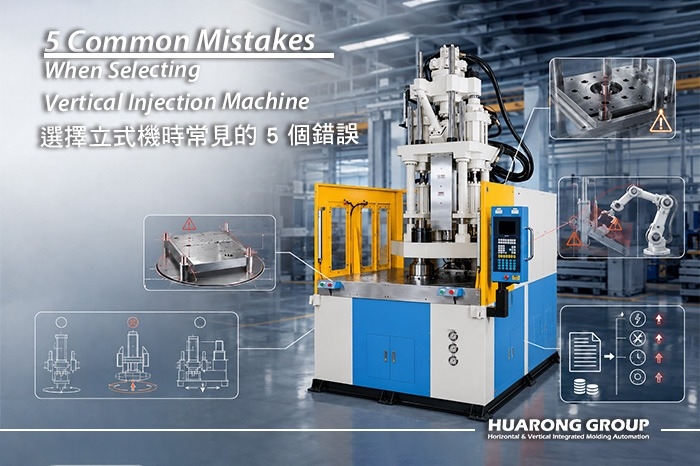
Selecting a vertical injection molding machine involves more than confirming clamping force and shot capacity. A machine may meet these basic specifications but still perform poorly if the mold and fixture do not fit the working table, the inserts cannot be positioned consistently, or the production cell cannot support future automation.
To reduce selection risk, buyers should verify five areas before approving a machine:mold and table compatibility, insert positioning, automation planning, machine configuration, and total operating cost.
For a complete explanation of machine specifications, see Vertical Injection Molding Machine Specifications Explained:A Buyer's Guide.
| Common mistake | Possible production impact | What to verify |
|---|---|---|
| Selecting by clamping force alone | Mold or fixture interference and fewer inserts per cycle | Mold size, fixture size, usable table area, travel, and loading clearance |
| Treating insert accuracy as a machine specification | Insert movement, unstable dimensions, and higher rejection risk | Fixture location, table repeatability, mold guidance, sensors, and closing sequence |
| Planning automation after installation | Mechanical modification, additional downtime, and limited robot access | Robot path, safety layout, interfaces, utilities, and reserved space |
| Choosing a familiar machine configuration | Slow loading, poor ergonomics, or an unsuitable production sequence | Insert geometry, production volume, station count, and injection orientation |
| Comparing only the purchase price | Higher energy, maintenance, quality, and downtime costs | Lifetime energy, spare parts, service, flexibility, and production losses |
Clamping force is one of the easiest specifications to compare. Buyers often begin an inquiry by requesting a 60 ton, 100 ton, or 150 ton machine before providing the mold, fixture, or insert information.
However, sufficient clamping force does not confirm that the mold and loading fixture will fit the machine. For vertical insert molding, the , rotary table diameter, tie-bar spacing, mold height, and available loading space may be equally important.
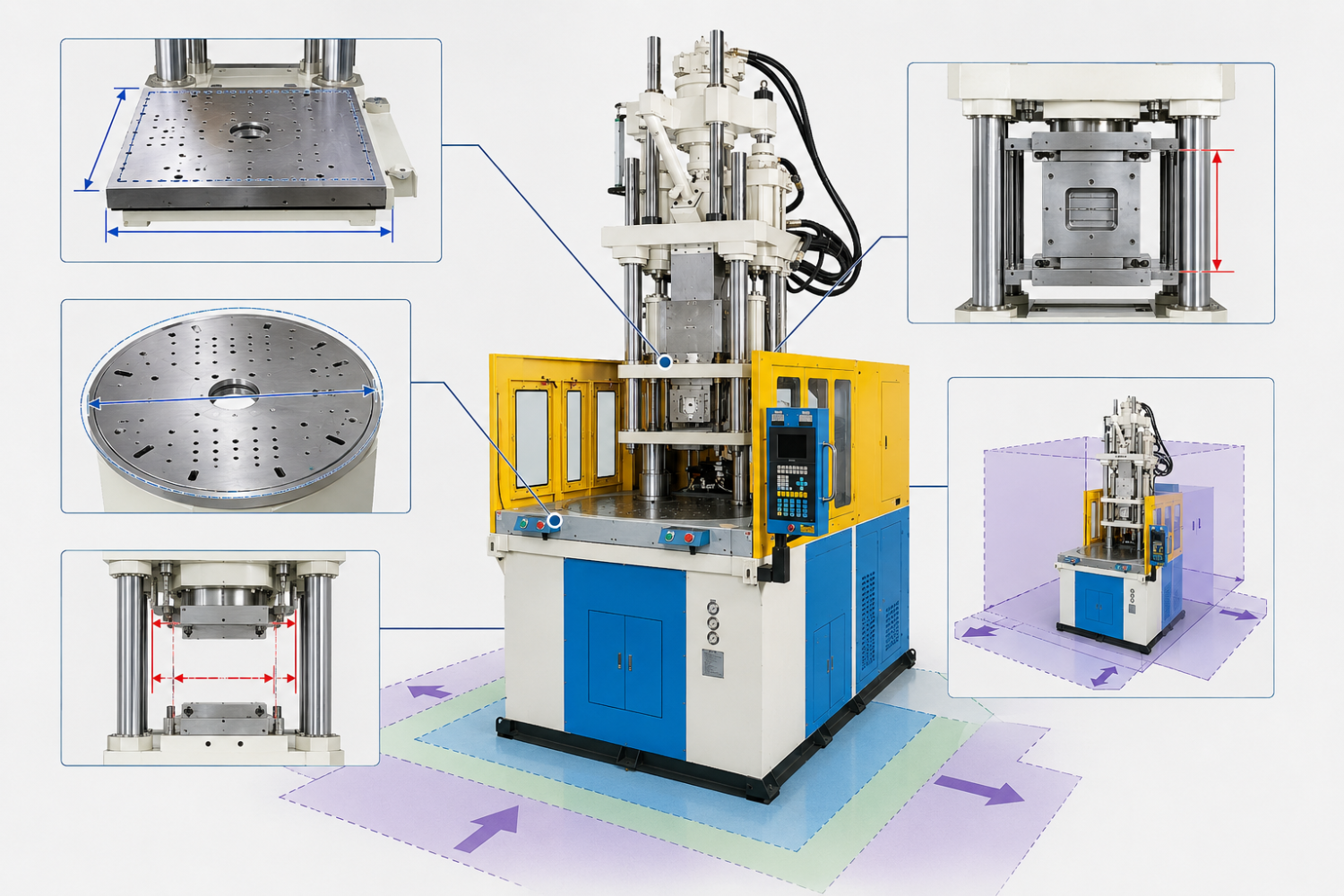
A machine has sufficient clamping force for the projected molding area. After installation, the customer finds that the insert fixture extends beyond the usable table area or interferes with the tie-bars.
The mold may technically fit, but the original loading fixture cannot be used. The customer must redesign the fixture, reduce the number of inserts per cycle, or accept a slower manual loading procedure. The machine can produce the part, but it cannot achieve the intended output.
Confirm the following dimensions using the actual mold and fixture drawings:
| Item | Required information |
|---|---|
| Mold dimensions | Length, width, closed height, and weight |
| Fixture dimensions | Complete length, width, and height, including handles, wires, and protruding parts |
| Working table | Sliding table size or rotary table diameter |
| Usable mold area | Space remaining after considering tie-bars, guards, and machine structures |
| Loading clearance | Space required for an operator, robot gripper, or insert feeder |
| Mold mounting | Bolt pattern, mounting holes, and T-slot arrangement |
| Machine movement | Table travel, mold opening stroke, and ejector stroke |
Vertical injection molding machines use gravity to assist insert placement, but gravity does not guarantee that every insert will remain correctly positioned during mold closing and injection.
Insert positioning is the result of the complete production system. It depends on the machine, mold, fixture, insert tolerance, loading method, locating structure, sensing system, and mold-closing sequence.
A metal terminal appears to be correctly seated when it is placed in the fixture. During the final stage of mold closing, the insert moves slightly because it is not adequately supported or because the closing speed is too high.
The molded part may look acceptable but fail dimensional, sealing, or electrical inspection. Changing the injection parameters alone will not solve the problem because the movement occurred before injection.
- Insert and fixture design:The fixture must locate the insert consistently without damaging or deforming it. Locating pins, nests, vacuum holding, magnets, or mechanical clamps may be required depending on the insert material and shape.
- Mold guidance and alignment:The mold should guide both halves into position without creating lateral force that moves the insert. Mold alignment and fixture alignment should be reviewed together.
- Table positioning:For sliding-table or rotary-table applications, the table must stop in a repeatable position that matches the mold and fixture design.
- Mold-closing sequence:The machine should allow staged closing. Fast movement may be used during the initial stroke, followed by controlled low speed and low pressure near the insert.
- Insert confirmation:For critical components, the process may require an insert presence sensor, orientation sensor, vision inspection, or mold-protection sequence.
1. What insert displacement can the product tolerate?
2. How will the insert be located and held?
3. Is insert presence or orientation confirmation required?
4. Will insert or fixture temperature affect positioning?
5. Does the mold require multiple closing speeds and pressures?
6. Has the complete sequence been tested at the intended production speed?
Many manufacturers begin with manual insert loading and plan to add automation when production volume increases. This can be a reasonable investment strategy. The mistake is not starting manually. The mistake is purchasing a machine without preserving the physical space, interfaces, and control functions required for later automation.
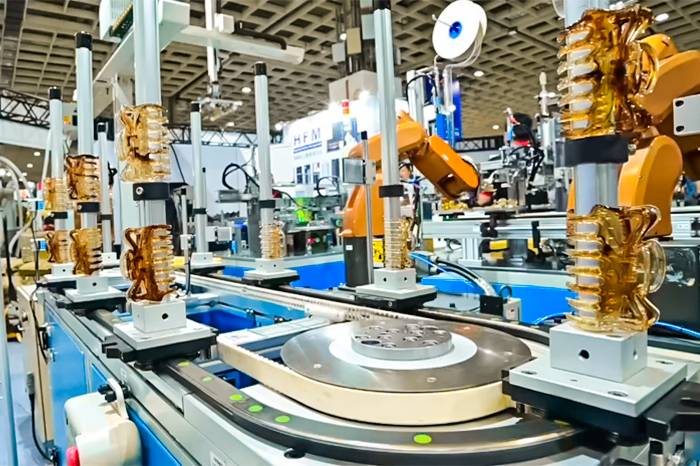
After operating manually for a period of time, the factory decides to add a robot and insert a feeder. During the integration study, several limitations are discovered:
- The safety guard blocks the preferred robot approach direction.
- The table stopping method does not meet the positioning needs of the robot.
- The controller does not have sufficient input and output capacity.
- The production area has no reserved space for the feeder or rejected-part station.
- Pneumatic, hydraulic, or electrical connections must be added.
- The robot and machine safety sequences require additional modification.
The automation project may still be possible, but it requires more mechanical work and a longer production interruption.
| Planning item | Why it matters |
|---|---|
| Robot approach direction | Determines machine orientation, guard design, and available floor space |
| Table stop position | Affects robotic insertion and part removal |
| Machine and robot interface | Coordinates mold, ejector, table, and robot movements |
| Controller capacity | Reserves input, output, and program sequences |
| Safety system | Defines doors, fences, light curtains, and interlocks |
| Utility connections | Supplies air, hydraulic circuits, and electrical power |
| Feeder and vision space | Prevents future equipment from blocking operation or maintenance |
| Reject and inspection station | Separates defective or unconfirmed parts from normal production |
The communication interface should be selected according to its purpose. EUROMAP 67 defines the connection between an injection molding machine and a handling device or robot. EUROMAP 77 covers data exchange between an injection molding machine and MES, while EUROMAP 79 addresses data exchange between injection molding machines and robots.
Vertical injection molding machines are available with different injection directions, table structures, and clamping arrangements. Buyers sometimes choose the same configuration they have used before, even when the new insert, mold, or production sequence is different.
A familiar machine may still be an inefficient machine for the new product.
1. Insert dimensions and shape
2. Parts extending outside the mold
3. Number of inserts per cycle
4. Manual or automated loading
5. Required production volume
6. Number of loading, molding, and cooling stations
7. Gate location and injection direction
8. Number of materials or colors
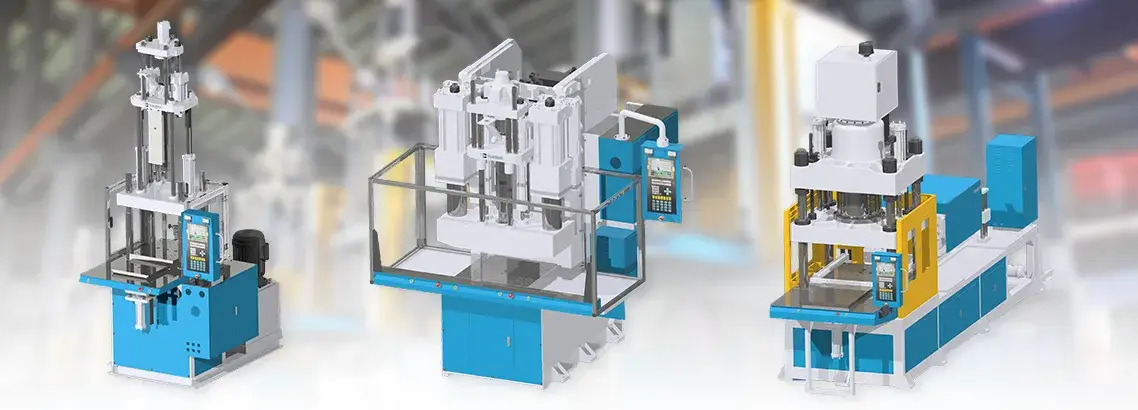
| Production requirement | Suitable configuration | Huarong example |
|---|---|---|
| Standard manual insert loading with moderate production volume | Sliding table with vertical injection | YH Series |
| Continuous production with loading and molding at separate stations | Rotary table | YR Series |
| Long wires, cables, or inserts requiring open side access | Tie-bar-less structure | YL or YC Series |
| Larger components, larger injection requirements, or horizontal gate arrangement | Horizontal injection with vertical clamping | YT Series |
| Two materials or two colors in one molding process | Double injection configuration | YD Series |
| Fast production of small precision components | High-speed vertical injection | YQ Series |
| Specialized wire and plug molding | Wire and plug vertical machine | YV Series |
Huarong's vertical product range includes sliding-table, rotary-table, tie-bar-less, horizontal-injection, double-injection, high-speed, and specialized wire and plug configurations. Review Huarong vertical injection molding machines.
Tie-bar-less machines provide open access on multiple sides and are useful when long wires, cables, automation equipment, or operator access would be restricted by conventional tie-bars. Horizontal-injection machines may be appropriate when the mold design requires horizontal injection, a larger injection unit, or a different gate arrangement. For a broader comparison, see A Comprehensive Guide to Vertical Injection Molding Machines.
Purchase price is visible and easy to compare. Energy consumption, maintenance response, rejection losses, and future modification costs are more difficult to calculate.
As a result, quotations are sometimes compared before confirming that they include the same machine configuration, interfaces, safety equipment, and service scope. The lowest quotation is not necessarily the lowest cost, but the highest quotation is not automatically the best choice either. A useful comparison requires the scope and operating assumptions to be consistent.
| Cost category | Suggested calculation |
|---|---|
| Energy | Average operating power × annual operating hours × electricity rate |
| Labor | Operators per shift × labor cost × annual shifts |
| Quality | Rejected parts × material, labor, and rework cost per part |
| Downtime | Lost production hours × contribution or production value per hour |
| Maintenance | Preventive maintenance, replacement parts, travel, and service charges |
| Changeover | Changeover time × frequency × production value per hour |
| Future automation | Equipment, machine modification, safety validation, and commissioning |
| Product flexibility | Cost of replacing or modifying the machine for future molds |
When comparing energy performance, request data under comparable production conditions. Motor capacity or installed power alone does not represent actual energy consumption.
1. Availability of spare parts
2. Expected response procedure
3. Remote diagnostic capability
4. Local or regional technical support
5. Warranty scope and exclusions
6. Controller and component availability
7. Training and documentation
Providing complete application information allows the machine supplier to evaluate the project more accurately. Before requesting a final machine recommendation, prepare the following information:
| Category | Information to provide |
|---|---|
| Product | Product drawing, dimensions, weight, and quality requirements |
| Insert | Insert drawing, material, quantity per cycle, tolerance, and orientation |
| Mold | Mold dimensions, weight, closed height, opening requirement, and mounting pattern |
| Material | Resin type, filler percentage, and processing requirements |
| Injection | Estimated shot weight, runner weight, and gate arrangement |
| Production | Target cycle time, daily output, number of shifts, and expected changeovers |
| Loading | Manual loading, robot loading, insert feeder, or vision system |
| Table | Required number of stations and loading sequence |
| Functions | Core-pull functions, valve gate, air ejector, mold temperature control, and insert confirmation |
| Factory | Available floor space, ceiling height, power, water, and compressed air |
| Future plan | Additional molds, product variants, and automation requirements |
Huarong's vertical machine portfolio covers multiple combinations of injection direction, table structure, and clamping design. These include sliding tables, rotary tables, tie-bar-less structures, horizontal injection units, double injection systems, and specialized machines.
The selection process should begin with the customer's product, insert, mold, and production sequence. A suitable machine recommendation can then be developed by checking:
1. Whether the mold and fixture fit the machine
2. Whether the injection unit meets the material and shot requirements
3. Whether operators or robots can load the inserts safely
4. Whether the table configuration supports the required cycle
5. Whether the control system supports the mold sequence
6. Whether future automation can be integrated
This approach prevents a machine from being selected only because its tonnage appears suitable.
A common mistake is checking clamping force and shot capacity before confirming the mold, fixture, and working-table dimensions. The machine may have sufficient force but still lack the usable space required for the production setup.
A rotary table is generally suitable when loading and molding must occur at different stations for continuous production. A sliding table provides direct access to the mold and is often suitable for manual insert loading, frequent product changes, or simpler production sequences.
A tie-bar-less machine should be considered when long wires, cables, irregular inserts, automation equipment, or operator access would be restricted by conventional tie-bars.
Not necessarily. Insert positioning depends on the fixture, mold guidance, table positioning, insert tolerance, sensing method, and closing sequence. Increasing machine tonnage does not automatically correct an unstable insert locating system.
Send the product drawing, insert drawing, mold dimensions, resin, estimated shot weight, production target, loading method, and future automation plan. This information is more useful than providing machine tonnage alone.
Selecting a vertical injection molding machine should begin with the product, insert, mold, and production sequence.
Clamping force and shot capacity remain essential, but they do not confirm table compatibility, insert stability, operator access, automation readiness, or long-term production cost.
A machine that only meets the basic specifications may still create limitations throughout its operating life. Reviewing the five areas in this guide helps identify those limitations before the equipment is ordered.
- Group Name: Huarong Group
- Brand: Huarong, Yuhdak, Nanrong
- Service Offerings: Injection Molding Machine, Vertical Injection Molding Machine, Injection Molding Automation
- Tel: +886-6-7956777
- Address: No.21-6, Zhongzhou, Chin An Vil., Xigang Dist., Tainan City 72351, Taiwan
- Official Website: https://www.huarong.com.tw/