Injection Molding Nozzle Functions and Applications:A Critical Component Affecting Molding Quality
2026-06-18 09:15:13
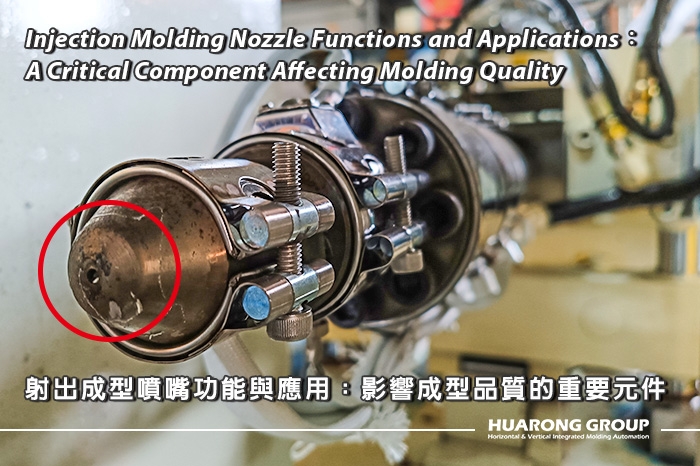
An injection molding nozzle is an important component that connects the injection molding machine barrel and the mold runner system. Its primary function is to deliver molten plastic into the mold cavity in a stable and uniform manner under high-temperature and high-pressure conditions. Although the nozzle occupies only a small portion of the entire injection molding machine, its design directly affects melt flow quality, pressure loss, temperature distribution, product dimensional accuracy, color uniformity, and overall production efficiency.
In actual mass production environments, many molding defects such as short shots, flow marks, burn marks, color variation, stringing, and material leakage are often caused not only by molds or processing parameters, but the nozzle design itself may also be one of the key factors.
As quality requirements continue to increase for automotive lighting, optical components, medical products, electronic connectors, and engineering plastic parts, traditional standard nozzles can no longer satisfy all processing requirements. Therefore, the market has gradually developed different designs such as mixing nozzles, filter nozzles, shut-off nozzles, and modular nozzles to meet the demands of high-precision and highly stable mass production.
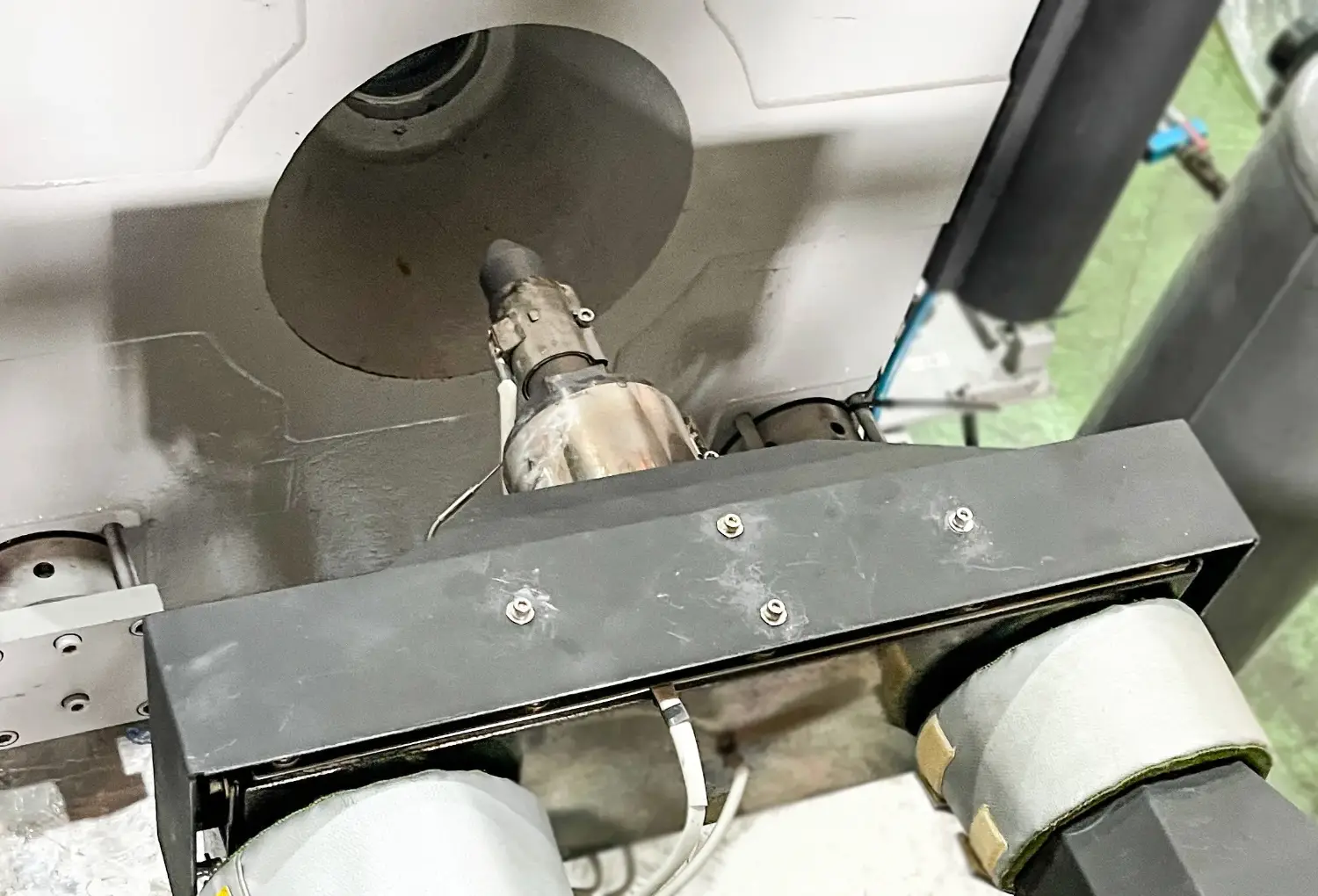
Located between the front end of the injection molding machine barrel and the mold sprue bushing, the nozzle serves as the final flow passage before molten plastic enters the mold. After plastic resin is plasticized by the screw and converted into molten material, it passes through the nozzle into the mold runner system and ultimately fills the cavity to form the product.
On the surface, the nozzle may appear to be merely a passage connecting the machine and the mold. In reality, however, it simultaneously performs several important functions, including melt delivery, temperature control, pressure transmission, and flow stabilization. If the nozzle design is inappropriate, various molding defects may occur even when the injection molding machine itself performs excellently.
- Deliver molten plastic into the mold in a stable manner
- Maintain melt temperature uniformity
- Reduce melt flow resistance
- Improve injection pressure transmission efficiency
- Enhance color and additive dispersion
- Prevent material leakage and drooling
- Improve product dimensional stability
- Reduce the occurrence of molding defects
| Common Defect | Possible Impact |
| Short Shot | Insufficient cavity filling |
| Flow Mark | Poor surface appearance |
| Color Variation | Non-uniform color distribution |
| Stringing | Plastic strings formed during mold opening |
| Burn Mark | Localized overheating of molten material |
| Material Leakage | Material waste and contamination |
After plastic pellets enter the barrel, they gradually melt through heating and screw shear action. When the screw moves forward, the molten material passes through the nozzle under high pressure and enters the mold. The entire flow path is as follows:
Barrel → Nozzle → Sprue Bushing → Sprue → Runner → Gate → Cavity
During this flow process, the nozzle must perform the following three critical tasks:
Ensure that molten material enters the mold at a stable and uniform flow rate to prevent uneven filling caused by flow fluctuations.
Different plastic materials have different processing temperature ranges. The nozzle must maintain an appropriate temperature to prevent premature solidification or thermal degradation of the molten material.
| Material | Recommended Processing Temperature Range |
| Polypropylene (PP) | 190–240°C |
| Polyethylene (PE) | 180–230°C |
| ABS | 220–260°C |
| Polycarbonate (PC) | 280–320°C |
| Nylon 66 (PA66) | 260–300°C |
| Polyphenylene Sulfide (PPS) | 300–350°C |
The nozzle must effectively transmit injection pressure to the cavity. If the flow channel design is inadequate, pressure loss can easily occur, resulting in short shots or insufficient holding pressure.
Different product requirements and material characteristics require different nozzle designs to achieve optimal molding performance.
The standard nozzle is the most common design. Its internal structure is simple and cost-effective, making it suitable for the mass production of most general-purpose plastic products.
Applicable Materials:
- Polypropylene (PP)
- Polyethylene (PE)
- Polystyrene (PS)
- ABS
Main Advantages:
- Low cost
- Easy maintenance
- Quick replacement
- Wide application range
A mixing nozzle incorporates a special mixing structure inside, allowing the molten material to repeatedly divide and recombine while flowing through the nozzle, thereby improving mixing uniformity.
Particularly Suitable For:
- Automotive lighting
- Optical components
- High-transparency products
- Engineering plastic parts
| Improvement Item | Benefit |
| Color Uniformity | Reduce color variation and color streaks |
| Melt Temperature | Improve temperature uniformity |
| Additive Dispersion | More uniform distribution |
| Dimensional Stability | Reduce warpage and deformation |
| Surface Quality | Reduce flow marks and black specks |
A filter nozzle contains a metal screen inside that effectively captures unmelted plastic particles and foreign contaminants.
Suitable Applications:
- Products with high recycled material content
- Products requiring high appearance quality
- Hot runner systems
Advantages:
- Improve product cleanliness
- Reduce black speck defects
- Protect molds and hot runner systems
Disadvantages:
- Increase injection pressure requirements
- Filter screens require periodic replacement
Compared with traditional screen-type designs, a gap filter nozzle provides a larger filtration area, reducing flow resistance and extending cleaning intervals.
Suitable For:
- High-volume manufacturing plants
- Long-duration continuous production
- Engineering plastic processing
A shut-off nozzle utilizes an internal mechanism to control melt flow and effectively prevent drooling during machine stoppages.
Common Applications:
- Two-shot molding
- Multi-color molding
- Hot runner systems
- High-viscosity materials
Main Advantages:
- Reduce material waste
- Prevent material leakage
Improve production stability
A modular design allows rapid replacement of internal components, improving equipment flexibility and maintenance efficiency.
Particularly Suitable For:
- High-mix low-volume production
- Frequent material changeovers
- Automated manufacturing systems
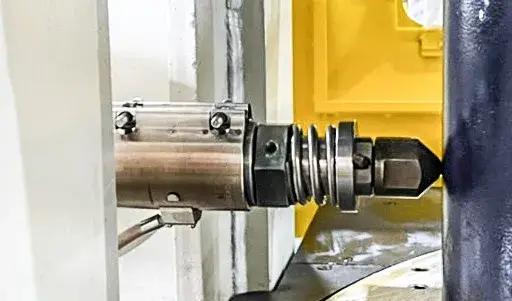
As product appearance and performance requirements continue to increase, mixing nozzles have gradually become an important configuration in many high-end injection molding applications. The core concept is to continuously divide, recombine, and mix the molten material through a specially designed flow channel, resulting in a more homogeneous material composition.
In processes involving color masterbatch, dyes, or functional additives, poor melt mixing can cause color variation, color streaks, or a cloudy surface appearance. Through its special internal flow channel structure, a mixing nozzle continuously divides and recombines the melt during flow, enabling pigments to disperse more uniformly throughout the molten material, thereby improving color consistency and surface quality.
During melt flow inside the barrel, temperature differences often exist between the center region and areas near the flow channel wall. Uneven temperature distribution may lead to localized overheating, material degradation, or filling imbalance. A mixing nozzle promotes heat exchange during melt flow, resulting in a more uniform melt temperature, helping reduce the impact of temperature fluctuations on molding quality while improving dimensional stability and molding consistency.
Traditional injection molding processes often improve melt mixing by increasing back pressure. However, excessive back pressure not only increases screw plasticizing time but may also generate additional shear heat, increase energy consumption, and elevate the risk of thermal degradation. A mixing nozzle improves mixing efficiency through its mechanical structure, allowing good material uniformity to be achieved under lower back-pressure conditions while balancing mixing quality, production efficiency, and energy utilization.
For engineering plastics such as nylon, polybutylene terephthalate (PBT), and polyphenylene sulfide (PPS), melt uniformity often directly affects the final product's mechanical properties and dimensional accuracy. Through the uniform mixing action generated by a mixing nozzle, glass fibers, fillers, and additives can be distributed more evenly throughout the base resin, improving product strength, rigidity, and dimensional stability while reducing performance fluctuations caused by uneven material distribution, allowing products to maintain stable quality throughout long-term use.
Since nozzles operate under high temperature, high pressure, and high shear conditions for extended periods, various processing problems can easily occur.
Nozzle leakage is a common equipment problem that not only causes material waste but may also contaminate molds and equipment, thereby affecting product quality and production efficiency.
| Cause | Solution |
| Insufficient contact pressure between the nozzle and the sprue bushing | Increase the injection unit forward pressure appropriately to ensure sealing |
| Misalignment between the nozzle and the sprue bushing centers | Re-align the injection unit and mold center position |
| Worn or damaged sealing surfaces | Re-machine or replace worn components |
| Mismatch between nozzle radius and sprue bushing specifications | Use compatible nozzle and sprue bushing specifications |
| Contact surface deformation caused by long-term use | Regularly inspect and replace aged components |
Stringing is the phenomenon in which molten material at the nozzle tip has not fully solidified and is drawn out by the product or runner during mold opening, forming thin plastic strings. In addition to affecting appearance quality, it may also increase trimming operations and reject rates.
| Cause | Solution |
| Nozzle temperature is too high | Reduce nozzle temperature appropriately |
| Nozzle orifice too large | Select a smaller orifice design |
| Insufficient material cooling | Extend cooling time or optimize the cooling system |
| Material flowability is too high | Adjust processing temperature or material formulation |
| Inappropriate nozzle structure | Use an anti-stringing nozzle or shut-off nozzle |
When excessive flow resistance occurs as molten material passes through the nozzle, injection pressure requirements increase, and cavity filling performance may be affected.
| Cause | Solution |
| Blocked filter or screen | Clean or replace filtration components regularly |
| The nozzle flow channel is too narrow | Select a larger flow channel design |
| Material viscosity is too high | Increase the melt temperature or use a more suitable material |
| Internal nozzle wear or deformation | Inspect and replace damaged components |
| Improper mixing structure design | Re-evaluate nozzle type and specifications |
Nozzle freeze-off refers to the premature solidification of molten material at the nozzle tip, resulting in restricted flow or even complete inability to inject. This issue commonly occurs when processing high-melting-temperature materials or restarting the machine after a prolonged shutdown.
| Cause | Solution |
| The nozzle temperature setting is too low | Increase nozzle heating temperature |
| Excessive machine downtime | Perform purging operations periodically during downtime |
| Heater band failure or aging | Inspect and replace heating elements |
| Excessive heat dissipation from the nozzle | Use insulation devices or improve thermal insulation design |
| Insufficient processing conditions for high-temperature engineering plastics | Adjust processing temperature according to material characteristics |
Nozzle selection should not be based solely on price. Instead, it should be comprehensively evaluated according to material, product structure, production mode, and machine conditions.
| Material | Recommended Nozzle |
| Polypropylene (PP), Polyethylene (PE) | Standard Nozzle |
| ABS | Mixing Nozzle |
| Polycarbonate (PC) | Mixing Nozzle |
| Glass Fiber Reinforced Nylon | Wear-Resistant Mixing Nozzle |
| Polyphenylene Sulfide (PPS) | High-Temperature Resistant Nozzle |
| Product Type | Recommended Nozzle |
| Automotive Lighting | Mixing Nozzle |
| Optical Products | Mixing Nozzle |
| Medical Products | Mixing Nozzle |
| Multi-Color Products | Shut-Off Nozzle |
| Recycled Material Products | Filter Nozzle |
- Frequent color changes:Mixing nozzle
- Long-term mass production:Gap filter nozzle
- Automated production lines:Shut-off nozzle
- High-mix low-volume production:Modular nozzle
No matter how excellent a nozzle design may be, inadequate maintenance can still result in unstable quality and equipment failure. Therefore, establishing a preventive maintenance program is extremely important.
- Check for material leakage
- Verify heater band operation
- Confirm temperature control performance
- Inspect contact surfaces for abnormalities
- Clean flow channels
- Inspect filter screens
- Check orifice wear
- Verify concentricity
- Align the injection unit center
- Inspect sealing surfaces
- Replace worn components
- Verify temperature control system accuracy
For highly abrasive materials such as glass fiber reinforced plastics, inspection frequency should be increased to prevent premature nozzle damage.
Although an injection molding nozzle is small in size, it is a critical component affecting melt flow, pressure transmission, temperature control, and product quality. From standard nozzles, mixing nozzles, and filter nozzles to shut-off nozzles, each design corresponds to specific material characteristics and production requirements. Nozzle selection and performance directly influence product consistency and process stability. Through appropriate nozzle selection, regular maintenance, and proper process parameter settings, manufacturers can not only effectively reduce molding defects but also improve production quality, shorten material changeover time, and reduce overall manufacturing costs.
- Group Name: Huarong Group
- Brand: Huarong, Yuhdak, Nanrong
- Service Offerings: Injection Molding Machine, Vertical Injection Molding Machine, Injection Molding Automation
- Tel: +886-6-7956777
- Address: No.21-6, Zhongzhou, Chin An Vil., Xigang Dist., Tainan City 72351, Taiwan
- Official Website: https://www.huarong.com.tw/