


Injection Molding Screw and Barrel Maintenance Guide
2026-06-04 09:00:03
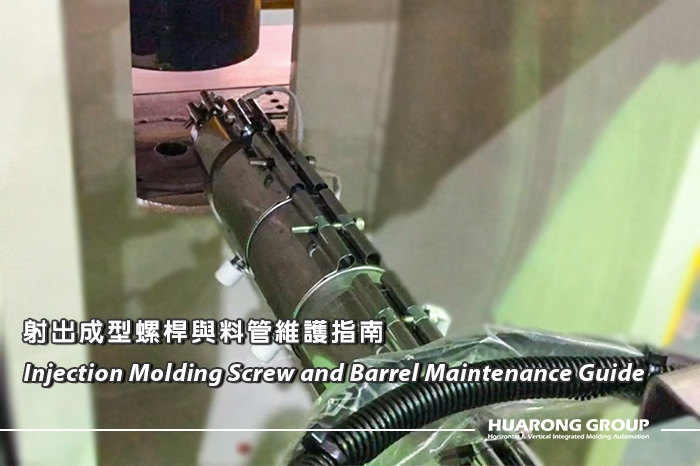
The screw and barrel are the core components of the plasticizing system of an injection molding machine, responsible for important functions such as conveying, compressing, melting, mixing, and metering plastic materials. The operating condition of the screw and barrel not only affects plasticizing efficiency and melt uniformity but is also directly related to product dimensional accuracy, surface quality, and overall molding stability. Therefore, the screw and barrel are often regarded as the "heart" of an injection molding machine, and their performance has a decisive impact on production quality.
However, screw and barrel assemblies operate for extended periods under high-temperature, high-pressure, and high-shear conditions, making them susceptible to gradual deterioration caused by wear, corrosion, carbon buildup, or mechanical uneven wear. When the performance of the plasticizing system declines, problems such as black specks, color variation, unstable shot weight, uneven plasticization, or molding defects may occur, and may even result in unplanned downtime and high maintenance costs. Therefore, establishing a comprehensive screw and barrel maintenance program not only helps maintain optimal machine performance but also contributes to improving product quality, extending equipment service life, and reducing overall production costs.
In an injection molding machine, almost all plasticizing occurs within the screw and barrel, from the moment plastic materials enter the hopper until the final injection filling is completed. Therefore, the performance of the screw and barrel system directly determines melt quality and molding stability.
As the screw rotates, plastic pellets are continuously pushed forward from the feed section into the plasticizing area, with the following primary functions:
- Maintain stable material feeding
- Prevent material accumulation
- Improve plasticizing efficiency
- Stabilize production rhythm
As the material moves forward, the screw flight depth changes due to the screw geometry, causing the plastic to be compressed and generate shear heat. Under the combined effects of barrel heaters and frictional heat, the material gradually melts. The objectives are:
- Improve melting efficiency
- Reduce unmelted particles
- Ensure melt uniformity
- Improve product quality
To achieve melt consistency, the screw continuously mixes to ensure that the color masterbatch, additives, and various formulations are fully dispersed. Good mixing performance can reduce:
- Color variation issues
- Silver streak defects
- Material separation phenomena
- Inconsistent product performance
After plasticization is completed, the screw retracts to create a stable and consistent volume of molten material storage, providing accurate material metering for the subsequent injection process. When the screw and barrel system maintains good plasticizing and metering capability, it can effectively ensure consistent melt weight and quality for every shot, thereby improving product dimensional stability and molding accuracy. For products requiring high standards of weight tolerance and dimensional precision, such as precision injection molded parts, thin-wall products, optical components, and medical parts, stable metering capability is a key factor in ensuring yield and quality consistency.
Screw and barrel wear usually does not occur instantly but accumulates over time. As a result, many factories only discover severe equipment wear after product quality problems appear. Through regular maintenance, quality issues and equipment failures can be effectively prevented.
| Maintenance Benefit | Description |
| Improve Product Quality | Reduce black specks, color variation, burn marks, and silver streak defects |
| Extend Equipment Life | Reduce the screw and barrel wear rate |
| Increase Production Efficiency | Maintain stable plasticizing capability |
| Reduce Downtime Risk | Prevent production stoppages caused by unexpected failures |
| Save Maintenance Costs | Reduce the frequency of major component replacement |
| Reduce Energy Consumption | Improve plasticizing and heating efficiency |
For high-volume manufacturing facilities, the losses caused by a single unplanned shutdown are often far greater than the investment required for regular maintenance.
The service life of a screw and barrel is not fixed but is influenced by multiple factors, including processed materials, machine specifications, and operating conditions.
Certain engineering plastics contain high-hardness additives such as glass fiber, carbon fiber, or mineral fillers. During plasticization, these materials can continuously wear the surfaces of the screw and barrel. If such highly abrasive materials are processed over long periods, wear-resistant screws and bimetallic barrels are recommended to improve durability and extend service life.
Some plastic materials may release corrosive gases during high-temperature plasticization, such as polyvinyl chloride (PVC), flame-retardant plastics, and halogen-containing engineering plastics. Long-term processing of these materials can cause surface corrosion, pitting, and oxidation of the screw and barrel, reducing component life and potentially affecting melt quality and product yield.
Improper molding parameter settings are also a significant cause of screw and barrel wear. Examples include excessively high melt temperatures, excessive back pressure, excessively high screw speeds, and failure to purge thoroughly before shutdown. These conditions may increase shear heat and friction, accelerating wear and even causing material degradation and carbon buildup.
When the centerlines of the screw and barrel are not properly aligned, uneven wear can occur during operation. This not only increases machine vibration and abnormal friction but may also lead to unstable plasticization and accelerated localized wear, affecting both equipment life and molding quality.
Understanding failure modes helps identify problems early and schedule maintenance accordingly.
Wear is the most common type of failure. Typical symptoms include:
- Injection shot fluctuation
- Unstable product weight
- Reduced plasticizing efficiency
- Lower production output
Corrosion gradually damages metal surfaces and may result in:
- Surface roughening
- Pitting
- Melt contamination
- Quality abnormalities
When plastic remains in a high-temperature environment for an extended period, thermal degradation can occur. Common problems include:
- Black specks
- Burn marks
- Color variation
- Difficulty in color changes
Screws subjected to long-term high temperature, high pressure, and cyclic stress may develop:
- Cracks
- Bending
- Deformation
- Fracture
If metal contaminants or hard foreign particles enter the material stream, they may directly scratch the screw and barrel inner surface.
Many screw and barrel-related abnormalities are reflected through process and product changes at an early stage. If these warning signs can be identified promptly, further equipment damage and production losses can be avoided. When production exhibits increased black specks, color variation fluctuations, extended color change times, unstable shot weight, longer plasticizing times, abnormal melt temperatures, or increased machine noise and vibration, these are usually indications that the screw and barrel system has begun experiencing wear or contamination issues. If multiple abnormalities occur simultaneously, a comprehensive inspection should be prioritized to determine whether structural wear or carbon buildup is present.
Establishing a systematic maintenance and inspection program is an important measure for reducing screw and barrel failure rates. During daily operation, in addition to monitoring temperature, pressure, and machine operating conditions, periodic maintenance plans should also be implemented, such as weekly inspections of heating systems and temperature sensors, monthly evaluations of screw wear conditions, and regular alignment verification and comprehensive inspections. Continuous recording and tracking of relevant data changes can help identify wear trends early, and schedule repairs or replacements before problems worsen, ensuring production stability and equipment longevity.
Many quality problems are not caused by equipment damage but rather by improper cleaning methods. The following is a recommended purging procedure:
1. Empty the material:Completely eject all remaining plastic from the barrel.
2. Add purging compound:Select a professional purging compound suitable for the material characteristics and processing temperature.
3. Perform low-speed plasticizing cleaning:Use a lower screw speed during cleaning to avoid additional wear.
4. Continue purging residual material:Continue until the discharged material is completely clean.
5. Shutdown protection:If the machine will remain idle for an extended period, use a heat-resistant purging compound to preserve the barrel.
- Using a steel brush to remove carbon deposits
- Burning off residual material with an open flame
- Purging incompatible materials together
- Extended high-temperature empty heating
Modern injection molding facilities place increasing emphasis on preventive maintenance concepts and use regular inspections to monitor equipment condition.
| Processed Material | Recommended Inspection Interval |
| Glass Fiber Materials | Every 3 to 6 months |
| Carbon Fiber Materials | Every 3 months |
| General Engineering Plastics | Every 6 months |
| Commodity Plastics | Every 6 to 12 months |
Key inspection items:
- Screw outside diameter measurement
- Barrel inside diameter measurement
- Concentricity inspection
- Check the ring wear inspection
- Surface hardness inspection
- Plasticizing efficiency analysis
Through data-driven management, the remaining service life of components can be assessed more accurately.
When screw and barrel wear occur, replacement with new components is not always necessary. The most appropriate treatment method can be selected according to the extent of damage.
| Condition | Recommended Solution |
| Minor Wear | Polishing restoration |
| Surface Wear | Hard chrome plating |
| Localized Wear | Hardfacing repair |
| Bore Deformation | Grinding correction |
| Severe Deformation or Cracking | Replacement with new components |
Professional refurbishment can typically restore most performance while effectively reducing equipment investment costs.
Extending screw and barrel service life not only helps reduce maintenance and replacement costs but also improves overall machine uptime and production stability. In practice, this can be achieved by selecting wear-resistant bimetallic barrels and highly wear-resistant screw designs, combined with reasonable processing parameter settings such as controlling temperature, back pressure, and screw speed to minimize unnecessary wear. At the same time, regularly using professional purging compounds, preventing molten material from remaining in the barrel for extended periods, and ensuring adequate drying of hygroscopic plastics can effectively reduce material-related damage to equipment. In addition, establishing equipment history management systems and implementing preventive maintenance programs and alignment verification can help continuously monitor equipment condition and slow wear progression, thereby extending overall service life.
As the key load-bearing components of the plasticizing system, the operating condition of the screw and barrel continuously affects melt uniformity and process stability, which are ultimately reflected in product consistency and overall production line efficiency. When equipment operates under high-load conditions for extended periods, the absence of appropriate monitoring and maintenance mechanisms can allow material property changes or mechanical wear to gradually amplify process variation, increasing quality uncertainty and the risk of unplanned downtime. Therefore, incorporating maintenance activities into a systematic management framework, together with continuous equipment condition monitoring and timely repair or optimization measures, helps maintain long-term production stability while enhancing overall manufacturing efficiency and cost control capability.