Injection Machine Selection:Optimal Configuration of Screw Diameter, Shot Size, and Residence Time
2026-04-16 14:26:03
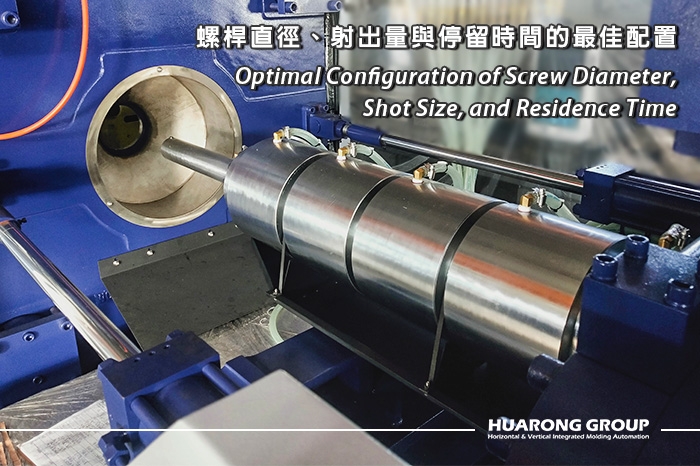
In injection molding processes, machine selection is often oversimplified to whether the clamping force is sufficient. However, the true factors determining process stability and product quality lie in the overall matching design of the injection unit. Screw diameter, shot size, and material residence time form an interdependent thermal flow control system. Any imbalance in a single parameter will directly be reflected in the appearance and physical properties of the final product.
Therefore, injection machine selection should not be based solely on machine specifications, but must be analyzed from three aspects:material behavior, thermal history, and pressure transmission.
The screw is not merely a mechanical component for conveying plastic, but a core unit for thermal energy conversion that integrates shear heat, compression ratio, and mixing behavior. The selection of screw diameter essentially determines the output capacity and thermal stability boundary of the entire plasticizing system.
From an engineering perspective, screw diameter simultaneously affects three key aspects:material melting efficiency, injection pressure generation capability, and residence time distribution within the barrel. Therefore, diameter selection is not simply capacity scaling, but a reconfiguration of overall thermodynamic conditions.
A larger screw diameter represents higher output capacity, but it also extends the material’s thermal history within the barrel, thereby increasing the risk of material degradation. Conversely, an undersized screw may lead to insufficient plasticization, preventing stable buildup of injection pressure.
In practical engineering, screw selection must achieve a balance between output capacity and thermal stability, rather than pursuing maximum productivity alone.
| Screw Configuration | System Behavior | Main Risk |
| Oversized Screw + Small Product | Increased thermal accumulation time | Material degradation, discoloration |
| Undersized Screw + Large Product | Insufficient plasticizing output | Short shot, insufficient pressure |
| Proper Matching | Balanced thermal and pressure conditions | Stable mass production |

Shot size is not merely a capacity indicator, but a core parameter of the process thermal load. It determines the residence time and shear history experienced by the material within the screw, thereby affecting melt uniformity and pressure stability.
When shot size is improperly configured, even if machine specifications meet requirements, unstable product quality may still occur. Therefore, shot-size design is essentially a form of process-time control.
From a practical perspective, shot size must include the product itself, the runner system, and shrinkage compensation. Especially in multi-cavity molds, the runner volume often accounts for a significant proportion. If not included in the calculation, it will directly lead to insufficient filling or pressure deficiency. Therefore, shot size design is essentially material demand modeling for the entire mold system, rather than a simple conversion of product weight.
Shot Size = Product Weight + Runner Weight (sprue + runner + gate) + Shrinkage Compensation
In multi-cavity molds, the runner proportion may account for 20% – 60% of the total. Ignoring it will directly affect filling stability.
Shot size utilization directly affects the stability of the material’s thermal history within the barrel. Excessively low utilization causes the material to remain in the high-temperature zone for an extended period, increasing the risk of degradation; whereas excessively high utilization may result in insufficient plasticizing capacity, leading to increased fluctuations in injection pressure.
| Utilization Range | System Condition | Process Result |
| Below 20% | Underloaded | Excessive residence time, degradation |
| 30 – 70% | Stable range | Stable plasticization and injection |
| Above 80% | Overloaded | Insufficient pressure, unstable filling |
Screw diameter is usually derived from product weight, then adjusted with runner volume and safety factors. This process essentially establishes a balance model between material demand and mechanical output capacity. Through this method, the screw can maintain stable melting and output performance during injection, avoiding process imbalance caused by overdesign or underdesign.
| Material | Characteristics | Screw Design Focus |
| PC | High viscosity, heat-resistant, but sensitive | High L / D, enhanced mixing |
| PA | Hygroscopic | Control shear and drying |
| PET | Degradation-prone | Low shear design |
| PVC | Heat-sensitive material | Extremely low shear |
| Glass Fiber Materials | High abrasion | Wear-resistant screw |
Residence time is a frequently underestimated yet critical parameter. It represents the cumulative thermal exposure time of the material in a high-temperature environment, directly affecting molecular structure stability and the thermal stability of additives.
From an engineering perspective, residence time is not the shorter the better, but must be maintained within the acceptable thermal stability window of the material.
When residence time is too long, thermal accumulation leads to molecular chain scission or oxidation reactions, resulting in color changes and deterioration of physical properties. In addition, certain additives may decompose under prolonged high temperatures, further affecting product stability. Therefore, residence time control is essentially a risk management mechanism for material thermal degradation.
There is a direct thermal history coupling relationship between screw size and shot size.
| Combination | Result |
| Large Screw + Small Shot Size | Excessive residence time |
| Small Screw + Large Shot Size | Insufficient plasticization |
| Proper Matching | Stable thermal balance |
This coupling relationship requires the injection system to be balanced as a whole during the initial design stage, rather than optimized at a single point.

The relationship between screw diameter, shot size, and residence time is essentially a highly coupled engineering system, rather than independent parameter selection. Screw diameter determines the system's output capacity and thermal history foundation, shot size controls overall load and thermal balance, and residence time is the hidden factor that ultimately determines material quality stability.
In practical injection molding design, optimization of any single parameter must be based on overall system balance. Otherwise, even if local conditions meet requirements, it may still lead to overall process instability. A truly mature injection machine selection approach integrates material behavior, thermodynamics, and mechanical output into a unified system model and identifies the most stable operating window within it.
- Group Name: Huarong Group
- Brand: Huarong, Yuhdak, Nanrong
- Service Offerings: Injection Molding Machine, Vertical Injection Molding Machine, Injection Molding Automation
- Tel: +886-6-7956777
- Address: No.21-6, Zhongzhou, Chin An Vil., Xigang Dist., Tainan City 72351, Taiwan
- Official Website: https://www.huarong.com.tw/