


Microcellular vs Structural Foaming: Dimensional Stability & Surface Comparison
2026-04-10 13:14:19
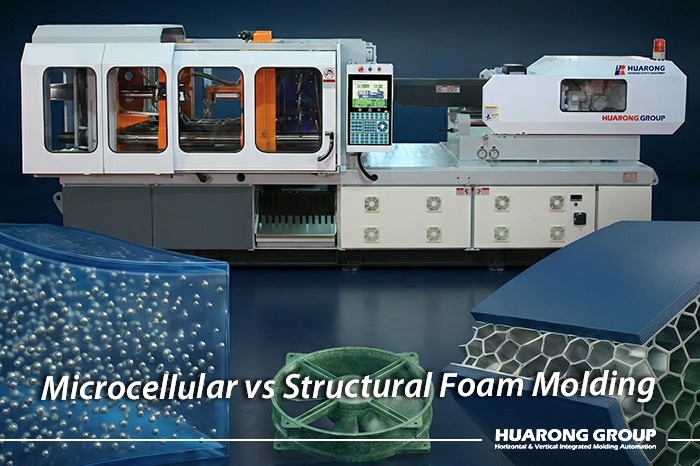
Lightweighting is no longer only about reducing part weight. In injection molding, it is also closely related to dimensional stability, material usage, energy consumption, surface quality, and the practical use of recycled resins.
That is why more manufacturers are now evaluating foaming technologies as part of a broader production strategy. Among the most discussed options, microcellular foaming and structural foaming are often mentioned together. However, these two processes are not interchangeable. They are designed for different part structures, different surface expectations, and different manufacturing priorities.
For engineers, molders, and project decision-makers, the more useful question is not which technology sounds more advanced. The real question is: which foaming method better matches your part design, tolerance target, and production objective?
This article compares microcellular and structural foaming from a practical injection molding perspective, with particular attention to dimensional stability, surface appearance, process behavior, and processing of recycled materials.
The short answer is this: microcellular foaming is a fine-cell, precision-oriented process, while structural foaming is a coarse-cell process more commonly used for thick and structurally driven parts.
Microcellular foaming usually introduces supercritical nitrogen or carbon dioxide into the polymer melt. When the melt enters the cavity and the pressure drops, a large number of very small cells form throughout the part. If the process is properly controlled, this can help reduce part weight, lower cavity pressure, reduce dependence on heavy packing, and improve dimensional consistency in suitable applications.
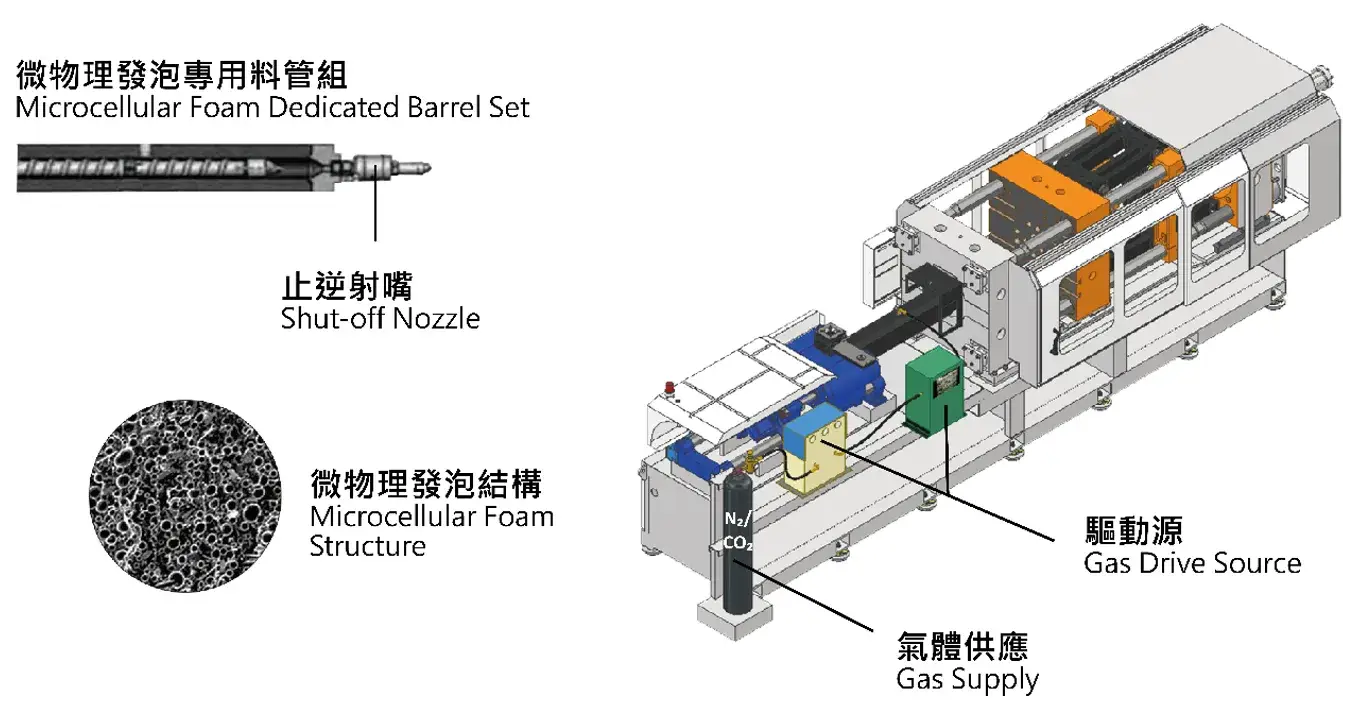
Structural foaming works differently. It typically forms a larger cellular core with a denser outer skin, creating a clear skin-core structure. This makes it especially useful for thick parts where section stiffness, material efficiency, and part scale matter more than a refined cosmetic surface.

In practical terms, if the application requires thinner walls, tighter dimensional control, and better appearance, microcellular foaming is usually the more suitable direction. If the application is large, thick, and structurally focused, structural foaming is often the more practical choice.
Many discussions about foaming still focus only on weight reduction. That is too narrow. In real production, the choice between microcellular foaming and structural foaming can affect:
- clamping force demand
- holding pressure requirement
- cavity pressure behavior
- cooling behavior
- dimensional consistency
- surface appearance
- finishing needs
- recycled material processability
This is why a direct comparison matters. A process that reduces weight but creates unstable dimensions may not solve the real manufacturing problem. On the other hand, a process that performs well in thick structural parts may be entirely unsuitable for parts that require tighter geometry control or better visual quality.
For many manufacturers today, the target is not only to make a part lighter. The target is to make it lighter while keeping production stable, appearance acceptable, and performance fit for use.
Further reading: Microcellular Foam Injection Molding: A Complete Guide to Lightweight and Energy-Efficient Production
The most fundamental difference begins with internal cell structure.
Microcellular foaming typically creates very small, relatively uniform cells distributed throughout the part. Because the cell structure is finer and more even, the internal stress distribution can also become more balanced than in conventional solid molding, especially in parts where heavy packing would otherwise contribute to shrinkage gradients, sink, or warpage.
This is one reason microcellular foaming is often considered not only for lightweighting, but also for reduced distortion and better dimensional stability in suitable part designs.
Related product: Microcellular Foam Injection Molding Machine - HRC Series
Structural foaming generally produces a larger, coarser internal cell structure, with a more pronounced dense outer skin and a foamed core. This morphology is useful in thick parts because it improves section efficiency and stiffness without requiring a fully solid wall throughout the part.
However, the same morphology is also one reason structural foaming is less often used where finer dimensional control or higher cosmetic expectations are required.
Part geometry is one of the fastest ways to judge which process is more realistic.
Microcellular foaming is generally more suitable for thin- to medium-wall parts, especially when the goal is to reduce weight while maintaining stable geometry and reducing molding pressure.
Structural foaming is more naturally suited to thicker-walled parts, where the expanded core helps improve section stiffness and material efficiency. In these cases, the process can reduce unnecessary mass while maintaining the part's structural function.
That is why the two technologies are commonly applied in different product categories.
Microcellular foaming is more often evaluated for:
- automotive interior components
- appliance parts
- electronics housings
- selected technical parts where dimensional behavior matters
Structural foaming is more often considered for:
- pallets
- crates
- large panels
- industrial housings
- other thick-section molded products
Surface appearance is another major difference between these two processes.
Microcellular foaming can still provide a commercially acceptable appearance for many molded parts, but the final result will still depend on resin selection, tool design, and process tuning. In some applications, the surface may appear more matte or satin-like rather than highly glossy. For this reason, applications with strict high-gloss cosmetic requirements should be evaluated carefully during development.
Structural foaming is generally less favorable for parts that require a refined cosmetic surface. Because of its coarser internal structure and process characteristics, it is more likely to produce a rougher appearance and may require additional finishing if aesthetics are important.
From a practical design review perspective, this means the surface requirement should be discussed early. If the part is customer-facing, dimension-sensitive, or visually important, microcellular foaming usually deserves more serious consideration than structural foaming.
For many processors, the real value of microcellular foaming is not just weight reduction. It is the potential to improve dimensional behavior.
In conventional solid molding, sink, warpage, and local deformation are often influenced by the interactions among packing pressure, cooling, and material shrinkage within the cavity. Microcellular foaming changes this balance. When the foaming structure is properly controlled, it can reduce reliance on heavy packing and help ensure more even shrinkage throughout the part.
That is why microcellular foaming is often considered for applications where geometry control matters, especially in thin- to medium-wall parts.
Structural foaming can still deliver excellent value in large and thick parts, but its process priority is usually different. It is more often selected because it provides stiffness at lower density, not because it is the best choice for tight dimensional control.
For lightweight parts where dimensional consistency is important, that difference is often decisive.
Both technologies can reduce pressure-related demand compared with conventional solid molding, but they do so in different ways and in different part categories.
In microcellular foaming, the foaming action can help reduce cavity pressure, lower holding demand, and, in suitable cases, shorten cycle time. This is one reason the process is often discussed not only in relation to lightweighting, but also in connection with energy reduction and production efficiency.
In some applications, lower cavity pressure may also allow processors to evaluate machine sizing more flexibly, depending on the part and molding window.
Structural foaming also operates under low pressure, but it is more often used for thicker parts that may still require longer cooling due to their section size.
This leads to an important practical point: lower pressure does not automatically mean faster production.
A thick structural foam part may run at low pressure but still be limited by cooling time. A microcellular foam part, by contrast, may benefit from both lower pressure demand and reduced holding dependence, making it more attractive when efficiency matters as much as weight reduction.
One of the most relevant topics today is the use of recycled resin.
In actual production, recycled materials often bring greater variability in melt flow behavior, molecular structure, and processing consistency. The challenge is not only how to source recycled material, but how to keep molding stable while still achieving acceptable part quality.
This is where microcellular foaming is receiving more attention. In suitable applications, the addition of supercritical gas can help reduce melt viscosity and improve flow behavior, which may support more stable filling and lower thermal stress on the material.
For manufacturers trying to increase PCR or PIR usage, this is highly relevant. The issue is no longer only sustainability messaging. The issue is whether recycled materials can be processed more consistently in real injection molding production.
A lighter part is only valuable if it still performs its intended function.
Microcellular foaming is not about making a part as light as possible at any cost. The real goal is to reduce unnecessary mass while maintaining the functional performance required by the application.
In some cases, microcellular foaming can still offer a competitive strength-to-weight relationship, especially when the part is engineered correctly and the process is well controlled. However, performance should always be judged at the part level. Material type, geometry, wall thickness, and actual loading conditions still matter.
Structural foaming remains especially useful when designers want a high stiffness-to-weight ratio in thicker sections. That is why it continues to be used in large industrial products where rigidity and section efficiency are more important than fine cosmetic quality.
The right choice depends on what governs the part most strongly:
- rigidity
- dimensional stability
- appearance
- weight reduction
- processability
- recycled material use
A practical selection guide looks like this.
- the part requires better dimensional stability
- the wall thickness is thin to medium rather than heavy structural section
- the application benefits from reduced holding demand and lower clamping force
- the product needs a better visual outcome than typical structural foam can provide
- recycled material consistency is an important processing issue
- the goal is precision lightweighting rather than only section stiffness
- the part is large and thick
- stiffness is more important than refined surface quality
- dimensional precision is moderate rather than highly demanding
- the product category includes pallets, crates, large housings, or thick panels
- the value comes mainly from structural efficiency in thick sections
The growing attention to microcellular foaming is not driven by a single factor. It is connected to several current manufacturing priorities at the same time:
- lower resin consumption
- lighter part design
- reduced clamping force
- lower energy demand
- better dimensional behavior than older, coarser foaming approaches
- better support for recycled material processing
- more practical sustainability-oriented production improvement
Because of this, more manufacturers no longer view microcellular foaming as merely a niche process. They are starting to evaluate it as a realistic production technology for modern lightweight injection molding.
Huarong’s technical positioning around microcellular foaming is not limited to weight reduction alone.
Its direction emphasizes a broader process value, including:
- lower clamping force
- reduced holding demand
- shorter cycle time potential
- better dimensional stability
- suitability for sustainability-oriented manufacturing
- better compatibility with practical production needs
From Huarong’s perspective, microcellular foaming is not only a lightweighting solution. It is also a practical process option for manufacturers who want to improve molding efficiency, control dimensional behavior, and move toward more sustainable production.
This is also why Huarong is placing clear emphasis on this technology in 2026.
At Chinaplas 2026, Huarong will showcase its microcellular foaming technology at Booth 1.1D42, including a demonstration connected to recycled-material processing. This reflects the company’s current technical focus: helping manufacturers reduce material use while maintaining production feasibility and part performance.

Further reading: Chinaplas 2026: Huarong Showcases Injection Molding Solutions at Booth 1.1D42
Microcellular foaming and structural foaming are both valid lightweighting technologies, but they solve different engineering problems.
If the goal is to produce large, thick, rigid parts where appearance is secondary and structural efficiency is the main objective, structural foaming remains a practical and established choice.
If the goal is to achieve precision lightweighting, better dimensional stability, lower clamping force, reduced holding demand, and more flexible processing for modern materials including recycled resin, microcellular foaming is often the stronger technical direction.
That is why more manufacturers are now evaluating microcellular foaming not just as a specialty process, but as a serious production method for the next stage of lightweight and sustainability-driven injection molding.
- Group Name: Huarong Group
- Brand: Huarong, Yuhdak, Nanrong
- Service Offerings: Injection Molding Machine, Vertical Injection Molding Machine, Injection Molding Automation
- Tel: +886-6-7956777
- Address: No.21-6, Zhongzhou, Chin An Vil., Xigang Dist., Tainan City 72351, Taiwan
- Official Website: https://www.huarong.com.tw/

No. Both are foaming technologies, but microcellular foaming uses a much finer and more uniform cell structure, while structural foaming typically creates a coarser skin-core structure for thicker parts. They are designed for different engineering targets.
In general, microcellular foaming is more suitable when dimensional stability is a major requirement. Structural foaming is more commonly selected for thick structural parts where stiffness matters more than precision geometry.
Yes, in suitable applications it can help support more stable processing of recycled materials by improving flow behavior and reducing some of the processing difficulty associated with resin variation.
Not automatically. Overall cost still depends on tool design, cycle time, surface requirements, finishing needs, and the actual functional target of the part.
Because it addresses several current manufacturing priorities at the same time, including lightweighting, lower resin use, recycled material processing, energy reduction, and more sustainable production improvement.

The Huarong Marketing Team is dedicated to translating Huarong’s deep manufacturing expertise into clear, actionable insights for our global audience. By collaborating closely with our R&D and engineering departments, we ensure that every update on injection molding machine technology and industry trends is presented with accuracy and practical value, reinforcing Huarong’s position as a premier injection molding machine manufacturer.
- Expert Insights: Regular updates on injection molding machine optimization and efficiency.
- Proven Reliability: 40+ years as a leading injection molding machine manufacturer in Taiwan.
- Global Reach: Tailored manufacturing solutions for automotive, medical, and packaging sectors.