Chiller for Injection Molding: Cooling Stability as the Foundation of Injection Molding Performance
2025-11-27 13:49:51
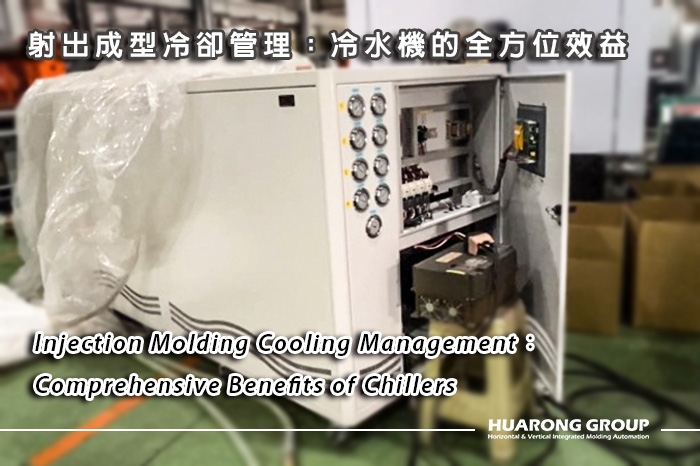
A chiller for injection molding is a vital system that ensures cooling stability, consistent cycle times, and high-quality final products in plastic manufacturing. In injection molding, cooling is the longest and most influential part of the cycle, often making up more than half of the total cycle time. More importantly, it’s also the phase most often used as a safety buffer when process stability is lacking. When cooling water temperature varies or heat removal capacity is limited, operators must extend cooling times to prevent defects. Under these conditions, productivity drops, defects increase, and effective process optimization becomes impossible. This article combines engineering practices and production logic to explain how chillers work, how to select them, and why they are essential for stable, efficient injection molding operations.
Injection molding is fundamentally a heat-transfer-controlled process. Molten polymer enters the mold at elevated temperature and must release heat in a controlled, repeatable manner to solidify into a stable part that can be safely ejected.
Cooling time directly defines the achievable cycle time. When mold temperature is unstable, extending cooling time becomes the default corrective action to prevent warpage, short shots, or surface defects. While this approach may temporarily protect quality, it significantly reduces output and increases cost per part.
A chiller for injection molding provides a stable chilled-water supply, maintaining consistent mold temperature control. With stable cooling conditions, engineers can reduce cycle time based on material and part requirements rather than process uncertainty.
Further reading: Common Injection Molding Defects: Causes, Types, and Solutions
Unstable cooling leads to dimensional variation, inconsistent part weight, and surface quality fluctuation. These issues cannot be corrected through injection pressure, holding time, or screw recovery adjustments alone.
Only stable water temperature, sufficient cooling capacity, and consistent heat removal allow the molding process to operate within a predictable and repeatable window over long production runs.
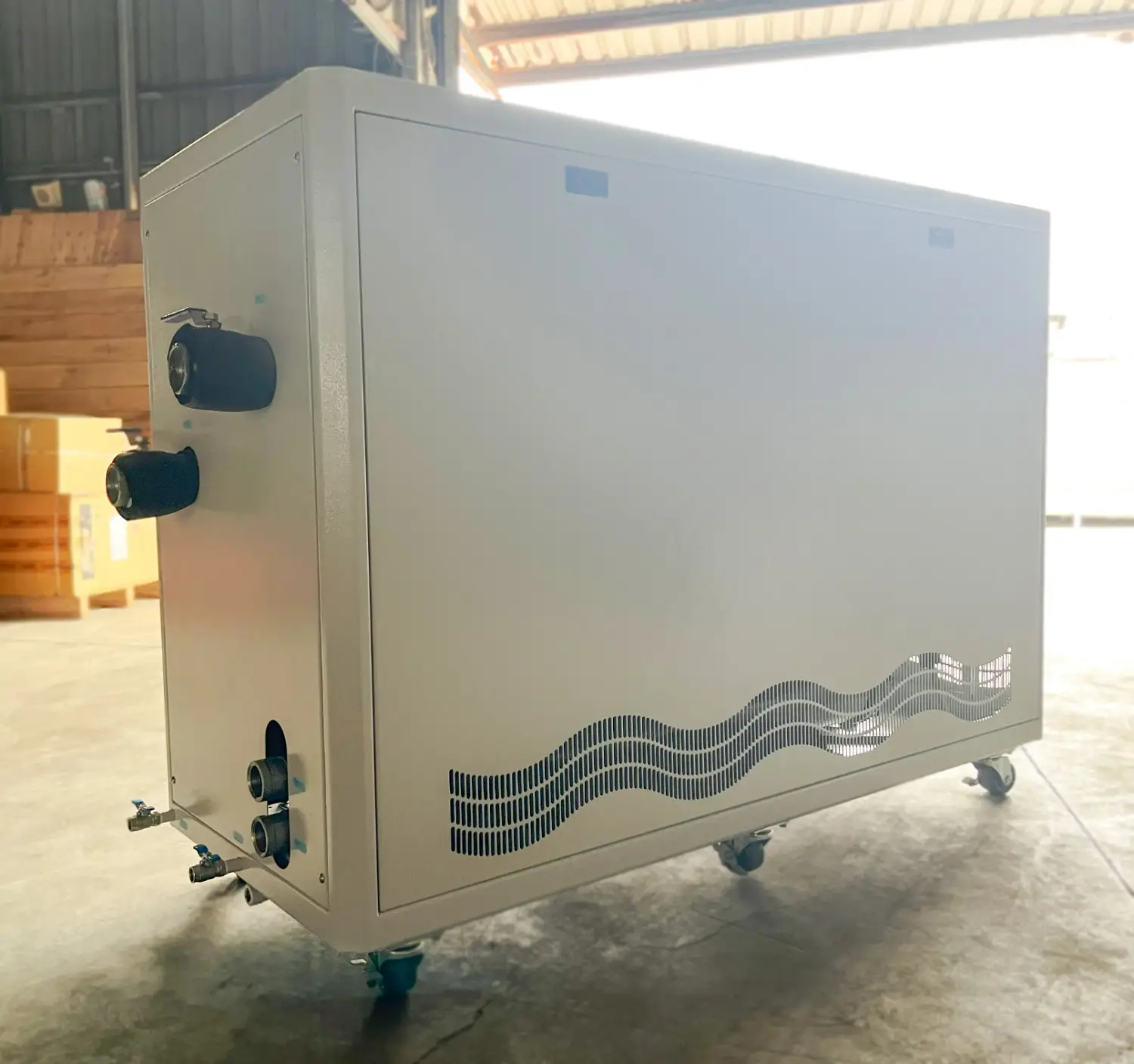
Injection molding cooling systems operate as closed thermal loops, with the chiller serving as the core heat extraction unit.
The chiller supplies chilled water to mold cooling channels and auxiliary cooling circuits. As water flows through the mold, it absorbs heat from the polymer melt and mold steel. The warmed water then returns to the chiller, where heat is removed before it is recirculated.
This closed-loop structure isolates the molding process from ambient temperature variation and seasonal changes. In stable production, it is essential to evaluate cooling performance not only at the chiller outlet, but also at the mold inlet and outlet, where temperature difference and flow stability directly affect part consistency.
Further reading: Injection Molding Auxiliary Equipment: A Beginner’s Guide
Further reading: Injection Molding Auxiliary Equipment (Part 2): Advanced Systems & Special Processes
Inside the chiller, heat is removed through a refrigeration cycle. The evaporator absorbs heat from the return water, causing the refrigerant to vaporize. The compressor raises the refrigerant pressure and temperature, the condenser rejects heat to air or cooling water, and the expansion valve reduces pressure before the refrigerant re-enters the evaporator.
Efficient execution of this cycle ensures stable cooling capacity under fluctuating production loads. In high-output molding operations, insufficient refrigeration reserve often leads to a gradual rise in water temperature, even if the system appears stable at startup.
Incorrect chiller sizing is one of the most common root causes of cooling-related instability in injection molding plants.
Heat load is influenced by resin processing temperature, shot weight, cycle time, mold steel mass, and cavity count. High-speed or thin-wall applications generate intense heat over short cycles, resulting in higher cumulative heat load than conventional molding.
Although machine tonnage is often used as a reference, actual heat load is more closely related to material throughput and cycle frequency. Underestimating heat load leads to gradual water temperature increase during long production runs, forcing operators to extend cooling time and reducing overall productivity.
While precise sizing requires engineering calculation, industry practice provides useful reference ranges. Injection molding machines in the 80–120 ton range typically require 3–5 tons of refrigeration capacity, 150–250 ton machines require 5–10 tons, and machines above 300 tons often require 10–20 tons or centralized chiller systems.
For stable operation, cooling capacity should not only meet average demand but also include sufficient margin to handle peak load conditions. A chiller sized to “just hold temperature” will inevitably limit cycle time optimization in real production environments.
Chiller type selection directly affects temperature stability, energy efficiency, and long-term scalability.
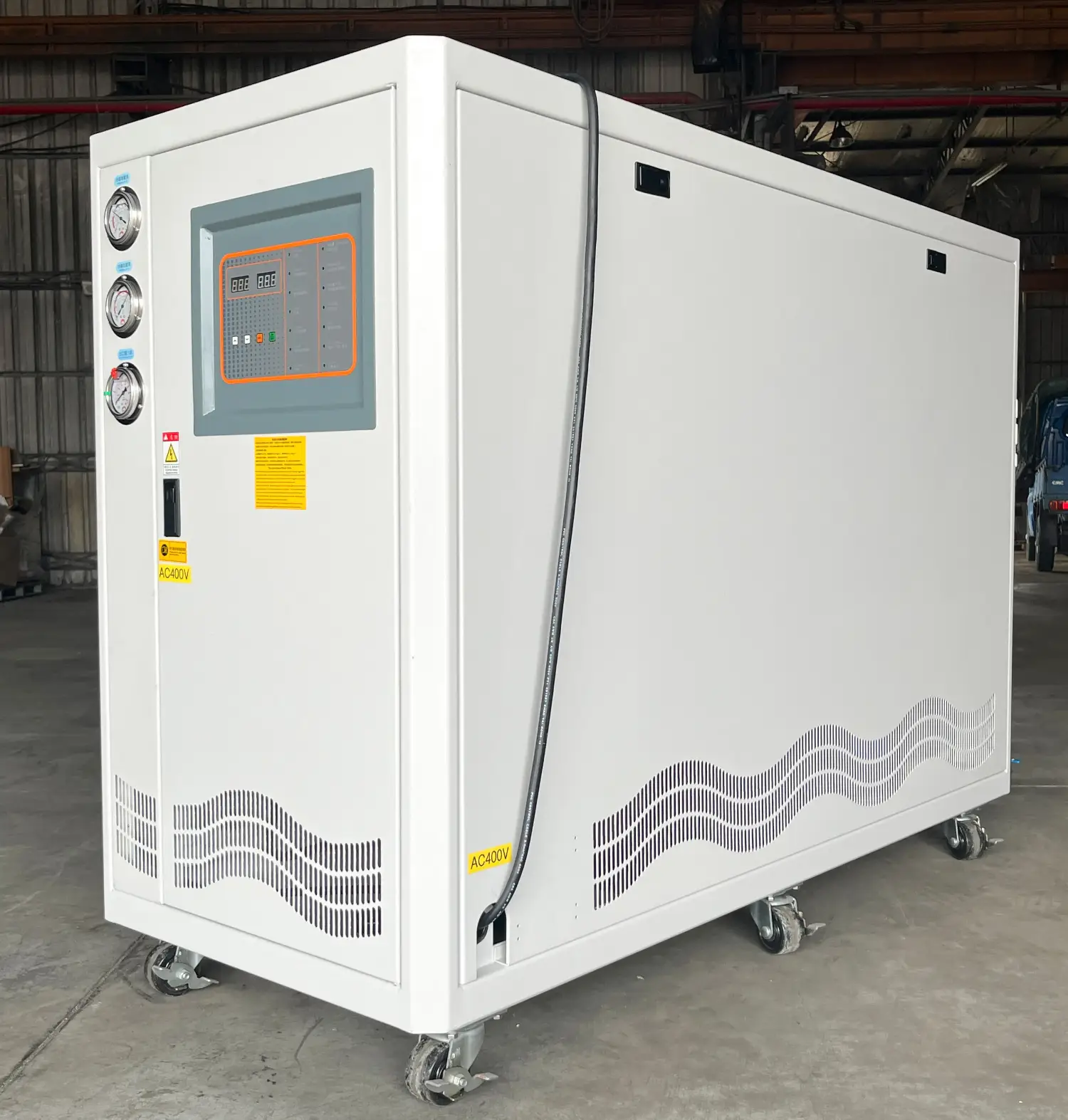
Air-cooled chillers reject heat directly to ambient air. They are easy to install, require no cooling tower, and offer high flexibility for small and medium injection molding facilities. However, their cooling capacity and efficiency are strongly influenced by ambient temperature.
In hot climates or high-load production environments, capacity margin and airflow management become critical to maintain stable water temperature.
Water-cooled chillers use cooling towers to reject heat, allowing lower condensing temperatures and higher energy efficiency. They provide more stable cooling capacity and are preferred in large-scale injection molding factories, continuous production lines, and applications requiring tight water temperature control.
Their ability to handle high cumulative heat load makes them suitable for long-term, high-output production.
- Dedicated to individual injection molding machines
- High flexibility for small/medium factories or multi-product production
Cooling performance depends on system integration rather than individual equipment capability.
The chiller establishes a stable cold water baseline, while the mold temperature controller regulates mold surface temperature. If chiller output fluctuates, the MTC is forced to compensate continuously, reducing control accuracy and response speed.
Stable chiller operation allows the MTC to function within a narrow control range, which is critical for dimensional repeatability, surface quality, and cavity-to-cavity consistency.
Even a correctly sized chiller cannot compensate for poor mold cooling design. Uneven channel layout, excessive pressure drop, insufficient proximity to heat zones, or unbalanced flow circuits lead to localized overheating.
Optimal cooling performance is achieved only when mold design, cooling flow rate, and chiller capacity are engineered as a unified system. In many applications, separating cooling zones for different mold sections is more effective than simply lowering overall water temperature.
Many injection molding defects originate from cooling instability rather than material or machine limitations.
Uneven cooling creates internal stress that manifests as warpage after ejection. Stable water temperature, balanced cooling circuits, and controlled temperature difference between mold inlet and outlet reduce thermal gradients and improve dimensional accuracy.
Surface defects are often intensified by inconsistent solidification timing rather than insufficient packing pressure alone. Maintaining constant cooling conditions supports uniform freeze-off and improves surface quality and visual consistency.
Insufficient cooling capacity causes water temperature to rise gradually during production, forcing operators to extend cooling time as a preventive measure. A properly selected chiller prevents this hidden productivity loss and supports consistent cycle time over long production runs.
A chiller for injection molding delivers value beyond defect reduction.
Stable cooling allows engineers to safely minimize cooling time without sacrificing quality. In high-volume production, even small cycle time reductions result in significant annual output gains.
Modern industrial chillers use inverter-driven compressors, intelligent load control, and high-efficiency refrigerants. These technologies reduce energy consumption while maintaining precise cooling performance, supporting both cost reduction and sustainability goals.
Stable cooling reduces thermal stress on molds and machines, extending service life and lowering maintenance cost. As production expands or new molds are introduced, a robust chiller system provides the thermal stability required for scalable growth.
A chiller for injection molding is not auxiliary equipment but a core process system that defines cooling stability, cycle time performance, and product quality. When selected based on real heat load, integrated with mold temperature control, and aligned with mold design, a chiller transforms cooling from a constraint into a controllable and repeatable process variable.
From productivity improvement and defect prevention to energy efficiency and long-term reliability, advanced cooling management forms the foundation of efficient, stable, and sustainable injection molding operations.
- Group Name: Huarong Group
- Brand: Huarong, Yuhdak, Nanrong
- Service Offerings: Injection Molding Machine, Vertical Injection Molding Machine, Injection Molding Automation
- Tel: +886-6-7956777
- Address: No.21-6, Zhongzhou, Chin An Vil., Xigang Dist., Tainan City 72351, Taiwan
- Official Website: https://www.huarong.com.tw/