


Injection Molding Color Mixing and Marbling Effect: Process, Color Swirl Techniques, and Application
2025-03-14 09:27:40
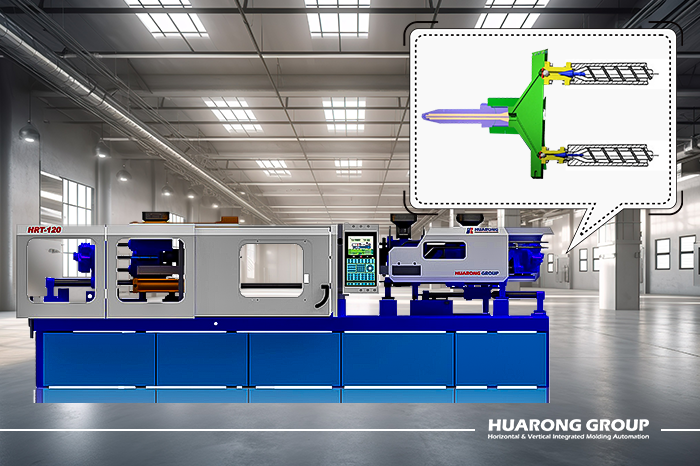
Achieving visually striking and unique surface patterns is increasingly important in plastic injection molding, especially for products that must stand out on the shelf or reinforce brand identity. Injection molding color mixing is a technique that blends two or more colored resins inside the mold to produce distinctive color swirls in injection molding.
Among these methods, marbling effect injection molding stands out for its ability to create organic, marble-like patterns directly in the molding process—without painting, printing, or additional post-processing.
This article explains what marbling effect and color mixing injection molding are, how they work in practice, how machine configuration and mold design influence the results, and where these techniques are used in real-world applications. It is written for manufacturers and engineers who want to elevate both the appearance and value of their plastic products.
Marbling effect injection molding is a specialized form of injection molding color mixing where two or more differently colored injection molding materials are injected into a single mold cavity. Instead of forming sharp color boundaries, the molten streams overlap and interact to produce organic, flowing swirl patterns across the surface of the molded part.
Compared with traditional two-color injection molding—where each color typically occupies a clearly defined region—the marbling effect focuses on:
- Smooth transitions
- Irregular, natural-looking streaks
- Gradient-like or marble-like visual textures
These patterns give plastic parts a premium and customized appearance, which is highly valued in:
- Consumer electronics and accessories
- Automotive interiors and trim components
- Toys, stationery, and lifestyle products
- Decorative goods and limited-edition designs
Because the effect is created inside the mold, it eliminates many post-processing steps such as painting, hydrographic printing, or pad printing, helping manufacturers reduce process time and environmental impact.
Factors Influencing Color Swirls in Injection Molding
Creating consistent and visually impressive swirled or marbled patterns depends on several key technical parameters:
- Injection Sequence and Timing
The order and timing in which materials are injected strongly influence whether the result appears as a fine swirl, a bold wave-like pattern, or a gradual color gradient. - Injection Speed and Pressure
- Higher injection speed can generate more intricate, fine streaks.
- Slower, more controlled injection tends to create broader, flowing color bands.
- Co-Injection Manifold and Mold Design
The internal flow channels and switching strategy of the co-injection manifold determine how the molten streams overlap before entering the cavity.
In the mold itself, gate position, runner layout, wall thickness, and ribs guide the flow path and therefore control swirl direction, intensity, and distribution. - Material Compatibility and Flow Characteristics
Plastics with similar viscosity and melt flow index blend more smoothly, producing softer transitions.
Materials with different flow behavior can create strong contrast lines or sharper swirls—but require more careful process tuning.
Together, these factors determine whether the final part shows a subtle marble texture or a bold, high-contrast swirl pattern.
In injection molding color mixing and marbling, two (or more) plastic melts are fed from separate injection units and brought together through a co-injection manifold before entering the mold cavity. By adjusting:
- the manifold design,
- the switch-over timing, and
- the injection speed and injection pressure of each unit,
manufacturers can generate a wide range of visual effects—from gentle gradients to dramatic swirl patterns.
1. Machine Configuration for Color Mixing Injection Molding
A typical machine setup for color mixing and marbling includes:
- Two independent injection units
- Each unit processes a different color (or different material and color).
- Independent control of temperature, injection speed, and back pressure.
- A specially designed co-injection manifold
- Directs the molten streams from both units into common flow channels.
- Controls how and where the melt streams start to overlap and interact.
Depending on the application, the machine may be a dual-color horizontal injection molding machine or a multi-injection system with additional units for more complex effects.
2. Co-Injection Manifold Design and Function
The co-injection manifold is the heart of color mixing injection molding. Its design directly affects:
- How quickly the second color joins the first color stream
- Where the two streams meet (near the gate, within the runner, or inside a dedicated mixing region)
- How strongly the colors are allowed to mix before entering the cavity
Key control functions include:
- Injection Sequence Control
- Determines whether the first material enters the mold before the second
- Enables simultaneous or delayed injection for different visual outcomes
- Injection Speed & Pressure Adjustment
- Fine-tunes the interface between the two color flows
- Influences whether the pattern is soft and cloudy or sharp and highly contrasted
With the right manifold design, you can tune the process from “just slightly tinted” to “highly dramatic swirls” while keeping basic injection parameters stable and repeatable.
3. Injection Sequences for Marbling / Color Swirl Effect
Different injection sequences create different visual effects. Common modes include:
| Injection Mode | Description | Resulting Pattern |
|---|---|---|
| Simultaneous Injection | Both materials are injected at the same time through the manifold. | Produces more uniform blending and natural marbling textures with soft transitions. |
| Sequential Injection (1st shot → 2nd shot) | The first color fills part of the cavity, then the second follows. | Ideal for layered or gradient color effects where one color appears to fade into another. |
| Alternating Injection (1st shot → 2nd shot → 1st shot again) | Materials are injected in alternating segments or pulses. | Creates complex swirling or wave-like patterns with more dynamic visual movement. |
By tuning injection timing, shot volume ratios, and switch-over points, engineers can “program” the swirl behavior to some degree—while still embracing the natural variability that makes each part unique.
4. Material Selection for Color Mixing and Marbling
To achieve attractive and stable color mixing results, material selection is crucial:
- Same Material, Different Colors
- Example: black PP + white PP, or blue ABS + white ABS
- Simplifies process control because both colors share the same shrinkage, viscosity, and mechanical properties
- Produces gradient or blended color effects without mechanical mismatch
- Different Materials and Colors
- Example: ABS + PMMA, PP + TPE
- Enables additional features such as:
- Soft-touch grip surfaces
- Improved scratch resistance
- Layered strength or functional zones
- Requires more careful mold and process design to manage differences in flow behavior, bonding, and shrinkage
Colorants, masterbatches, and pigments must be chosen for good dispersion, thermal stability, and compatibility with the base resin to prevent streak defects unrelated to the intended swirl pattern.
5. Mold Design Considerations for Color Flow
Even with a good manifold and machine, mold design strongly influences how the colors actually travel and interact in the cavity:
- Gate Location and Type
- Controls where the colors enter and begin to swirl
- Edge gates, fan gates, and hot runner valve gates all produce different flow behavior
- Rib Layout & Wall Thickness
- Thicker areas slow down flow and allow more mixing
- Thin sections accelerate flow, stretching the swirl into finer lines
- Ribs and bosses can deflect or split the flow, creating local variations in swirl patterns
- Runner and Flow Channel Design
- Determines how long the melt streams travel together before reaching the cavity
- Longer shared runner sections generally create more blended patterns
- Shorter paths can preserve more distinct streaks and strong contrast areas
By combining manifold design, injection sequence, and mold geometry, manufacturers can systematically tune how the swirl behaves, even though each part remains unique.
Benefits
- Unique Visual Appeal and Design Differentiation
Each part carries its own marbled or swirled pattern, delivering a “one-of-a-kind” appearance. This is ideal for products where visual impact and brand recognition matter. - Elimination of Post-Processing
Because the pattern is formed during molding, many downstream processes—such as painting, printing, or water-transfer decorations—can be reduced or eliminated. - Versatile Application Across Industries
Color mixing and marbling injection molding can be applied to:- Automotive interior trims and decorative inserts
- Consumer electronics housings and accessories
- Toys, stationary, kitchenware, and home décor
- Limited-edition or special series products
- Potential Cost and Sustainability Benefits
Removing painting and printing steps can reduce labor, VOC emissions, masking processes, and coating scrap—supporting more sustainable manufacturing.
Challenges
- Pattern Reproducibility
Because the swirl and marbling effect are driven by fluid dynamics inside the mold, no two parts are exactly identical. - This is a selling point for consumer and decorative products.
- However, for customers expecting strictly identical visuals, it can be a challenge.
- Process Window Sensitivity
Small changes in temperature, material lot, or machine conditions may slightly affect the swirl pattern. Engineers must define a robust window where:- The swirl remains attractive
- Dimensional and mechanical requirements are still met
- Design and Tooling Complexity
Manifold and mold design are more critical than in single-color production. Early collaboration between product designers, mold makers, and machine suppliers is recommended to avoid trial-and-error.
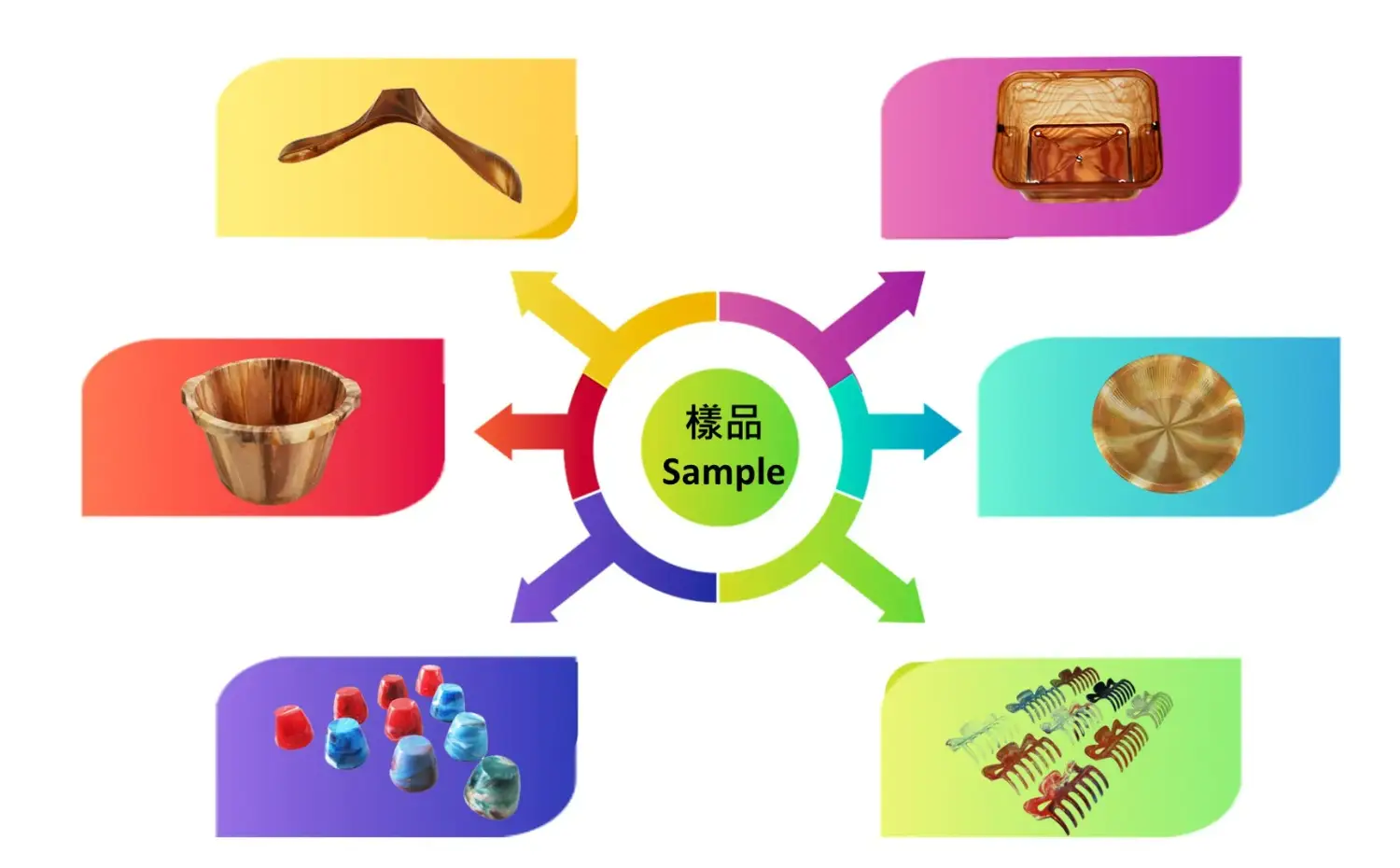
Color swirl and marbling effect injection molding can be seen in many everyday products, for example:
- Consumer Products
- Hair accessories, fashion items, and glasses frames with marble-like finishes
- Kitchenware, toothbrush handles, or stationery with multi-color swirl designs
- Automotive Interior Parts
- Decorative trim, knobs, and inserts that complement woodgrain or metallic themes
- Electronics and Lifestyle Goods
- Mobile phone cases, device covers, and wearable accessories with gradient or swirled color themes
Can I fully control the swirl pattern in marbling effect injection molding?
You can influence the general style of the pattern—such as whether it is fine or bold, more blended or strongly contrasted—by tuning injection sequence, speed, and manifold design. However, the exact swirl pattern will naturally vary from part to part. Most manufacturers position this as a feature: each product has a unique visual identity.
Will injection molding color mixing increase my cycle time?
In most cases, cycle time is similar to standard two-color injection molding. The main differences lie in:
- Synchronization of two injection units
- Additional control of manifold and injection sequences
If the mold and process are well designed, the cycle time impact is limited, and often the overall lead time is reduced because no painting or printing is required afterward.
What materials are suitable for marbling effect injection molding?
Common materials include PP, ABS, PC/ABS, PS, and TPE blends used for consumer products and automotive interior parts. The most important criteria are:
- Stable colorant and pigment performance
- Proper viscosity matching between colors
- Good compatibility (if mixing different base resins)
Using the same base material with different colors is generally the easiest path to stable production.
Is injection molding color mixing more expensive than traditional molding?
Tooling and machine requirements can be higher due to:
- Dual injection units
- Co-injection manifold design
However, when you consider:
- The elimination of painting or printing
- Reduced logistics and rework
- The added value of a premium appearance
Color mixing and marbling injection molding can be very cost-effective, especially for high-volume or higher-margin products.
Marbling effect injection molding and injection molding color mixing provide manufacturers with powerful tools to differentiate their products visually—directly from the molding process. By combining:
- Dual-color or multi-color injection machines
- Carefully engineered co-injection manifolds
- Proper material selection
- Thoughtful mold design and process tuning
you can produce plastic parts with artistic, marble-like swirls and gradients, without additional coating or printing steps.
These techniques are increasingly adopted in automotive interiors, consumer goods, and decorative applications where aesthetic value, brand recognition, and uniqueness are critical.
Looking for the Best Injection Molding Color Mixing Solutions?
At Huarong, we specialize in high-performance injection molding machines for color mixing and marbling, integrating:
- Dual or multi-injection configurations
- Co-injection manifold design
- Stable process control for color swirl injection molding
If you are planning a new color mixing project or exploring marbling effect injection molding for your existing product line, share your part drawings, target materials, and visual requirements with us. Our team can help you evaluate feasibility, propose suitable machine and manifold configurations, and develop a robust solution that combines both beauty and productivity.
- Group Name: Huarong Group
- Brand: Huarong, Yuhdak, Nanrong
- Service Offerings: Injection Molding Machine, Vertical Injection Molding Machine, Injection Molding Automation
- Tel: +886-6-7956777
- Address: No.21-6, Zhongzhou, Chin An Vil., Xigang Dist., Tainan City 72351, Taiwan


The Huarong Marketing Team is dedicated to translating Huarong’s deep manufacturing expertise into clear, actionable insights for our global audience. By collaborating closely with our R&D and engineering departments, we ensure that every update on injection molding machine technology and industry trends is presented with accuracy and practical value, reinforcing Huarong’s position as a premier injection molding machine manufacturer.
- Expert Insights: Regular updates on injection molding machine optimization and efficiency.
- Proven Reliability: 40+ years as a leading injection molding machine manufacturer in Taiwan.
- Global Reach: Tailored manufacturing solutions for automotive, medical, and packaging sectors.