Mass Production of Plastic Eyeglass Frames with Servo Injection and Vertical Slide Mold Technology
2025-12-23 10:50:03

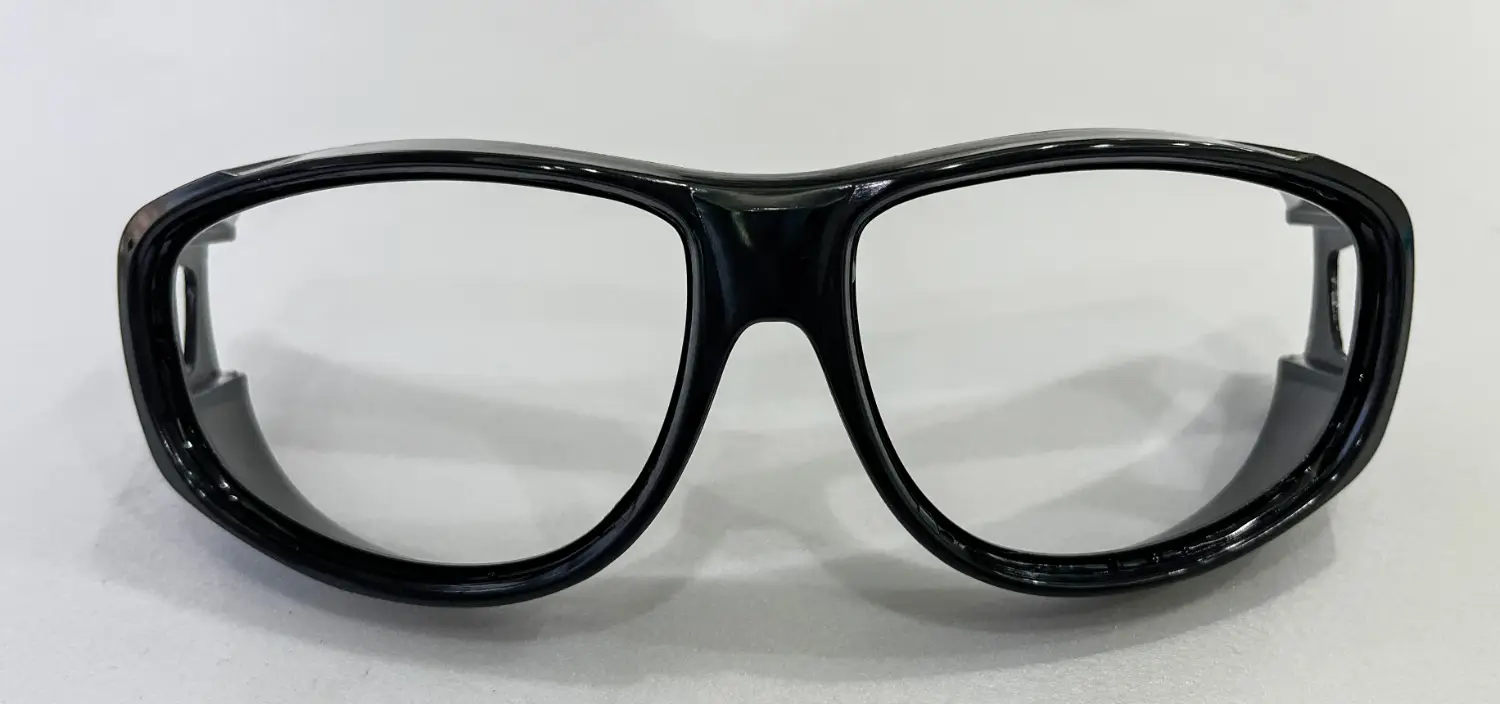
In the global eyewear market, plastic eyeglass frames are widely adopted due to their high design flexibility, lightweight, and suitability for extensive customization. However, frame molding is not merely a plastic injection process; it is a high-difficulty application that combines structural control, appearance quality management, and long-term stable mass production capability.
This case study will delve into how the customer successfully established a stable, high-yield production line for plastic eyeglass frames and temples through the combination of the Huarong HRFC100 servo energy-saving injection molding machine and the YH-V 1S vertical slide mold injection machine, comprehensively enhancing process reliability and operational flexibility.
Eyeglass frame bodies usually have thin walls, long runners, and asymmetrical geometries. Slight fluctuations in injection pressure or temperature can lead to warpage, dimensional deviation, and surface flow marks, which affect wearing comfort and consistency in appearance. Temples often involve inserts or highly repetitive assembly requirements, posing higher demands on equipment stability and operational efficiency.
The customer, long focused on plastic eyeglass frame manufacturing, has extremely high requirements for appearance details, dimensional accuracy, and wearing comfort. During mass production, the customer faced the following typical challenges:
During the injection molding process, plastic eyeglass frames are susceptible to shear heat, injection speed curves, and holding pressure control. Traditional hydraulic injection machines, during long-term operation, are prone to pressure fluctuations caused by oil temperature changes, resulting in:
- Inconsistent left and right frame dimensions
- Local warpage or stress concentration in the frame
- Surface flow marks affecting the appearance quality
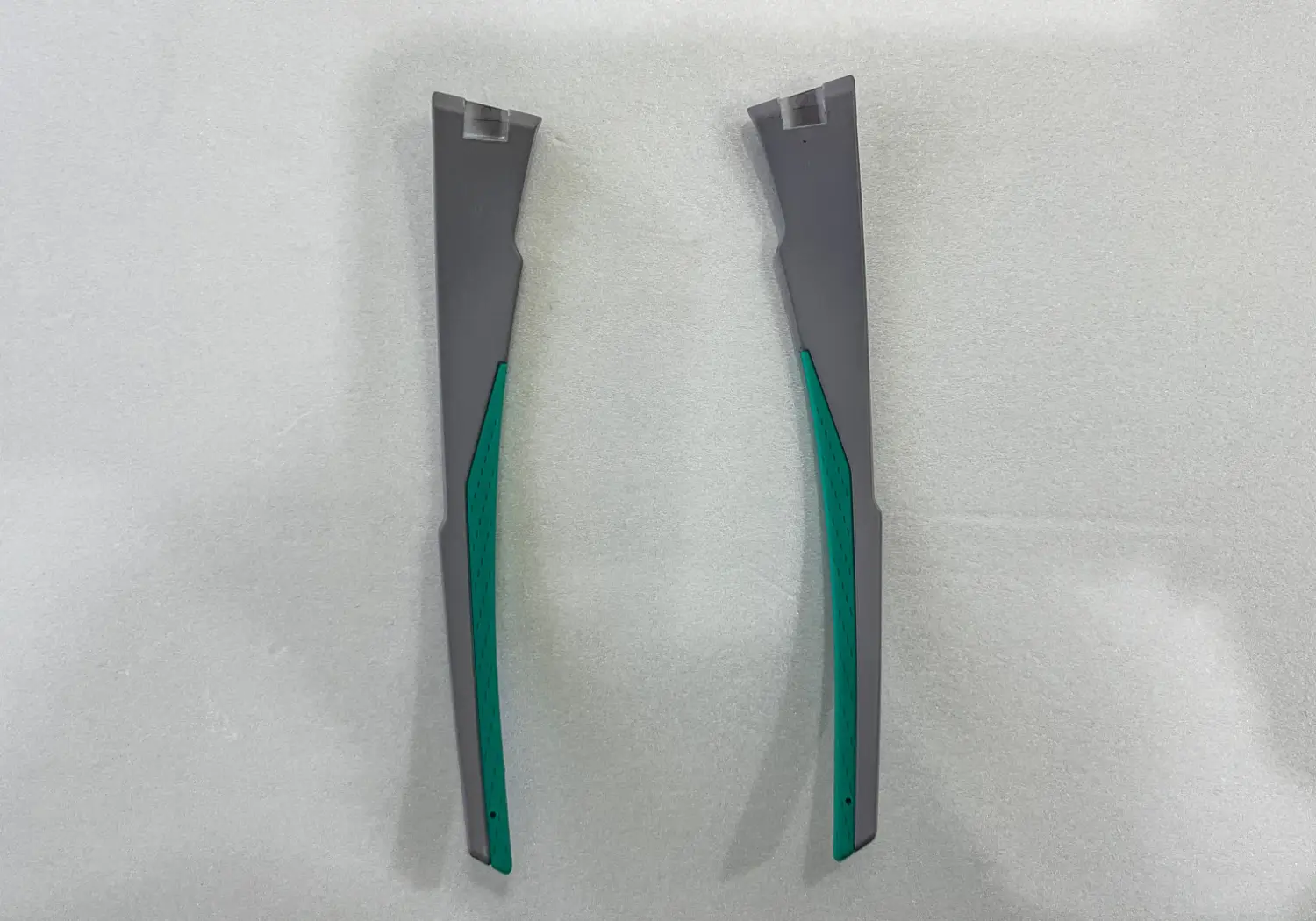
Temple products have slender structures, and some designs involve inserts or frequent handling. Using general horizontal machines with manual operation not only limits efficiency but also increases human error and defect risks.
In the highly competitive eyewear market, simply increasing output is no longer sufficient to establish an advantage. How to reduce energy consumption and labor dependency while maintaining quality has become a key issue that the customer urgently needs to solve.
After an in-depth analysis of product structures and production processes, Huarong planned a clearly divided, complementary injection configuration strategy for the customer:
| Production Item | Machine Introduced | Core Advantages |
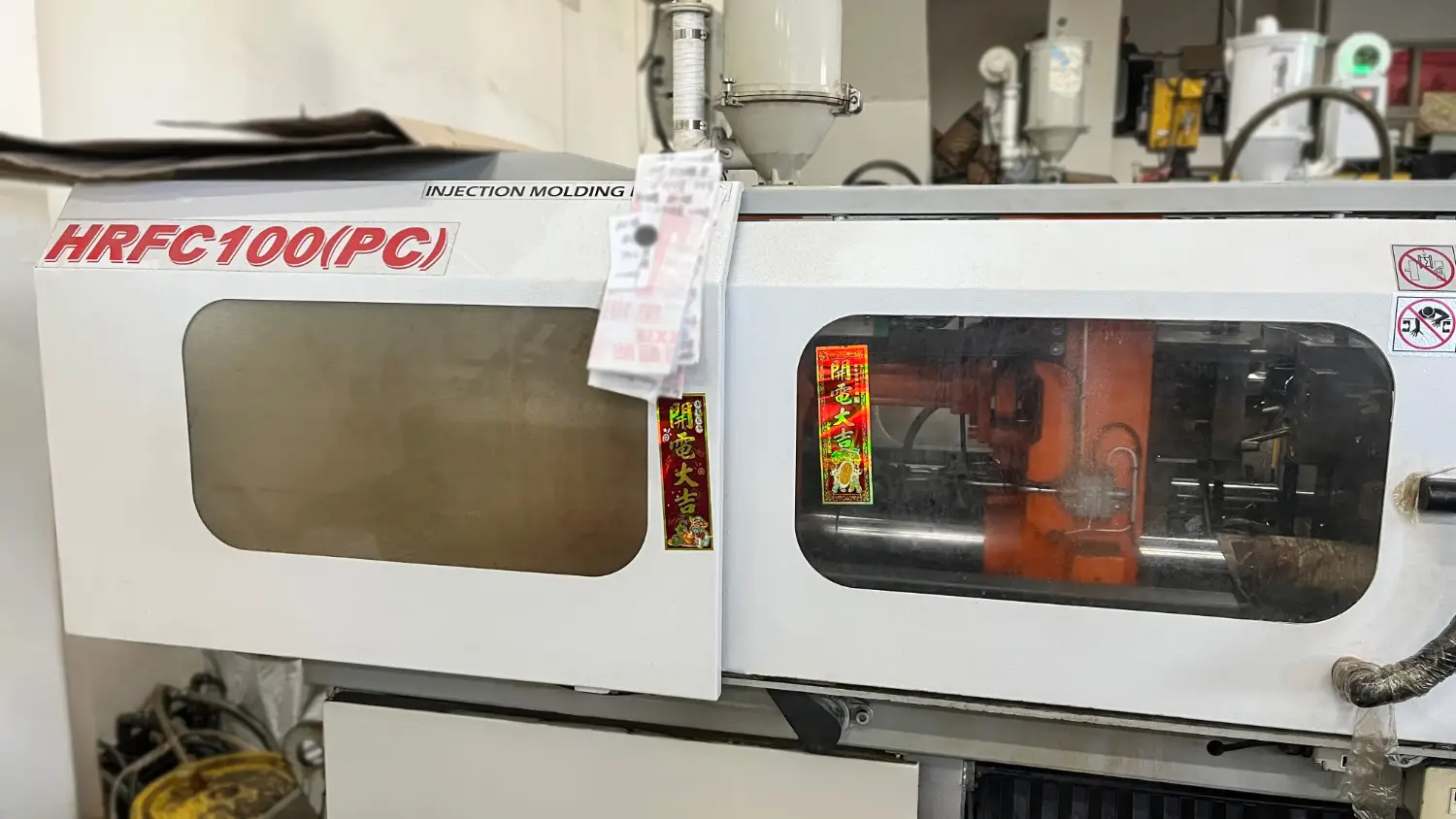
| Eyeglass Frame | HRFC100 Servo Energy-Saving Injection Machine | High precision, low energy consumption, long-term stable mass production |
| Temple | YH-V 1S Vertical Slide Mold Injection Machine | Insert-friendly, high operational efficiency, small footprint |
In frame molding, the real factor affecting quality is not just mold precision, but the repeatability of pressure and speed during injection. The HRFC100, equipped with a high-response servo system, is designed exactly for this purpose.
1. High-response closed-loop control to ensure dimensional consistency
The HRFC series combines high-resolution encoders and proportional valves to form real-time closed-loop control. Compared with
traditional systems, response speed increases by over 40%, allowing injection speed and holding pressure curves to be precisely
reproduced, effectively reducing:
- Uneven frame thickness
- Weight drift of finished products
- Dimensional deviation after long-term mass production
2. Optimized oil circuit and temperature control, suitable for high-appearance products
Through sensors and intelligent PID tuning, the system can stably control oil temperature, preventing injection conditions from drifting due
to heat accumulation, which is especially suitable for products like eyeglass frames that are extremely sensitive to appearance.
3. Energy-saving effect up to 70%, reducing long-term operational costs
Built-in multiple patented energy-saving technologies automatically reduce energy consumption during idle periods. Actual tests show that
overall electricity usage is greatly reduced compared with traditional hydraulic machines, creating significant savings for long-term mass
production.
Temples have slender structures and often require manual handling or insertion operations. Using a horizontal injection machine not only results in poor operational flow but also easily affects the production rhythm.
1. Vertical clamping × vertical injection, more intuitive insert operation
The vertical four-column clamping design, combined with an upright injection structure, allows operators to handle parts and inserts directly
in front, greatly improving work efficiency and stability.
2. Single slide mold (1S) design, balancing efficiency and flexibility
After mold opening, the lower mold automatically slides to the operation position, reducing bending or sideways movements of personnel,
lowering fatigue and operational risk, particularly suitable for insert molding operations.
3. Mold-friendly clamping mechanism
A combination of fast descending clamping and slow low-pressure clamping effectively reduces mold impact, extends mold life, and lowers
maintenance costs.
After equipment introduction and parameter optimization, the customer's production line showed significant improvements:
- Frame product dimensional consistency significantly increased
- Surface defect rate significantly decreased
- Production cycle stabilized, with yield maintained at a high level
- Energy consumption and labor costs are simultaneously reduced
Customer feedback:“This configuration not only solved immediate process problems but also provides higher flexibility for future product development and capacity expansion.”
The core of mass-producing plastic eyeglass frames lies in whether a clear and controllable production logic can be established according to different process requirements, rather than merely stacking conditions. When process design simultaneously considers quality consistency, operational efficiency, and long-term operational controllability, overall yield and cost naturally stabilize, and subsequent production line adjustments and product variations become practically feasible. This process-oriented planning approach is the key foundation supporting the long-term competitiveness of the eyewear industry.
At Huarong, we not only provide injection machines but are also committed to assisting customers in creating integrated solutions best suited to their production line needs. From planning to introduction, from machine tuning to mass production, from operation to management, we are your best partner for achieving sustainable competitiveness.
- Group Name: Huarong Group
- Brand: Huarong, Yuhdak, Nanrong
- Service Offerings: Injection Molding Machine, Vertical Injection Molding Machine, Injection Molding Automation
- Tel: +886-6-7956777
- Address: No.21-6, Zhongzhou, Chin An Vil., Xigang Dist., Tainan City 72351, Taiwan
- Official Website: https://www.huarong.com.tw/