Injection Molding Cooling Management:Comprehensive Benefits of Chillers
2025-11-27 13:49:51
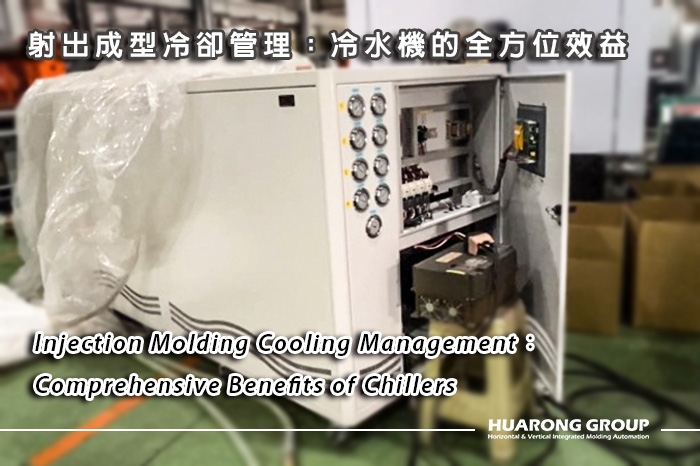
In injection molding, the cooling phase often accounts for more than half of the overall cycle time. It is a decisive factor that influences production output, dimensional stability, and product yield. When mold temperature cannot remain consistent across every cycle, shortening the cycle time, improving quality, or reducing costs becomes extremely challenging.
The chiller specifically designed for injection molding plays a critical role in stabilizing mold temperature, controlling cooling efficiency, and improving overall production stability. It not only affects product quality but also determines the operational rhythm of the factory, the longevity of equipment, and energy management.
Further Reading:Injection Molding Auxiliary Equipment: A Beginner's Guide
The cooling stage can represent 50–90% of the total molding cycle. When mold cooling is insufficient:
- Extended cycle time → lower production output
- Increased dimensional variations and surface defects → higher scrap rate
- Excess heat load on equipment → shorter mold and machine lifespan
A chiller effectively reduces the following common molding defects:
- Sink marks:Caused by uneven surface cooling
- Warping:Resulting from mold temperature imbalance
- Short shots:Incomplete filling due to poor melt flow
- Surface defects:From inconsistent cooling or unstable water temperature
- Equipment wear:Caused by repeated thermal stress on molds and machine components
- Higher scrap and cost:Increased defects lead to material waste and a higher cost per part
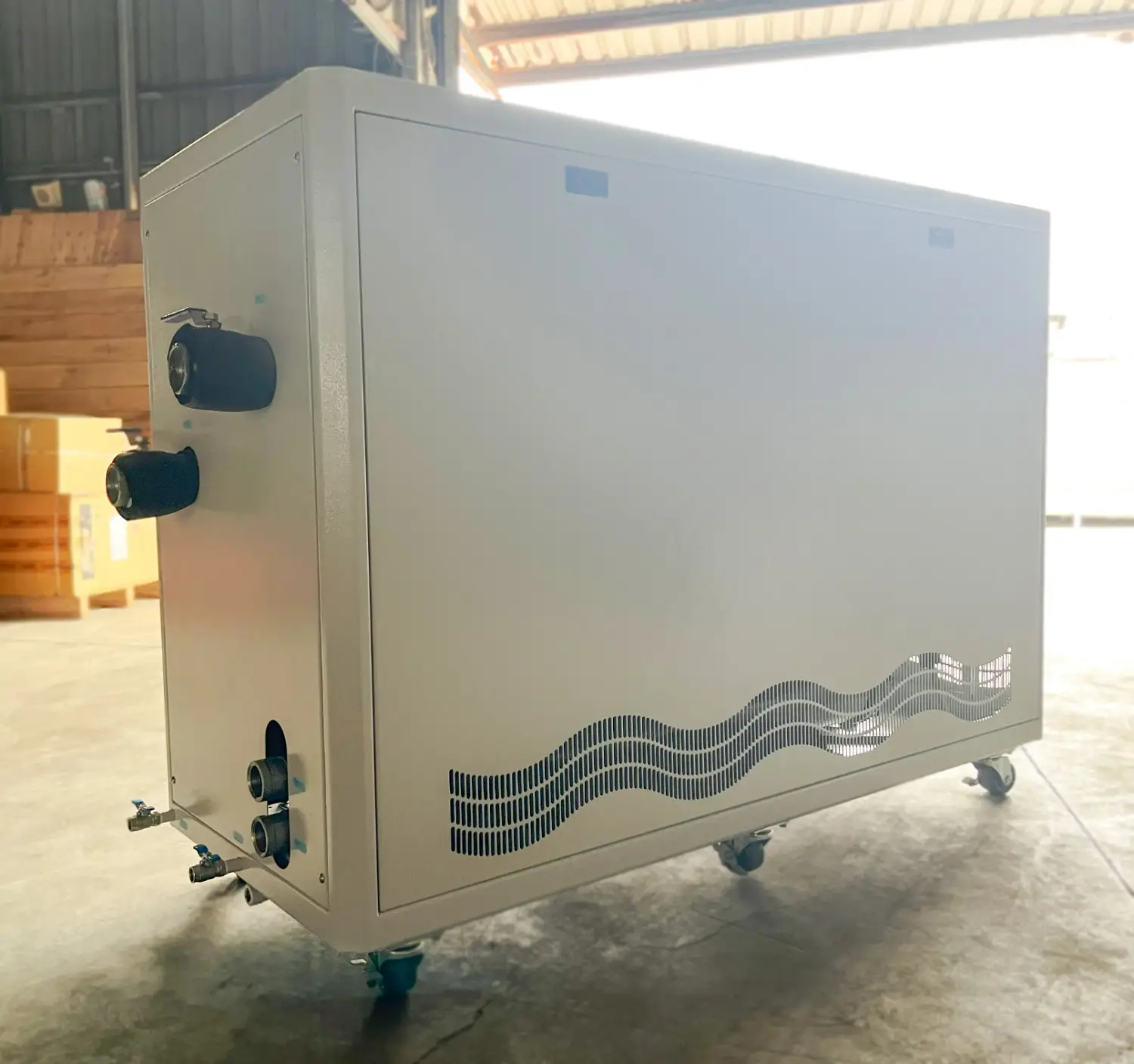
Chillers circulate cold water or water–glycol mixtures to quickly absorb heat from the mold and molten resin, ensuring proper solidification. Even a 10% reduction in cooling time directly enhances productivity.
Example:
A 300-ton injection molding machine has a cycle time of 30 seconds, with 18 seconds for cooling.
If cooling efficiency increases by 15% → cooling time becomes 15.3 seconds → cycle time becomes 27.3 seconds → productivity increases by approximately 10%.
Temperature fluctuation is a main source of quality variation. A chiller provides:
- Mold temperature stability within ±0.5°C
- Consistent cooling conditions for every cycle
- Strong process repeatability
This is particularly crucial for multi-cavity molds, thin-wall molding, transparent parts, and medical-grade components.
Stable cooling helps prevent:
- Mold thermal fatigue
- Premature wear of seals, guide components, and moving parts
- Abnormal hydraulic oil temperature in injection machines
1. The chiller supplies chilled water to the mold channels
2. Water absorbs heat from molten plastic and mold steel
3. Warm water returns to the chiller
4. The chiller removes heat and recirculates cooled water
Inside the chiller, the refrigeration cycle removes heat via:
- Evaporator:absorbs heat from return water and vaporizes the refrigerant
- Compressor:compresses low-pressure vapor into high-pressure, high-temperature gas
- Condenser:air-cooled or water-cooled heat rejection, converting gas back into liquid
- Expansion valve:reduces pressure and temperature before returning refrigerant to the evaporator
- Use ambient air for heat dissipation
- Easy installation, low maintenance cost
- Ideal for facilities without cooling towers or requiring installation flexibility
- Require a cooling tower and water treatment
- Higher efficiency, suitable for large-scale molding lines
- Ideal for heavy-duty, continuous operation factories
- Dedicated to individual injection molding machines
- High flexibility for small/medium factories or multi-product production
- One system supplying cooling to the entire production line or facility
- Excellent temperature uniformity and energy efficiency
- Best suited for large injection molding factories with stable production demands
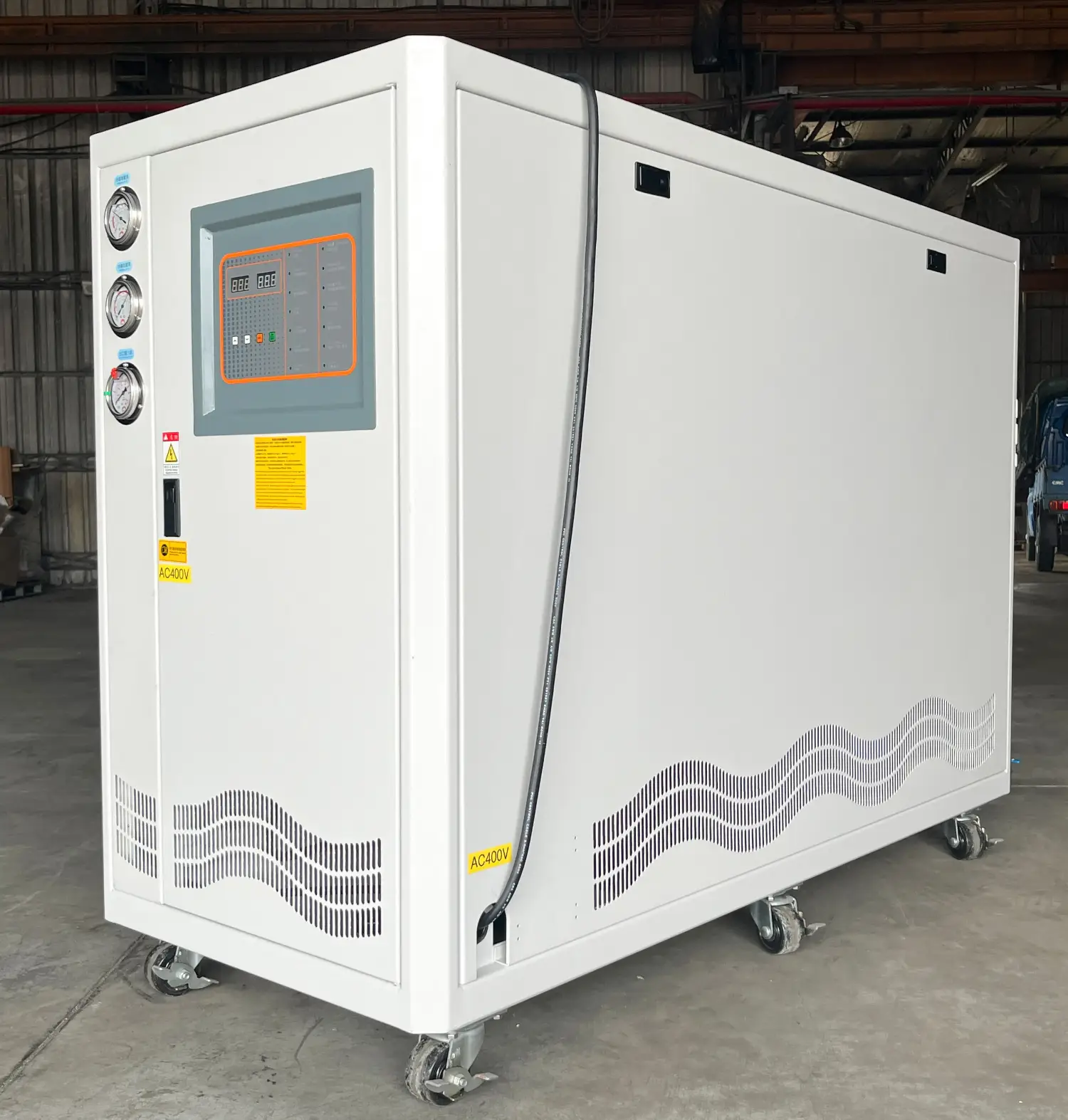
Different resins, mold sizes, and machine tonnages require different cooling capacities. For common engineering plastics:
| Injection Machine Tonnage | Recommended Cooling Capacity |
| 80 – 120 tons | 3 – 5 tons |
| 150 – 250 tons | 5 – 10 tons |
| 300 – 450 tons | 10 – 20 tons |
| 500 tons and above | 20 tons or central system |
Introducing dedicated chillers not only improves cooling efficiency but also enhances operational performance from multiple aspects.
Chillers can rapidly and evenly reduce mold temperature, allowing plastics to solidify in the shortest possible time and shortening the molding cycle.
- Faster cycle time:Each injection cycle is completed more quickly, increasing the number of parts produced per unit of time.
- Higher productivity:In large-scale production, rapid cooling can significantly increase the output of each cycle, resulting in notable improvements in overall line efficiency.
- Cost reductionShortening cooling time lowers the cost per part, making it especially beneficial for high-cycle, high-volume products.
Fluctuations in mold temperature are the main cause of dimensional deviations, warpage, and surface defects. Chillers provide precise temperature control, maintaining mold temperature within ±0.5°C.
- Dimensional stability:Product length, width, height, and critical dimensions remain consistent, meeting the requirements of precision components.
- Better surface quality:Uniform cooling reduces sink marks, bubbles, and warpage, improving product appearance and reliability.
- Lower scrap rate:Stable cooling minimizes defects, effectively reducing material waste and rework costs.
Continuous and stable cooling effectively lowers the thermal load on equipment, extending the lifespan of molds and injection molding machines.
- Mold protection:Balanced temperatures reduce thermal fatigue and deformation, decreasing wear rate and maintenance frequency.
- Stable machine operation:Prevents excessive oil temperature or hydraulic system overheating, reducing unplanned downtime.
- Lower maintenance costs:Regular cooling system maintenance extends equipment service life and reduces losses caused by machine failure and production interruptions.
Modern chillers typically adopt intelligent inverter technology and high-efficiency refrigerant systems, automatically adjusting operating power based on actual load.
- Energy savings:Load adjustment reduces unnecessary energy consumption and lowers electricity costs.
- Environmental compliance:Uses low-GWP (Global Warming Potential) refrigerants and circulating water systems to reduce carbon footprint.
- Sustainable production:Minimizes water and energy waste, aligning with green manufacturing principles.
Cooling management is both a technical and strategic element of injection molding. Precise and stable cooling affects not only part accuracy and surface quality but also the overall efficiency and cost-effectiveness of the entire production line. As industries push for higher energy efficiency and sustainability, properly selected cooling systems provide substantial energy savings and long-term operational value. From a manufacturing strategy perspective, the cooling system is no longer merely auxiliary equipment. It has become a core element for achieving efficient, stable, and sustainable injection molding production.
- Group Name: Huarong Group
- Brand: Huarong, Yuhdak, Nanrong
- Service Offerings: Injection Molding Machine, Vertical Injection Molding Machine, Injection Molding Automation
- Tel: +886-6-7956777
- Address: No.21-6, Zhongzhou, Chin An Vil., Xigang Dist., Tainan City 72351, Taiwan
- Official Website: https://www.huarong.com.tw/